

Lynch returned by train to Glasgow's Central Station to a hero's welcome as thousands of people brought the city centre to a standstill.
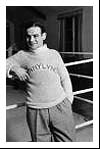
His winning run continued into 1936 with nine victories including a title defence against Pat Palmer in which he won a Lonsdale Belt outright.
 |  |
© SCRAN | |
|
A further defining moment came eight months later when he successfully defended his crown against Peter Kane in Glasgow…knocking him out in round thirteen.
But fame dealt Lynch a cruel blow. His status as a local hero in the working class Gorbals led to money problems and alcoholism.
|  |
© SCRAN | |
|
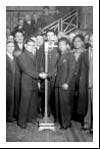
He was stripped of his world title on 29 June 1938 when he tipped the scales six and a half pounds overweight prior to his bout with Jackie Jurich. In the ultimate irony, Lynch agreed to fight Jurich regardless…and knocked him out in 12 rounds.
It was the beginning of the end.
In his final fight - on 3 October that same year - he suffered the only knock-out of his professional career at the hands of Aurel Toma. His fighter's licence was revoked.
His decline into alcoholism was rapid. His marriage broke up. On 8 August 1946, Lynch died in the Southern General Hospital of malnutrition and respiratory problems. He was 33.
His friends and admirers once more brought the streets of Glasgow to a standstill as his funeral cortege made its way to a cemetery in the north of the city.
Today, there is a memorial to Benny Lynch in a block of flats in the Gorbals. The plaque, while worthy, doesn't convey the true affection and admiration which remains for arguably Scotland's finest world boxing champion.
The legend of Benny Lynch shines bright 70 years on.
Page: 12





