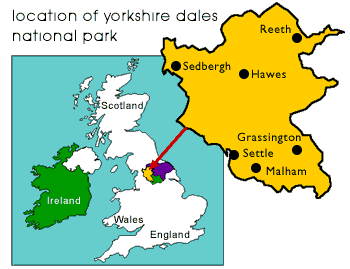
The Yorkshire Dales National Park is the third largest of the National Parks of England and Wales and encloses 1,769 square kilometres of the central Pennine uplands. It is known for its outstanding scenery and diversity of wildlife and habitats. It was designated a National Park in 1954 in recognition of these important features. It has a population of 19,000 in some 7,400 households, mainly in small villages. The largest settlement in the National Park is Sedbergh, with 2,000 people. Farming gives the Yorkshire Dales much of its character. The dry-stone walls, traditional farmhouses and field barns typify the Dales scenery. The 90% native deciduous woodland cover of 8,000 years ago has been progressively cleared and now covers only 1% of the national park. Today some 52% of the Park is open moorland, while 40% is enclosed farmland. The quarrying industry in the Dales dates back hundreds of years. Stone from small local pits was used to create the distinctive Dales landscape of dry-stone walls, field barns, farmsteads and villages. It's big business in the Dales with over 4.7 million tonnes being quarried in 1994.
The National Park Authority is the statutory planning authority and because of the need to preserve the natural and human landscape, extra restrictions are imposed on local developments whether they be for residential, farming, industrial or tourist use. Planning applications tend to take a lot longer than in other places because various conservation bodies have always to be consulted. Buildings are more expensive because local materials must be used and any housing developments are restricted to a few areas. No development at all is allowed on the open moorlands and in open spaces in small villages. Farmers are not allowed to get rid of field boundaries or do anything which would affect any of the wildlife habitats on their land. There are much stricter rules on the changes allowed to buildings and there is a good practice manual which must be followed. Shopkeepers are not allowed to have internally illuminated signs and fascias. Farm buildings, if they are to be changed into housing, must be at low cost and be sold to people who work in farming or forestry. |