 | The UCS 'work in'.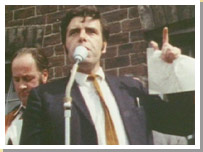 | Jimmy Reid |
From 1966 to 1968, the Labour government set about reorganizing shipbuilding on the River Clyde. The government split the existing shipyards into two groups. On the lower Clyde, the Scott Lithgow group brought together the shipyards of Port Glasgow and Greenock. The other shipyards on the upper Clyde became Upper Clyde Shipbuilders (UCS). Weak management and powerful trade unions meant that UCS faced major problems from the start. In 1970 the Labour government had to give UCS £20 million to prevent the company going out of business. The new Conservative Government insisted that shipbuilding should not rely on government subsidies. In June 1971 the Government refused to give UCS a subsidy to save the shipyards from being closed. Instead, at least 6,000 of the 8,500 shipyard workers employed by UCS would have to be made redundant. 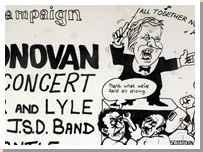 | Publicity poster |
The trade unions decided that the shipyards might be closed for good if the workers went on strike in protest at the government's refusal to support UCS. Instead, the trade unions organized a 'work in'. The workers would manage and operate the UCS shipyards until the government changed its policy. The supporters of the UCS 'work in' organized marches, concerts, public collections and other fund raising activities to support the workers involved in the 'work in'. A support fund of nearly £250,000 was raised and news reports of workers' meetings were broadcast all over the world. The 'work in' continued until February/March 1972 when the government reversed its decision not to support UCS. |  | |
|


