| | |   | | | | | Matt Grant's diary - 19/03/03 | | | |
Our producer Matthew Grant is travelling with our foreign affairs correspondent Michael Williams in Kuwait. He sends his thoughts on the country and the build up to war.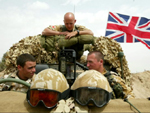
British soldiers in Kuwait
| | | |
First impressions: Kuwait is a peculiar mix of modern, western culture and the Arab world - sometimes yoked together with violence.
Everywhere stands American fast food joints, malls and long stretched out cars. A footstep past customs at Kuwait airport stands Starbucks, although now most of the passengers buying their coffees are planning to enjoy them in the departure lounge, not the city. But the hospitality, the attitude and the driving make it clear we are in the Middle East, even if the majority of the faces are Indian or Filipina.
As we wait, everything takes on an increasingly surreal edge.
The hotel where we spend much of our time has turned into a top security military base for the American and British forces. Yet look away from the men in fatigues, the machine gun positions and the x-ray machines and it remains a beautiful, spanking new, beachside resort; a haven of tranquillity from the bustle of the city. Look inland and there is nothing but soldiers. Staring out into the Persian Gulf, only the oil processing plant mars the view.
The war surcharge is already kicking in. Everything is becoming fantastically expensive, except petrol. The 4x4 we have hired for the desert takes nearly a hundred litres. Filling it right up costs about a tenner.
Kuwaitis have their own perspective on what's about to happen. Almost all insist they do not greatly fear an Iraqi missile strike, although they are well within range. What concerns many - especially the ex-pat communities - is a terror attack by either the small number of affluent Islamic radicals in the country, or the Iraqi fifth columnists.
There are other factors. You may have heard Mona Malik on the programme. The Iraqis took her husband in the Gulf War and she doesn’t know why. She does know he was alive when it ended and prays he may still be. She wants him back. This war could, conceivably, deliver him. What she cannot do is hope for a war that would deprive Iraqi women of their husbands.
When we stop the interview, she asks: 'Do you think he will come back?'
'I don’t know,' I say.
Kuwaitis ask us strange interlopers carrying mobile phones, microphones, cameras and gas masks a lot of questions. 'Will there be a war?' is becoming a less frequent one.
Click here to read Mike Williams's diary from Kuwait
| |
| |
|
|