| | |   | | | | | Jim Naughtie's diary | | | |
 Jim Naughtie Jim Naughtie
Jim Naughtie reports from the diplomatic flurry of the United Nations in New York
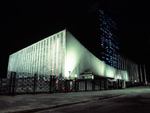
The United Nations building in New York
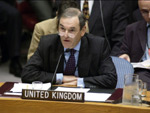
Jeremy Greenstock, the UK ambassador to the UN
| | | |
The most important proposal put before the Security Council this week was, officially, a 'non-paper'. It was so described because it wasn't part of the draft second resolution, coloured blue to indicate its status, and because Britain and the United States weren't making their six 'benchmarks' for Saddam Hussein a formal proposal (only an accompanying document which, in the words of the British ambassador, might give the council the opportunity to make a political commitment).
So a 'non-paper' it was, and the talks which went into the night throughout this week - and may swallow up the weekend, for all anyone knows - focused on these benchmarks as a kind of diplomatic commentary on the resolution itself. It was a deft manoeuvre on the battlefield, trying to find a way round the impasse produced by the split in the permanent five members by mobilizing the others in a resolution of 'principle'.
Sir Jeremy Greenstock, the British ambassador, spoke of a 'trial balloon' which might gain 'traction' among the undecided members, a mixed metaphor right out of the top drawer of his trade. Not something, however, as silly as it sounded. For a day or two, at least, it looked as if this might be a way of delivering to his political masters the second resolution they needed (and of giving them the ammunition to describe the coming French veto as unreasonable). Old UN hands nodded in admiration at his ingenuity.
Yet this is precisely the kind of strategy that allows the UN's most determined critics to accuse it of being specious, indecisive and irrelevant. Right-wing columnists in the United States are in flow against the organisation whose main crime in their eyes seems to be that it interferes with the imposition of a pax Americana (even by war). How, they ask, can this lumbering diplomatic machinery be thought to be the best way of settling the world’s problems?
Perhaps, as Winston Churchill said, it's because no-one has yet thought of anything better. If the UN is charged with sorting out what Kofi Annan calls 'problems without passports' that involve everyone, it follows that it's going to find itself dealing with the insoluble disputes, the ones that can't be solved in any other way. And if the Security Council seems mired in diplomatic porridge, that's because the sovereign governments who sit there have themselves failed to find a way out.
'Non-papers' can have their uses. Diplomats can sell dummies as elegantly as any rugby player. And though this is no game, it is a contest of strategies. This Thursday lunchtime in New York, it seems likely that Sir Jeremy's gamble will fail. But if it does it won't be because of a diplomatic trick but because the divisions between the nations are too deep to be bridged. The UN will not have created the crisis; it will just have to prepare, as usual, to pick up the pieces.
| |
| | |
|