|  | | | | PROGRAMME INFO | | | |
| | | From amaranth to zabaglione, Sheila Dillon and Derek Cooper investigate every aspect of the food we eat. | | | | | LISTEN AGAIN | | | |
|
|
| | PRESENTERS | | | |
|  | | | | - Derek's biography
- Derek's interview
- What do you know about Derek? | | | | | | "Cooper is a man with tremendous gusto and passion for the pleasures of life and food, but he is also a man who has a blazing fury with those who are responsible for allowing our food supply to have become so contaminated and with those countless others who accept this state with apathy and disregard."
Journalist Colin Spencer | | |
| | | | | | PROGRAMME DETAILS | | | |
| 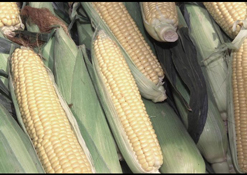
This week Sheila Dillon explores one of the world’s great staple foods, corn, and look at its place in the culture, cuisine and economy of its country of origin, Mexico.
It is impossible to overstate the importance of corn in Mexican life. A quarter of the population depends on it for their income, over half the planted land in Mexico is given over to it, and the corn tortilla remains the staple food of Mexico despite the conquest nearly 500 years ago of the wheat bread eating Spaniards.
Spanish society remains riven by the corn/wheat divide. Mexico’s predominantly Spanish middle and upper classes tend to eat the many wheat breads baked in the country, while the indigenous Indian Mexicans still make and eat corn tortillas.
Azucena Suarez from the Herdez Fundacion explains.
Corn is grown across Mexico, from the large scale commercial farms in the north to the small scale subsistence farming carried out in much of the rest of the country. Sheila joined a “Reality Tour” run by the US based Global Exchange charity to an agro-forestry project in the Yucatan Peninsula to show North Americans the reality of farming and global trade for farmers in the developing world.
As well as growing the traditional crops of corn, squash and beans, these farmers are diversifying into pitaya or dragon fruit. This fetches a good price in local markets as a fruit for Mexican “fruit waters”, but the farmers are also interested in the potential for international trade.
They produce maize for their own food, and when, as happened recently, weather destroyed their crops, they found themselves without food or money to buy food. They hope that diversifying with help this.
Since Mexico joined the North American Free Trade Area in 1994 huge quantities of corn from the USA has flooded into the Mexican market. The impact of this has been to bring the price of Mexican corn, traditionally protected by the government because of its importance, in line with the world price, in effect halving it.
This hasn’t, however, translated into cheap tortillas for Mexicans, the price has risen by 500%. Alejandro Nadal from the research centre the Collegio de Mexico explains why.
The corn grown in Mexico varies enormously. There are many thousands of varieties, all different sizes and all different colours, including blue, red, purple, white, yellow, and mixtures of colours.
These variations play a role in the nutritional value of the corn, as Professor Ricardo Uauy from the London School of Hygiene Tropical Medicine explained.
The way that tortillas were traditionally eaten with beans also explains why Mexico’s predominantly corn based diet was so healthy, the two compliment one another’s deficiencies, and provide the diet with a protein content 95% as effective as meat or dairy produce without any of the negative side effects.
Sheila was joined in the studio by Sofia Craxton, Mexican born food writer, to find out if it is possible to make a good tortilla from the ground corn flour available to Mexican’s living away from home.
Tortillas remain the great peasant food of Mexico, but have recently seen something of a return to favour in the upper echelons of society. Aquila y Sol, the eagle and the sun, in the affluent Polanco area of Mexico City, is the height of high dining, and features modern interpretations of traditional Mexican dishes on its menu, including multicoloured tortillas.
Sheila Dillon joined its owner, artist and food broadcaster, Martha Chapa, and designer Carmen Padin, for lunch.
Águila y sol: Moliere 42,
Polanco
11560 México
DF.
Tel: 5281 8354
Fax: 5281 8371
Email: [email protected].
BBCi Food website
The BBC is not responsible for external websites | |
| | |