

16:30 - 17:30
Sean Rafferty presents a selection of music and guests from the arts world.
Music Timeline |  | |
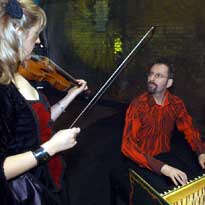 Baroque A term originally employed in the context of the visual arts to describe extravagance or irregularity, the word Baroque has come to define a period in music in which the principle of contrast replaced the consistency of texture of the late Renaissance. In the church music written for St Mark's in Venice by Giovanni Gabrieli and later Claudio Monteverdi , groups of performers of different kinds, vocal and instrumental, and placed in different parts of the building, created striking new spatial, harmonic and textural effects, typifying the new spirit.
| | Music Genres Instrumental Chamber Orchestral Vocal Choral Opera Music Timeline Medieval Renaissance Baroque Classical Romantic Modernism Musical Instruments Strings Woodwind Brass Percussion Electronic Related Links on radio 3 on bbc.co.uk Essential Guide to Classical Music What's On Classical TV and Radio Classical Reviews Guide to the Orchestra on the web The BBC is not responsible for the content of external websites. |
| | |

BBC iD
BBC iDBBC navigation
BBC links

BBC © 2014The BBC is not responsible for the content of external sites. Read more.
This page is best viewed in an up-to-date web browser with style sheets (CSS) enabled. While you will be able to view the content of this page in your current browser, you will not be able to get the full visual experience. Please consider upgrading your browser software or enabling style sheets (CSS) if you are able to do so.
