Why does Africa import a lot of food?
We speak to food entrepreneurs about how Africa can be more self sufficient.
2022 has seen record food prices. Many African countries have been badly hit because they import their staples – wheat, rice and oil. A lack of infrastructure and capacity in some countries means that food grown in Africa is often not processed into packaged food products, instead those items are imported from outside of the continent.
In this programme we speak to two women who run food businesses in Zambia and Ghana, to talk about the impact of rising food costs, and whether this year’s food crisis could be the impetus for Africa to be more self-sufficient. Ruth Alexander is joined by Monica Musonda, founder and CEO of Java Foods, which manufactures fortified noodles and cereal products in Zambia and Yvette Ansah who owns two restaurants, Café Kwae and Kwae Terrace in Accra, Ghana, BBC West Africa business reporter Nkechi Ogbonna joins from Nigeria, Africa’s biggest economy by gross domestic product to talk about the impact of rising food costs there.
Presented by Ruth Alexander.
Produced by Beatrice Pickup.
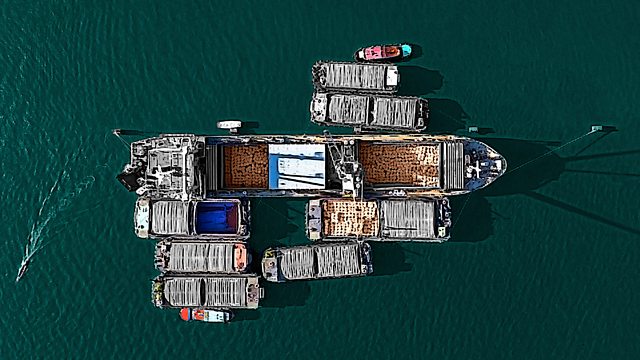
(Image: aerial view of a large ship transporting rice, unloading cargo onto smaller ships. Credit: Getty/BBC)
Last on

Broadcasts
- Thu 8 Dec 202204:32GMTBBC World Service except Americas and the Caribbean, Australasia, East Asia & South Asia
- Thu 8 Dec 202205:32GMTBBC World Service Australasia, Americas and the Caribbean, South Asia & East Asia only
- Thu 8 Dec 202211:32GMTBBC World Service
- Thu 8 Dec 202221:32GMTBBC World Service East and Southern Africa & West and Central Africa only
- Thu 8 Dec 202223:32GMTBBC World Service except East and Southern Africa & West and Central Africa
- Sun 11 Dec 202208:32GMTBBC World Service except Europe and the Middle East
Food Chain highlights

Tea, coffee, spices, chillies ... snack on a selection of programme highlights
Podcast
![]()
The Food Chain
Examining what it takes to put food on your plate