Should China ban 'wet' markets?
They’ve been blamed for coronavirus, but some say calls to close them are misguided
China’s so-called ‘wet’ markets have been under intense scrutiny ever since the first coronavirus cases were linked to one in Wuhan six months ago. Now a growing number of influential figures, including leading White House adviser Dr Anthony Fauci, are calling for them to be banned.
But the suggestion has been met with dismay and even anger in China - an expert on the markets tells Graihagh Jackson they are the main source of fresh food in Chinese cities and a healthier and more affordable option than many supermarkets. A market trader in Beijing tells us they play a vital cultural and community role too.
But if these markets were shut down, would it prevent future outbreaks? We speak to a virus-hunter and expert in the region, who explains that it's global agriculture’s growing encroachment into wild spaces that's making us most vulnerable to emerging infectious diseases.
If you would like to contact us about this or any other episode please email thefoodchain@bbc.co.uk.
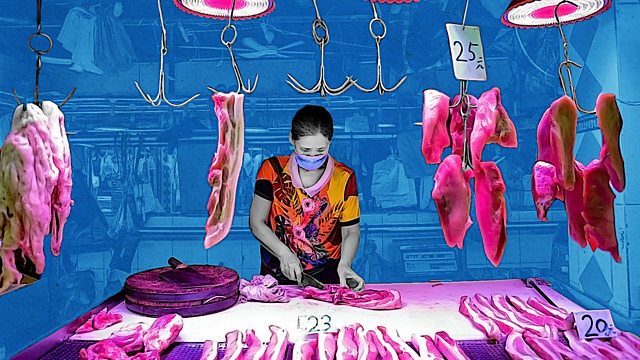
(Picture: A vendor sells meat at Xihua Farmer's Market in Guangzhou, Guangdong province, China. Credit: Alex Plavevski/EPA/BBC)
Last on

More episodes
Broadcasts
- Thu 14 May 202002:32GMTBBC World Service
- Thu 14 May 202010:32GMTBBC World Service
- Thu 14 May 202015:32GMTBBC World Service Australasia
- Thu 14 May 202017:32GMTBBC World Service East and Southern Africa & West and Central Africa only
- Thu 14 May 202021:32GMTBBC World Service except Europe and the Middle East
- Thu 14 May 202022:32GMTBBC World Service Europe and the Middle East
- Sun 17 May 202007:32GMTBBC World Service
- Mon 18 May 202000:32GMTBBC World Service except Americas and the Caribbean & Australasia
Food Chain highlights

Tea, coffee, spices, chillies ... snack on a selection of programme highlights
Podcast
![]()
The Food Chain
Examining what it takes to put food on your plate