Absolute Food: Part I
How authoritarian regimes control food, and what it's like to eat in their countries.
How do authoritarian regimes use food to control and manipulate? In the first of two episodes exploring food and power, we find out how changes to the global economy mean food policy under dictatorships could soon look quite different. Plus, how do you write about food when there isn't any? Emily Thomas talks to a Venezuelan food writer who says her country's food story speaks volumes about the political situation, and explains why she continues to blog about restaurants, despite hunger being rife. In a country where people are afraid to say what they think, we hear why food writing can mean freedom.
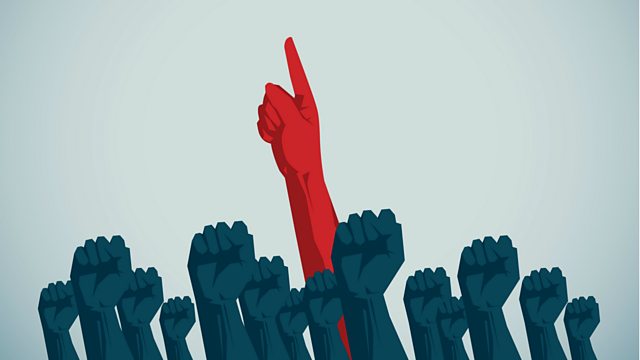
(Picture: Red hand pointing upwards with clenched fists, Credit: Getty Images)
Last on
Clip
![]()
What do you do as a food writer when there’s no food?
Duration: 03:51
Broadcasts
- Thu 3 May 201802:32GMTBBC World Service Online, Americas and the Caribbean, UK DAB/Freeview, Europe and the Middle East & West and Central Africa only
- Thu 3 May 201803:32GMTBBC World Service South Asia & East Asia only
- Thu 3 May 201804:32GMTBBC World Service Australasia
- Thu 3 May 201810:32GMTBBC World Service except News Internet & West and Central Africa
- Thu 3 May 201821:32GMTBBC World Service except News Internet
- Sun 6 May 201807:32GMTBBC World Service except News Internet
Food Chain highlights
Tea, coffee, spices, chillies ... snack on a selection of programme highlights
Podcast
![]()
The Food Chain
Examining what it takes to put food on your plate