BBC Radio 3's exploration of the 1917 Russian Revolution and its cultural reverberations.
Silent movie accompanist Neil Brand reappraises Eisenstein's influential film October.
Political historian Tariq Ali recalls a tour of Constructivist Moscow in the 1980s.
Ceramicist Claire Curneen tells the strange story of the State Porcelain Factory.
Writer Elaine Feinstein compares the impact of the Revolution on two great Russian poets.
Musicologist Tamsin Alexander considers the industrially inspired music of Mosolov.
Michael Berkeley's guest is the writer Simon Sebag Montefiore.
Lucie Skeaping introduces music from the court of Catherine the Great in Russia.
Tom Service meets conductor Teodor Currentzis.
Matthew Sweet on the Russian Revolution and music for film.
Art historian Christina Lodder describes the influence of sculptor Vladimir Tatlin.
Richard Eyre appraises the Revolution's impact on theatre director Meyerhold.
Boris Akunin and Zinovy Zinik talk with Anne McElvoy, recorded at Pushkin House in London.
The Tsar's finest porcelain became a tool for the revolutionary education of the masses.
Tom Service travels through the arts to find the essence of a century of Russian history.
Turn the dial up to одиннадцать.
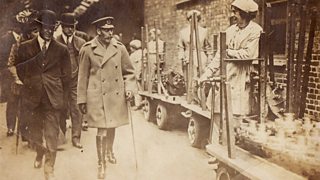
In 1917, there was a genuine fear that revolution could come to Britain.
Korobushka is a Russian folksong - but you may know it as something else. Tetris, anyone?
In October 1917, Russia was operating 13 days behind much of the rest of Europe...
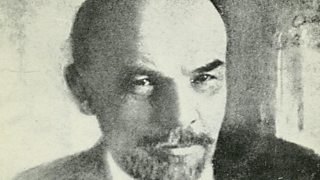
Despite his chilling ruthlessness, Lenin had a sentimental streak.
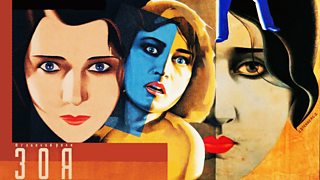
After the 1917 Revolution, the visual arts entered an experimental, avant-garde era...
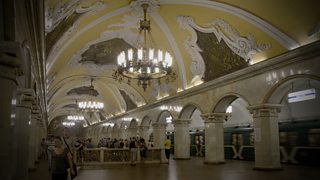
Moscow's 1920s metro is one of the largest, most efficient & most beautiful in the world.