Old Sarum, Wiltshire: Making Aviation History
Better known for its army heritage, Wiltshire is also home to aviation expertise
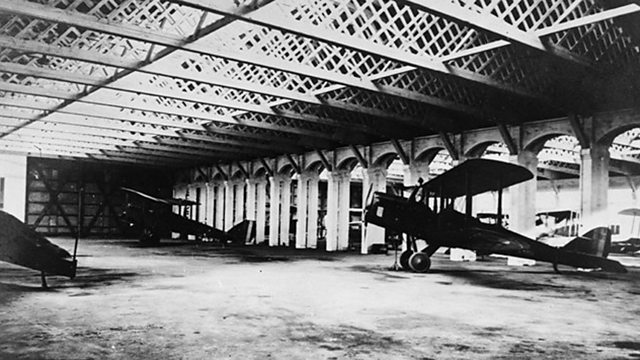
The hangars at Old Sarum have a weary quality to them, yet also with an abiding strength. The massive brick buttress towers, which stand at each corner, seem to resolutely uphold the rooves, gantries and doors of the massive hangars.
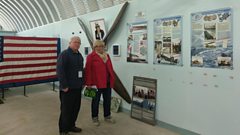
“What surprised us, when we were researching the hangars’ history was that they were built by German prisoners of war,” says Squadron Leader (Rtd) John Sharpe of the Boscombe Down Aviation Collection, which is housed in a WW1 hangar.
“They were helped by Chinese labourers too, which is even more surprising, I suppose.”
The hangers’ design is evidence of shortages during WW1. “When you look up at the ceilings in the hangers, you’ll notice the lattice work type of wooden struts up there. It’s known as the Belfast truss style of roof and we believe there isn’t a piece of wood up there that’s longer than eight feet. That’s because wood was in such short supply in the war, what with the demand from industry and the Western Front where so much of it was used in the trenches for duckboards, and so on.”
Within the Boscombe Down Collection is a replica of a BE2b aeroplane, which was the first aircraft to land at that particular Wiltshire airfield. “But really, the BE2b has come home to Old Sarum”, says John. “Undoubtedly, this type of aircraft would have sat in this hangar in 1917, so it’s nice that there’s an example of the type back here at Old Sarum.”
What the BE2b also highlights is the vulnerability of fighting aircraft back then. Wing Commander (Rtd) Jeff Jefford is the editor the RAF Historical Journal. “There’s no denying, it’s a vulnerable aircraft. It’s a lightweight, wooden frame, with just a few panels of plywood here and there. The rest is canvass. The tactic in WW1 was to fly up close, so guys would be shooting at you from 50 yards away, even less, and if they hit you, it was with .303 type bullets, so you were very vulnerable and you didn’t have a parachute either.”
Old Sarum represents an expansion of flying training during WW1. It was requisitioned for use as a flight training establishment with its hangars being built in 1917, which are now listed.
It was in the summer of that year that its first squadrons arrived, initially training to be pilots but then later specialising in the bombing role. Old Sarum graduates were taught to fly the DeHavilland DH4 and DH9 aircraft, the workhorse of the British bombing fleet towards the end of the war.
But military aviation in Wiltshire actually goes back before the start of WW1, according to Jeff Jefford.
“The origins are really at Lark Hill, which isn’t that far from Old Sarum. Flying there started in 1910. It spread from there to Netheravon and Upavon, both of which were up and running before the war as Royal Flying Corp stations. There’s a bit of a lull during the early part of the war, as the flying side of things is relatively small scale until 1915-16 when it starts to expand. Whilst construction may have been widespread in 1916, but it’s in 1917 that expansion really begins, and that’s when Old Sarum gets going.”
Whilst Wiltshire’s modern day military connections are mainly with the army, Jeff says the county’s WW1 heritage includes a lot of aviation.
“Lakedown, Boscombe Down – the ‘Down’, meaning flat, being the clue to why they were chosen; and other places too. Lopcombe Corner, Lark Hill, and Stonehenge, where pilots who already knew how to fly were given specialist training in bombing.”
Outside, another civilian flight is taking off from Old Sarum. As he watches it go, John Sharpe reflects on the men who flew from this same runway in WW1.
“Your chances of survival were pretty slim. It must have taken enormous amounts of courage and dedication. I don’t know how they did it, in all honesty. I take my hat off to them; I really do.”
Location: Old Sarum Airfield, Wiltshire SP4 6DZ
Image shows an Old Sarum hanger. Image courtesy of Imperial War Museums
Presented by Old Sarum and Wiltshire's WW1 Aviation Heritage Squadron Leader John Sharpe, from the Boscombe Down Aviation Collection, with Wing Commander Jeff Jefford from the RAF Historical Society
Duration:
This clip is from

Featured in...
![]()
BBC Wiltshire—World War One At Home
Places in Wiltshire that tell a story of World War One
![]()
War in the Air—World War One At Home
Zeppelin raids and aviation heroics
More clips from World War One At Home
![]()
The loss of HMY Iolaire
Duration: 18:52
![]()
Scotland, Slamannan and the Argylls
Duration: 07:55
![]()
Scotland Museum of Edinburgh mourning dress
Duration: 06:17
![]()
Scotland Montrose 'GI Brides'
Duration: 06:41