Body in the Suitcase
After the body of a young woman is found in a suitcase next to the M4 motorway and the key suspect denies causing her death, pathology proves vital in helping reveal the truth.
Early on a Monday morning, an unsuspecting lorry driver made a harrowing discovery. After seeing a suitcase on the side of the M4 between Swansea and Cardiff, the driver opened the case and found the body of a woman. Police shut the motorway and launched a major investigation to urgently establish the woman’s identity and find whoever caused her death.
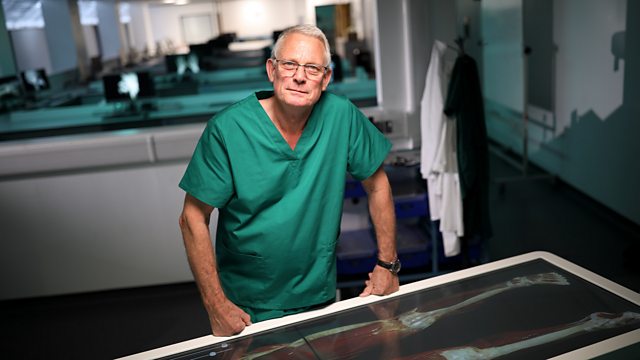
Using a digital autopsy table, leading forensic pathologist Dr Richard Shepherd reveals how evidence from the victim’s body helped investigators find the truth. Former detective chief superintendent Dorian Lloyd and ex chief reporter Penny Roberts recall a murder so shocking that it has stayed with them since.
The body was found wrapped in a pink garment carrier on an April morning in 2009, and the initial forensic sweep of the scene revealed few clues. The postmortem established the woman's build, rough age and that she had been subject to severe blunt force trauma, but identification was impossible.
Before the body was discovered, police in Swansea had been working on a missing person case. Kirsty Wilkinson had last been seen leaving a Swansea nightclub three days earlier and was reported missing by her husband, Paul Grabham. He told police she had left him after they had argued in a nightclub. Kirsty hadn’t contacted her mum Cathy since, which raised fears, as it was something she did daily. When asked to identify the body, Cathy knew from one facial feature that it was Kirsty.
The pathology lab confirmed that Kirsty died from blunt force injury to the head and strangulation. A violent killer was on the loose, and the clock was ticking to find them. Police built a picture of a turbulent relationship between Kirsty and her husband, and forensic psychologist Dr Catrin Williams examines letters between them that reveal elements of love and coercive control. However, Paul was sticking to his story that he had come home drunk and passed out, and that Kirsty was gone when he woke.
By identifying pieces of apple Kirsty had eaten the night she went missing, pathology helped narrow down the time of death. That, along with neighbours’ statements and evidence found by a team led by forensic scientist Clare Morse, built a strong case ahead of the trial.
Kirsty’s death shocked the whole community, but the most profound impact has been on her family, including mum Cathy, who lost a second daughter as a result of the struggle to cope with what happened. Since Kirsty’s death, Cathy has devoted years to helping women experiencing domestic abuse.
Last on