
Dramatis Personae
Donald Macleod explores key figures in Strauss’s life. Today, we escape the real world to meet the larger-than-life fictional characters that populated the composer’s imagination.
All this week, Donald Macleod explores key figures in the life of Richard Strauss. Today, we escape the real world to meet some of the larger-than-life fictional characters that populated the world of the composer’s imagination.
On his 85th birthday – just three months before his death in September 1949 – Strauss was asked to perform something for a short documentary film that was being made about him. Sat at the piano in his villa in Garmisch-Partenkirchen in the Bavarian Alps, built more than 40 years earlier from the proceeds of his opera Salome, the music he played was not something from one of his ‘greatest hits’ – Don Juan, Till Eulenspiegel, Der Rosenkavalier or, indeed, Salome. Instead, he chose the closing scene of a relatively recent opera, Daphne, in which the eponymous character rejects the advances of Apollo and is transformed into a laurel tree. According to his family, Strauss became quite obsessed by this music, playing it over and over again towards the end of his life. Daphne was one of the multifarious cast of characters that inhabit the music dramas – whether works of stage or concert hall – that form the backbone of Strauss’s life’s work. His ability to paint those characters in a single musical gesture and to translate their psychological and emotional states into sound, is what makes his music so compelling. Daphne loves nature, but has no interest in human love. You couldn’t say the same of Don Juan, the star of the ground-breaking tone poem that propelled Strauss, at the tender but precocious age of 24, into the international musical limelight. In a letter to the conductor Hans von Bülow written while he was working on the score, Strauss told him that “making music according to the rules of Eduard Hanslick [the foremost music critic of the day] is no longer possible”, adding that “from now onwards there will be no more beautiful but aimless phase-making, during which the minds of both the composer and the listeners are a complete blank.” The medieval German trickster who stars in the tone poem Till Eulenspiegels lustige Streiche, Till Eulenspiegel’s Merry Pranks, was another rule-breaker who clearly appealed to Strauss – in fact it’s hard to avoid the conclusion that the maverick Till, who gets into a thrilling series of scrapes that culminate in his hanging, is a thinly veiled stand-in for the composer himself.
Le bourgeois gentilhomme, Op 60 (3. The Fencing Master)
Orpheus Chamber Orchestra
Ariadne auf Naxos, Op 60 – Prologue (conclusion)
Albert Dohmen, baritone (Music Master)
Deborah Voigt, soprano (Prima Donna)
Anne Sofie von Otter, mezzo soprano (Composer)
Staatskapelle Dresden
Giuseppe Sinopoli, conductor
Don Juan, Op 20
Chicago Symphony Orchestra
Fritz Reiner, conductor
Daphne, Op 82 (Transformation scene, ‘Ich komme, ich komme’)
Lucia Popp, soprano (Daphne)
Bavarian Radio Symphony Orchestra
Bernard Haitink, conductor
Till Eulenspiegels lustige Streiche, Op 28
Staatskappelle Dresden
Rudolf Kempe, conductor
Produced by Chris Barstow for BBC Audio Wales & West
Last on

More episodes
Next
You are at the last episode
Music Played
![]()
Richard Strauss
Le bourgeois gentilhomme, Op 60 (3. The Fencing Master)
Orchestra: Orpheus Chamber Orchestra.- DG : 435-871 2.
- Deutsche Grammophon.
- 11.
![]()
Richard Strauss
Ariadne auf Naxos, Op 60 - Prologue (conclusion)
Orchestra: Staatskapelle Dresden. Conductor: Giuseppe Sinopoli. Singer: Anne Sofie von Otter. Singer: Deborah Voigt. Singer: Albert Dohmen. Singer: Michael Howard.- DG RECORDS : 471-323-2.
- DG RECORDS.
- 7.
![]()
Richard Strauss
Don Juan, Op 20
Orchestra: Chicago Symphony Orchestra. Conductor: Fritz Reiner.- RCA: 88697-68699 2.
- RCA.
- 15.
![]()
Richard Strauss
Daphne, Op 82 (Transformation scene, 'Ich komme, ich komme')
Singer: Lucia Popp. Orchestra: Bavarian Radio Symphony Orchestra. Conductor: Bernard Haitink.- DEUTSCHE GRAMMOPHON : 445-3222.
- DEUTSCHE GRAMMOPHON.
- 9.
![]()
Richard Strauss
Till Eulenspiegels lustige Streiche, Op 28
Orchestra: Staatskapelle Dresden. Conductor: Rudolf Kempe.- EMI : cde-574756 2.
- EMI.
- 2.

Broadcast
- Fri 5 Jul 202416:00BBC Radio 3
Beethoven Unleashed – the box set

The complete set of Radio 3 Beethoven Unleashed podcasts, with Donald Macleod.
What was really wrong with Beethoven?

Georgia Mann and neurosurgeon Henry Marsh examine the composer's numerous health problems
Composers A to Z

Visit the extensive audio archive of Radio 3 programmes about Composers and their works.
Who knew? Five eye-opening stories from Composer of the Week

The production team reflects on 5 of Donald Macleod’s best stories from the last 20 years
Five reasons why we love Parry's Jerusalem

What is the strange power of Jerusalem which makes strong men weep?
A man out of time – why Parry's music and ideas were at odds with his image...
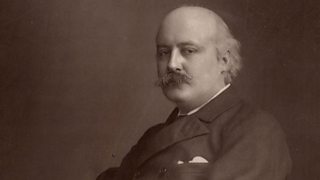
The composer of Jerusalem was very far from the conservative figure his image suggests.
Composer Help Page

Find resources and contacts for composers from within the classical music industry.
