
Riding with the Reich
Donald Macleod explores key figures in Strauss’s life. Today, the Nazi High Command, with whom the composer enjoyed what was, for some, an uncomfortably close relationship.
All this week, Donald Macleod explores key figures in the life of Richard Strauss. Today we have an uneasy encounter with the Nazi High Command, with whom the composer enjoyed what was, for some, an uncomfortably close relationship.
In January 1933, Adolf Hitler was appointed Chancellor of Germany. In November of that year, Strauss, one of the most famous and successful composers in the world, and an elder statesman of German music – by then not far off his 70th birthday – was appointed President of the Reichsmusikkammer, the Reich Chamber of Music, the body charged with “keeping music Aryan”. He seems to have genuinely, if naively, believed that this ‘honour’ would put him in a position to influence German musical life for the better (in particular, he wanted to bring about the extension of the term of copyright in Germany from 30 to 50 years after a composer’s death, something that was in fact achieved the following year). ‘Keeping music Aryan’ involved a number of things – above all the proscription of music by Jewish composers. The work of Jewish librettists was similarly considered beyond the pale, which could only put Strauss on a collision course with the Nazis over his current opera Die Schweigsame Frau, The Silent Woman, for the libretto of which he had chosen a Jewish writer called Stefan Zweig. In view of the developing political situation, Zweig wrote to Strauss offering to withdraw from the project; Strauss wrote back forcefully rejecting Zweig’s offer and adding “Who has told you I’ve become so deeply involved in politics? Because I pose as President of the Reichsmusikkammer?” The letter was intercepted by the Gestapo and brought to the attention of Hitler. The opera reached the stage in June 1935, but was cancelled after just a few performances. Early the following month, Strauss was forced to resign his presidency of the Reichsmusikkammer, due to “ill health”. The composer has been criticised for cosying up to the Nazis, but he seems to have genuinely believed that he could manage his relationship with them – as he once said, “I made music under the Kaiser and under Ebert. I’ll survive under this lot as well.”
Das Bächlein (The Little Brook), Op 88 No 1
Dietrich Fischer-Dieskau, baritone
Gerald Moore, piano
Die schweigsame Frau (The Silent Woman), Op 80 (Act 1, “Ha!” “Was ist?” “Mir fällt etwas ein!”)
Wolfgang Schöne, baritone (Barber)
Trudeliese Schmidt, mezzo-soprano (Carlotta)
Jeanette Scovotti, soprano (Aminta)
Carola Nossek, soprano (Isotta)
Klaus Kirte, baritone (Morbio)
Werner Haseleu, bass (Vanuzzi)
Helmut Berger-Tuna, bass (Farfallo)
Eberhard Büchner, tenor (Henry Morosus)
Chorus of Dresden State Opera
Staatskapelle Dresden
Marek Janowski, conductor
Friedenstag (Peace Day), Op 81 (extract)
Deborah Voight, soprano (Maria)
Alfred Reiter, bass (Sergeant-major)
Tom Martinsen, tenor (Private soldier)
Jochen Kupfer, baritone (Corporal)
Albert Dohmen, baritone (Commandant)
Jochen Schmeckenbecher, baritone (Officer)
Jon Villars, tenor (Mayor)
Sami Luttinen, baritone (Bishop)
Johan Botha, bass (The Holsteiner)
Chor der Staatsoper Dresden
Staatskapelle Dresden
Giuseppe Sinopoli, conductor
Metamorphosen, study for 23 solo strings, TrV 290
Staatskapelle Dresden
Rudolf Kempe, conductor
Produced by Chris Barstow for BBC Audio Wales & West
Last on

Music Played
![]()
Richard Strauss
Das Bachlein Op 88, No 1
Performer: Gerald Moore. Singer: Dietrich Fischer‐Dieskau.- EMI : CMS-7 63995 2B.
- EMI.
- 16.
![]()
Richard Strauss
Die Schweigsame Frau Op 80 (Act 1, "Ha!" "Was ist?" "Mir fällt etwas ein!")
Singer: Wolfgang Schöne. Singer: Trudeliese Schmidt. Singer: Jeanette Scovotti. Singer: Carola Nossek. Singer: Klaus Kirte. Singer: Werner Haseleu. Singer: Helmut Berger-Tuna. Singer: Eberhard Büchner. Choir: Chor der Staatsoper Dresden. Orchestra: Staatskapelle Dresden. Conductor: Marek Janowski.- EMI : 5-66033-2.
- EMI.
- 14.
![]()
Richard Strauss
Friedenstag (Peace Day), Op 81
Singer: Deborah Voigt. Singer: Alfred Reiter. Singer: Tom Martinsen. Singer: Jochen Kupfer. Singer: Albert Dohmen. Singer: Jochen Schmeckenbecher. Singer: Jon Villars. Singer: Sami Luttinen. Singer: Johan Botha. Choir: Chor der Staatsoper Dresden. Orchestra: Staatskapelle Dresden. Conductor: Giuseppe Sinopoli.- DG RECORDS : 463-4942.
- DG RECORDS.
- 13.
![]()
Richard Strauss
Metamorphosen
Orchestra: Staatskapelle Dresden. Conductor: Rudolf Kempe.- EMI : 94634-58312 1.
- EMI.
- 4.

Broadcast
- Thu 4 Jul 202416:00BBC Radio 3
Beethoven Unleashed – the box set

The complete set of Radio 3 Beethoven Unleashed podcasts, with Donald Macleod.
What was really wrong with Beethoven?

Georgia Mann and neurosurgeon Henry Marsh examine the composer's numerous health problems
Composers A to Z

Visit the extensive audio archive of Radio 3 programmes about Composers and their works.
Who knew? Five eye-opening stories from Composer of the Week

The production team reflects on 5 of Donald Macleod’s best stories from the last 20 years
Five reasons why we love Parry's Jerusalem

What is the strange power of Jerusalem which makes strong men weep?
A man out of time – why Parry's music and ideas were at odds with his image...
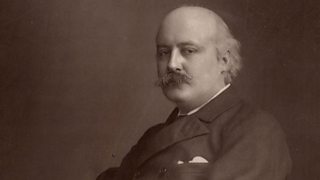
The composer of Jerusalem was very far from the conservative figure his image suggests.
Composer Help Page

Find resources and contacts for composers from within the classical music industry.
