The New "Passenger Assist" App For Rail Users; Royal Art Works On Show
The new "Passenger Assist" app and how it's aimed at helping visually impaired rail users.
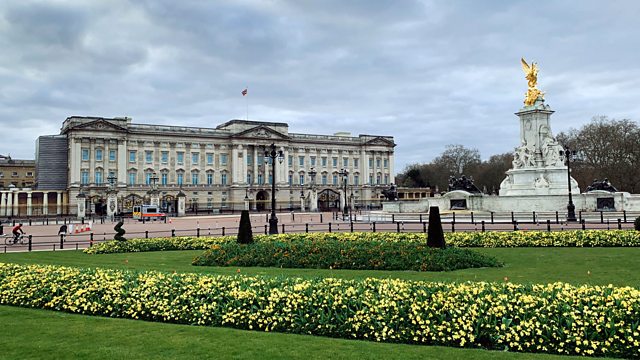
The royal artworks going on show online via new descriptive Zoom sessions.
The UK railway industry's new "Passenger Assist" app is finally being launched in March. It was supposed to be introduced in 2019. We hear from the app's designers and from a visually impaired rail user who's given the app a try.
And the new descriptive Zoom sessions opening up access to royal artworks.
PRESENTER: Peter White
PRODUCER: Mike Young
Last on

More episodes
Previous
In Touch transcript: 12/01/21
Downloaded from www.bbc.co.uk/radio4
THE ATTACHED TRANSCRIPT WAS TYPED FROM A RECORDING AND NOT COPIED FROM AN ORIGINAL SCRIPT. BECAUSE OF THE RISK OF MISHEARING AND THE DIFFICULTY IN SOME CASES OF IDENTIFYING INDIVIDUAL SPEAKERS, THE BBC CANNOT VOUCH FOR ITS COMPLETE ACCURACY.
IN TOUCH – Rail Users and Royal Art Works
TX: 12.01.2021 2040-2100
PRESENTER: PETER WHITE
PRODUCER: MIKE YOUNG
White
Good evening. Tonight, the new and much delayed app designed to make the railways more accessible. But, how much will it really help people with visual impairments? And we hear about the Royal art treasures being opened up for blind and partially sighted art enthusiasts to experience online.
Clip
I was able to look quite closely at the pictures myself but some of the people there would, I’m sure, would have enjoyed the description because it really brought the pictures to life.
White
More on the Zoom sessions showing off Royal art works a little later in the programme.
But first, in recent weeks we’ve been taking an in depth look at the accessibility of rail travel for blind and partially sighted people. And now In Touch has learned that the UK rail industry’s Passenger Assist app, which was due back in the summer of 2019, is finally going to be launched in March.
Well, the app is intended to prevent some of the nightmares people have told us about on this programme in the past, when trying to get assistance booked and using the trains. It comes as a report from the Leonard Cheshire charity claims that more than 50,000 disabled people are prevented from getting a job because the rail system is so inaccessible.
Our disability reporter, Carolyn Atkinson, has been telling me about that.
Atkinson
Leonard Cheshire estimates tens of thousands of disabled people are being actively blocked from finding a job, simply because they can’t get the train to work. People worry about a complicated route or being late because of a late of access or assistance at a station or on the train itself. And the report also claims relatively cheap and minor improvements would make a big difference – things like fitting or improving audio visual systems, accessible signage and tactile paving. Now we recently reported on In Touch that 35% of all platforms in England, Wales and Scotland still don’t have that.
White
And how do they back up this claim about the numbers of people who can’t find jobs because 50,000 sounds a lot of people, some of whom, of course, are blind or visually impaired?
Atkinson
Well, they used a variety of existing statistics and then they concluded that 24,000 people were actively looking for work and another 27,000 said they would like to work but are turned down a job due to problems accessing the railways. Now two people I’ve been talking to can very much relate to this. Let’s hear from Simon Wilks, who is currently unemployed, but first, graduate Emily Davison, who’s currently furloughed from her part-time retail job and despite having a masters degree wants to study for a diploma in journalism and needs assistance to use trains.
Davison
I have a visual impairment known as Septo-optic dysplasia. So, I’m blind in my right eye and I only have central vision in my left eye and because of that I work with a guide dog.
Atkinson
Have you ever had to turn down work or not take a job because of the problems of getting there?
Davison
I have, yes. There have been jobs where I’ve gone to apply or I’ve thought about applying or I’ve applied and I’ve tried to get there and it’s just simply not accessible. But also, I worry about things like if it’s going to be a very complicated journey with a lot of different changes. If I’ve got to rely on assistance every day what if I’m late and I do worry about time keeping. You know, I have had to turn down jobs or I’ve had to choose not to apply for jobs just because I look at the route to get there and I just know that it’s not going to be accessible and its not going to be possible to get there in the length of time that I would have and with the current restraints that are put in place for me.
Wilks
I’m Simon Wilks and I’m totally blind basically. Using the railways overall is okay, it’s certainly a lot more accessible than buses, for a start. When you have to start messing about with rail replacement bus services, you’re getting dropped off outside the stations, not always close enough to the entrance, if there’s no assistance there you get pretty much stuck basically.
Atkinson
What is your experience on unmanned stations, because you use those quite a lot don’t you?
Wilks
They’re a bit of a nuisance as well, bit of a nightmare quite honestly because, again, you can’t get assistance. It’s just those bits of the system that are making it not as accessible as it should be.
Davison
Accessibility constitutes things like being able to do something as simple as buy a ticket. If I’m going to a station that is unmanned and I can’t use the ticket machines because they are not accessible and also if I can’t see the machine to be able to do that then I have no way of being able to print out my ticket. Then also things like trying to get on a train because I’ve noticed that certain stations that are outside of London, that are in more rural areas, might have a very huge gap to access the platform and I do know a friend of mine who actually did have a scenario where her guide dog actually fell through the gap and luckily there was staff to help her and get the guide dog out of that situation.
Atkinson
A lot of people have been hanging a lot of hope on this Passenger Assist app, which is supposedly going to join up all the train operating companies and enable passengers to be able to book their tickets in one go and not have to go through a long saga and also have that backup on the platform at the right time. What are your thoughts about that?
Wilks
Nice if it works, put it that way, and it would be good if it did work. At the moment the app I currently use, which is the Trainline, it doesn’t tell you about unmanned stations but it does tell you about replacement bus services. So, that’s going to be an improvement, yeah.
White
So, it is that sort of detailed information, that’s what we really need and maybe we’re going to get it. We can now reveal that the Passenger Assist app for using trains is coming by March and we’ve done the first interview with the tech company designing the app. What do they say Carolyn?
Atkinson
Well, they deny things have gone, as it were, wrong but they say it has been a very complex job. We know that 85 million rail journeys are made by disabled people every year, the app has got to work for those travelling passengers but also for the staff providing assistance at more than two and a half thousand stations around the UK.
Now Walid Ali from the app company, Transreport, says users will create a personal profile, they’ll load in their access requirements just once and then, hopefully, they’ll get much more reliable assistance and a new level of independence. But the key question: Will it work efficiently for people who are blind or visually impaired?
Ali
Absolutely, whether you’re working off the Apple ecosystem or the Google’s android ecosystem, both platforms are very smart in themselves, from an accessibility perspective, so what we’ve done is we’ve built on top of that. So, those who may be defined as completely blind that’s where the voiceover will showcase what’s actually on the screen, allowing them to easily book their assistance without the need of someone else providing support.
Atkinson
Talk me through the contrast, so that something on a very small screen, because it’s only on your phone, is going to be able to be used by somebody who has visual impairment.
Ali
We’ve done a lot of research and what we’ve done is developed our own high contrast colour theme of black against yellow, which we’ve been advised really provides that contrast for those with visual impairments. But equally as much you can magnify the screen up to whatever meets your requirements.
White
That’s Walid Ali. Well, the rail delivery group which oversees all the train operating companies in the UK told us: “Train companies are fully committed to ensuring that everyone can travel by train safely, in comfort, and with dignity.” But what did they say about the app itself Carolyn?
Atkinson
Well, they point out that the big difference with this app is that rail staff have a live view of assistance bookings. They say previously passenger assistance requests were printed off just once a day, which meant it was difficult to change people’s requests throughout the day, so there were more likely to be mistakes. They told us that in the trials the new staff app is already improving the reliability of passenger assistance and they say that taking the time to train staff to use the app before rolling out the customer version means it will work from day one.
White
Well, of course, the only way to be really sure of that is to talk to someone who is visually impaired – Dermot Ware has actually tried out the app and so has a totally blind friend of his. Dermot, what did you make of it?
Ware
I thought it was really intuitive in the sense that you don’t have anything more than you need but you do have absolutely everything that you need there. I’ve got a little bit of eyesight myself so I found the colour schemes were really quite helpful – the high contrast mode was really good. But it also seems to work well, as well, from a voiceover perspective when things are being read out on the screen.
White
When you say the voiceover works well, I think your blind friend used it, so to what extent was it able to do the things that they actually needed it to do?
Ware
All the things that were needed to be read were read out by the phone essentially, by the iPhone that she uses, so it’s worked out really well from that point of view and she was able to get what she needed from it.
White
How do you think you will use this? I mean in a practical situation what’s it going to be able to do for you?
Ware
I think one of the best things for me is the fact that normally if you book assistance you have to do it either through the internet or you ring them up, so with the app, obviously, you’ll be able to do that at any time. If it’s necessary a member of staff will contact you to clarify anything that’s unclear but you’re able to book the journey from start to finish just from your phone on the app, which is great.
White
Dermot Ware, thanks very much indeed.
And you can hear more about the rail Passenger Assist app on the You and Yours programme tomorrow lunchtime.
Meanwhile, as some of you have already noticed the on/off provision of physical assistance to blind passengers on the London Underground is off again. Transport for London has told us: “While we review our assistance offering in response to current coronavirus restrictions and emerging information about the new variant of the virus, we have taken the difficult decision to temporarily pause turn up and go physical assistance services on the London Underground and London Overground.” They go on to say: “We’re urgently looking into safe ways to reintroduce physical assistance as soon as possible.” And they say: “All our staff are on hand at stations to help customers with any other assistance if required and that includes a fully paid for taxi to complete your trip if needed.”
Well, as one of our listeners dryly commented, thought it was too good to last.
Other overground rail services in the UK say that physical assistance will continue to be available on their trains. We’ll keep checking on what’s going on.
Next, some positive news about access. One of the things that’s been forced really to improve during the pandemic and lockdowns has been our access to all sorts of online services. And now art treasures from Royal palaces have been opened up to a visually impaired audience online, thanks to free descriptive Zoom sessions. Well, I’ve been speaking to Liz Illingworth from Bristol, she’s a member of her local sight loss council and Liz took part in a pilot to see how these sessions might work. And I’ve also been talking to Amy Stocker, who’s the access manager for the Royal Collection Trust.
Stocker
We programme events for blind and partially sighted people around exhibitions and we have a new exhibition: Masterpieces from Buckingham Palace. And when I started thinking about how we could engage our blind and partially sighted visitors, when people were perhaps still likely to be reluctant to travel, how we might still have social distancing measures in place, I thought well really one of the ways that we can try and do this is by using the Zoom technology that we’ve all got so used to.
White
What sort of thing might people actually be shown via these Zoom sessions in the coming months?
Stocker
So, we’re using the Masterpieces exhibition as inspiration which is showing 65 Old Master paintings that normally hang in the Picture Gallery at Buckingham Palace. We have already described Ruben’s Winter Scene and Rembrandt’s portrait of Agatha Bas. And then we thought, just because we can and because, obviously, Buckingham Palace is one of three official residences of Her Majesty the Queen, in February we’re going to look at a Van Dyke portrait of Charles I, which is on display to visitors now at Windsor Castle and then the one in March will be a portrait that hangs in the Palace of Holyrood House and is Bonnie Prince Charlie.
White
And there are commentaries, presumably, along with this information, so it’s not all visual, there’s talk as well.
Stocker
Myself or a colleague will do a description – a very straight simple description – of the portrait, of the painting, then they’ll be an opportunity for anyone to ask any questions, clarify any part of the description that they might not have understood or they’re not quite clear on. And then what we did in the pilots was just to spend, probably, another 15-20 minutes talking about the artist, giving a bit of context to the work and then again an opportunity at the end for anybody to ask any questions.
White
Let me bring in Liz, Liz Illingworth. You helped Amy out, I think, by taking part in a pilot of these sessions, so, what did you make of seeing a Royal work of art up close and is it, actually, in some ways, an advantage for you, using a screen, can you basically get closer than you could in an art gallery or a museum?
Illingworth
That’s certainly true and you can get close without setting all the alarms off and I’m sure Amy, when you’ve taken tours around the gallery, you know what it’s like taking a whole gang of blind people around and you’ve got to deal with guides and guide dogs, it can be fairly chaotic. So, in some ways, you can get down to the business of looking at the picture more quickly and I have partial vision, so, I was able to look quite closely at the pictures myself but some of the people there would – I’m sure would have enjoyed the description because it really brought the pictures to life.
White
I can quite see how that might be an advantage for you, I’m just wondering how someone with no vision or very little will get something out of this.
Illingworth
Because I have some sight, I was quite surprised at how much people with no sight or just a memory of sight do get out of it. Apart from anything else, it’s being able to take part in something that everybody else is taking part in and why shouldn’t they. And the history is always so interesting.
Stocker
We try really hard with the description, there’s a really fine line really of not getting bogged down in too much detail, which makes it difficult for people to follow, but, as you say, including enough detail, thinking about people who don’t have any sight, might not have any colour memory, how you really convey what’s going on in the picture to them. So, we’ve worked a lot with VocalEyes in the past, so we have some good skills to draw from. And that’s part of why I wanted the sessions to be informal, rather than doing them as something like a Zoom webinar, doing them the way that we do means that people can interject if they need to and actually at the end of the Winter description we had one gentleman who, I think from what he said, had no sight and he had a few questions just about clarifying some of the animals in the picture and where they were and I was just able to answer those and give him a bit more clarity so he could get it right in his mind.
White
And how do people sign up for it?
Stocker
All of the details are on our website: www.rct.uk, under our what’s on listing.
White
And they’ll be a link on our website as well. And just finally, Liz, I mean what’s been the highlight of doing this for you so far?
Illingworth
Well, actually being able to be in the room with experts like Amy and her colleagues and being able to ask them questions and I think there’s something about being involved with the Royal Collection, it’s quite exciting, I’ve only been to the Queen’s Gallery once. I mean this has really opened a whole new chapter for some of us.
White
And, Amy, will this go on, hopefully this situation isn’t going to last forever, has this given you an appetite to do more of this?
Stocker
Oh, definitely and that’s what was just such a blessing about the pilot we did with the sight loss councils. I’ve always planned these events very much from a London gallery point of view but actually that’s the beauty of Zoom, yes, you can do it without having to travel but also you can do it if you don’t want to travel or if you’re too far away to travel. And I just think suddenly that realisation that we could connect with anybody in the country and yes, two of the palaces are in England and are south but then there’s also the Palace of Holyrood House in Edinburgh. So, there was just so much scope to make these sessions available to anyone, wherever they were in the country.
White
That’s Amy Stocker and Liz Illingworth. And the link to the Royal Collection Trust is now up on our In Touch website. By the way, since recording that two more sessions have been introduced, they cover the months of April and May.
Our email is intouch@bbc.co.uk, we always want your reactions to anything you’ve heard in the programme and you can find all sorts of useful information, as well as listen again to our programmes via our website – bbc.co.uk/intouch.
From me, Peter White, my producer Mike Young and studio managers Sue Stonestreet and Philip Halliwell. Goodbye.
Broadcast
- Tue 12 Jan 202120:40BBC Radio 4
Download this programme
Listen anytime or anywhere. Subscribe to this programme or download individual episodes.
Podcast
![]()
In Touch
News, views and information for people who are blind or partially sighted