Masculinity Programme
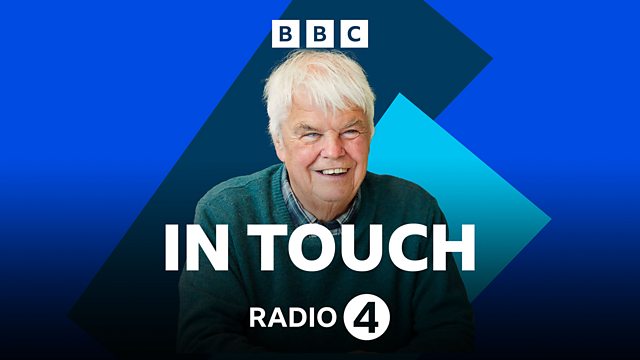
Peter White is joined by television producer Kevin Mulhern, teacher Sean Randall and comedian Chris McCausland to discuss the issues facing blind men around the subject of masculinity. The idea was prompted by an email from listener James Bird.
Producers: Cheryl Gabriel and Peter White.
Last on

More episodes
Transcript
THIS TRANSCRIPT WAS TYPED FROM A RECORDING AND NOT COPIED FROM AN ORIGINAL SCRIPT. BECAUSE OF THE RISK OF MISHEARING AND THE DIFFICULTY IN SOME CASES OF IDENTIFYING INDIVIDUAL SPEAKERS, THE BBC CANNOT VOUCH FOR ITS COMPLETE ACCURACY.
IN TOUCH – Masculinity Programme
TX: 13.02.2018 2040-2100
PRESENTER: PETER WHITE
PRODUCERS: CHERYL GABRIEL & PETER WHITE
White
Good evening. Many of the most intriguing issues that we discuss on In Touch come from you and tonight’s programme is a case in point. It’s arisen from an email we received from listener James Bird.
Bird
I think blindness and disability in general and masculinity are under discussed subjects. Particularly independence, work and finding work and the pressure to be the breadwinner, the pressure to be able to do things like DIY. Also, the difficulties of talking about it, for example, expressing frustration or anger at sight loss is often dismissed as being negative. And that’s something I’ve heard from many men who’ve lost their sight over the years.
White
James Bird. Now we realise that this instantly raises one major problem – many blind women will surely be saying, well in today’s world many of those questions are about being in control and now apply equally to them. Well our reason for continuing to explore this idea is because of perception really, perceptions of masculinity and what constitutes being a “real man”, which go back into the history of human beings and are very deep rooted. They’re about the way men perceive themselves and the way they think other men, and women for that matter, perceive them. So, does blindness and the limits it places upon us damage that sense of self and masculinity?
Well to discuss it we’ve assembled three real men, all with varying degrees of visual impairment. Radio and television reporter and producer Kevin Mulhern; a teacher of visually-impaired students Sean Randall and stand-up comedian Chris McCausland.
And I want to start by asking you all for a quick summing up of your take on this question. Kevin, let me start with you – I mean is it a runner?
Mulhern
It is and it shocked me that this has never really been discussed before because it is something that certainly has modified the things I have done in my life but I hadn’t really realised it till the question was posed. I’d had the thoughts but never pulled them together.
White
Sean – Sean Randall.
Randall
No, I totally agree with that. There are things that I haven’t pursued in life, maybe I would have done if I could have had more vision. DIY’s a brief example of that because I’m just not very good at it and I think maybe I could hammer nails straighter if I could see what I was about to hit. So, I think that’s a really good point.
White
But is it more than just a frustration, Sean, because James’ contention is that this really attacks at the root of your sense of being a man?
Randall
No, I think there are many frustrations in life but I don’t think my blindness has stop me being in any way really the man I want to be, not really.
White
Okay. Chris McCausland?
McCausland
Well I’d like to start that I am very manly – I like football and Die Hard II. But aside from that it is definitely a thing and it is something that I do feel in me and experience especially within the kind of family setting and being a dad but it’s not something I ever – I’ve ever really talked about to be honest. So, I will try to articulate as we go along.
White
Well I want to stay with you because you actually have, to some extent, tried to articulate it. You’ve taken a very precise family situation, which you think brings out a lot of these issues, and you’ve blogged about it. Just describe it to us.
McCausland
I’m always a lot more comfortable when there’s comedy in a situation to discuss it, you see, so and with my young daughter there’s very often comedy around any corner.
White
How old is she?
McCausland
She’s four now and back when I wrote this I think she was two and a half and she was just kind of talking and finding her words and things. We drove up to Liverpool and whenever we drive on a long-distance trip everything’s down to me wife, she has to do the driving for legal reasons, she has to find the food when we stop at services, take me daughter to the toilet, take me to the toilet. And a four-hour journey turned into seven and a half hours, as is often the way with like the M6 and all that. And it was a nightmare, meself and me daughter lost the will to live by the end. The next day I sat down and I said to [indistinct word], I said you were very good on the trip yesterday, it was a very long way, the roads were shut, you were a very good girl, well done Sophie. And she said – And well-done mummy for driving and well-done mummy for finding my dinner. And I said – Yeah and well-done mummy. And then she paused for a moment and she went – And well-done daddy for sitting down. So, nothing like your own four-year-old to remind you of your own inadequacies.
White
Right, I think that sums it up in a way but I said earlier, didn’t I, that nowadays a blind woman with a sighted partner would be in the same position. What’s the difference?
McCausland
The difference is they would be in a similar position that they would feel maybe that they can’t contribute and they can’t help but the expectation to help I think is stronger traditionally if you’re a man, if you’re a bloke – you are the protector, the doer. And I know it might sound in this day and age of gender equality it might sound a little bit antiquated but you can’t change how you feel you should be inside, if you know what I mean.
White
We discovered, just before we started, that Sean was 10 years younger than Chris, so have things changed in that decade Sean?
Randall
I’ve got a slight different situation in that my wife and I are both totally blind. We’ve got a daughter who is seven in May and I had all sorts of instances that mirror Chris completely. I was charging round the high street once, my daughter lost her shoe and it was almost like the village idiot trying to reverse back up and find this shoe on the floor without dropping the child or losing the guide dog. Would have been great on You’ve Been Framed.
White
But is it easier, in a sense…
Randall
Well I think so. I mean if I’m in the playground talking to the other parents, sighted parents, sighted children, one dad may talk about the rugby and how wonderful Wales played at the weekend, other dads may be talking about the emotional wellbeing of his team and the fact that they need to go off for a retreat and I don’t think that’s indicative of the fact that he’s – you know – you expect that sort of behaviour now, it’s sort of natural, people have naturalised themselves to that.
White
And Kevin I want – I mean you, as far as I know, don’t have children but – and I wonder what situations makes you feel inadequate.
Mulhern
Well can I just stay with the children theme because I think this is really interesting because when I was leaving school for the blind, Worcester, the whole genetic counselling thing had just started which basically meant in our day, my day, was you could pass it on – don’t have children. Now that is an enormous attack on masculinity before you begin and I’ve always found that when you speak to people they say to you – do you have children. And if I say no, they say oh that’s probably just as well because obviously I would not be a good parent. And the second thing is, I have on occasion said well yes, just to check it out. And the first thing they say is can they see, and I think it is fine, we’ve got two people here, three people here, have all got children, all of whom can see. Now I think it separates the men from the boys if you actually have what men want is a child in their own image. My god, go out and say you want to have a blind child, I don’t think you’d get very far. I think the masculinity of it is because what we have been taught. I mean in our day we were told we had to be massively independent, massively in control, much more than an ordinary fella – we had to be top dog. We were also representing all blind men, the stupidity of it was unbelievable.
White
And this is interesting from your point of view in a way, Chris, because I was born blind but you lost your sight at 10 was it?
McCausland
I lost it very gradually throughout me whole life but most of the important stuff went late teens, early 20s. So, I’m 40 now, so it’s probably like 20 years since I’d say I was blind. I just see us both as different beasts, to be honest Peter, because if you’re born blind you know no other way, especially with mobility and getting around and you just do things a lot differently. I still lack confidence with a lot of kind of getting about. It doesn’t feel like something I’m ever going to get, just the older I get the less I care, I think that’s my confidence strategy.
White
That’s the reassuring thing for people but you would say that, in a sense, because you grew up expecting to be a man, in a way, does that make it harder that you’ve lost the ability to do these things?
McCausland
I think it does because you’re still always grappling with the loss. If you haven’t lost the sight then you don’t have that hanging over your head, whereas like, for example, when we were going to have me daughter I was dreading being a dad and it wasn’t because I was fearing the responsibility or the lack of freedom, I was dreading being a bad dad who couldn’t – not that was going to walk out for a pint of milk and not come back but they just couldn’t do the dad things, couldn’t be the manly dad and play football in the park… we just said it at the same time.
White
Because I was that…
McCausland
Exactly yeah.
White
Well perhaps people born blind aren’t as different from you as you think we are, because we did say that without any rehearsal.
Mulhern
Do you see yourself then as a sighted man in a blind man’s body, not to be funny? I mean it is interesting because although you see yourself like that I think people who see us do not differentiate, we are the blindos, we are the blind men, that is who we are. And this idea – I mean the only question you normally get apart from make sure you haven’t had children, is the question is have you always been blind or is it better to have seen than not seen anything. Oh, go away. The fact is, is I think we did ourselves short when we were growing up, we were taught this terrific independence. And the other point is when people then actually see us I’m not sure they want to see over confident blind men.
White
There are lots more points to make. I want to move to the very specific situations of being in work because again at a time when the issue of equality at work could hardly be more topical, especially in the BBC, I don’t have to point out that this applies to both sexes. But again, that idea of the breadwinner is very deep rooted for men and not being able to fulfil that role brings its own problems. Let’s just hear again from James Bird, the listener who posed the original question, and he had some thoughts on this business of employment.
Bird
When I was 17 I was doing the work experience placement at an engineering company in the Midlands. One day one of the labourers came up to me and started trying to wind me up, as they would have put themselves, with traditional factory banter, it was nothing serious, I was expecting nothing else. But the next day somebody had obviously told him that I was partially sighted and he came back and he apologised profusely to me and wouldn’t stop, even when I said it’s alright, it doesn’t matter. And that was far worse for me and far more upsetting than the banter was.
White
Kevin Mulhern, you’ve thought about this whole – the business at work.
Mulhern
It goes even further than that. Some years I interviewed a guy called Alan Whicker, who was a very famous documentary maker and I’d interviewed him live on air and I gave him a hell of a pasting. And he just shrank. And then afterwards I was sort of washing my hands and saying god I did a good job there and he’d gone out and said to the producer – How dare you gave a blind man to interview me, how could I fight back.
White
Which of course is a very patronising thing.
Mulhern
Well it’s the same as…
White
Or it would feel patronising for you.
Mulhern
Well it was but in fact I think afterwards when I thought about it, it was true, he didn’t know how to fight back because he thought if I do anything – there were other people in the room, it was Start the Week and it was like if I go back at him what are people going to think about me. And it never occurred to me that I’d done that to him.
White
One of the important things to say is that for three out of four blind people of working age they won’t have jobs and that is the point about the breadwinner. Sean, I think you’ve spent some time out of work yourself I think.
Randall
Yes, very luckily, as it turns out, I was out of work when my daughter was born and the first two and a half, three years of her life I spent looking for work while studying for my degree from home and helping bring her up. And looking back I adore that time.
White
Did you adore it at the time though, did you adore the sense that you hadn’t got a job and you had a child to support?
Randall
No, I was fighting, I was applying for jobs left, right and centre and it was only through sheer dumb luck that I ended up working where I am. I didn’t apply for my current job initially, I didn’t apply because I was working in the disability sector, I just applied for an admin job – any old admin job that was…
White
Anything would do.
Randall
Yeah exactly and that’s what I got and that’s where I started. I mean growing up my dad was a fitter, he fixed big chemical vehicles, very physical hands on job, I struggle to tighten up things with spanners, I’m not very DIY. But seeing that made me think gosh, how much is there I can’t do and it took me a whole to realise, after school, that hang on, I’ve qualifications, I’ve got abilities and I can use those. But I think seeing him go off at five in the morning and come home at night exhausted and sweaty and full of oil, both put me off that sort of line of work but also made me think I would never be any good at it. And how much of that is because of my disability, how much is because of upbringing I really can’t say.
White.
And Chris, you were the one who said at the beginning I’m a real man, so is that a problem do you think?
McCaulsland
Well first of all, my dad was a fireman so in terms of employment I’m never going ever match up to a job like that. But I do stand-up comedy, I have sacrificed all of my social life really for an anti-social job.
White
Let’s talk a bit about the mating game, because again I’m going to stay with you, Chris, because you’ve got some thoughts on this. The problem of playing what you see as the assertive role that is expected of you.
McCausland
I’ve been with me wife now for 12 years, so I haven’t gone through the dating game in a while but it was a pain. I remember at the time when I was dating and me and my wife got together and we’d go out that first few times and I remember thinking to myself – do you know what I think that this would be a lot easier if I was a gay man and there was two blokes here and I could just make him go to the bar for me.
White
But you didn’t feel you could that with your wife?
McCausland
There was never any refusal or awkwardness from her, it’s just – it’s all within yourself and you just have to get more comfortable with yourself and with that, do you know what I mean.
White
Sean, you teach visually-impaired boys in a co-ed situation, do these issues come up about who takes the lead and all that kind of thing?
Randall
Yeah, I’m only 30, so for many of my students who range between 11 and 19 in age, so especially the upper end, they say to me – Oh Mr Randall, when you were doing it, how did it go. I do think they lack role models.
White
Kevin, the lack of role model thing, that’s interesting because I have to admit, having gone to a special school, I actually haven’t found that, I think there are blind people that I can talk to about things.
Mulhern
I think that’s true, although I do have to say I don’t think it is that easy for blind men to talk to blind men about this. And also, I’ve never discussed it with sighted men, to be honest. But I think when I went to Worcester, like you did, when I was in the lower sixth, there was an upper sixth and a fifth form coming up, those guys were some of the brightest people I’d ever met and I wonder where they are now because they certainly didn’t get the jobs. And if you discussed anything like this when we were at school and you whined you’d be called a chippy, you’ve got a chip on your shoulder. It was an expression. I just think what Sean is saying and Chris to a certain extent, I think maybe things have changed and maybe it is actually now easier. But I do remember thinking once that as a freelancer you’re always getting a new boss, like I’ve had five different bosses last year, all of them were women. I choose to work for women and not consciously, it’s just happened. And I think it’s because it’s less competitive because if you work for a fella you are challenging their masculinity, you compete for a job with a sighted man and you get it what does that say about his masculinity?
White
Let me try and pull this together with one final point. I wonder what effect the increasing emphasis on gender equality will actually have on this? Will it make things harder or easier? Sean?
Randall
I’d like to hope it would make things easier. I think those blind men who feel they have to be manly – enjoy their drinking and enjoy being a spectacle, if you like – are going to be sort of under increasing pressure either not to let that slip away. On the other hand, like I said, I know sighted men who are happy to talk about works of art and anything else. So, I think the more the barriers are loosened as they are being progressively through the years that’s going to be better for us in the long term.
White
Because Kevin, you could argue that as men and women swap roles much more comfortably, it takes a bit of the pressure off, as perhaps Sean is implying there. Do you think that’s true?
Mulhern
I think the pressure’s off for a different reason and that is that still the dominant people in our society are white, able-bodied men but white able-bodied men can get out of the argument now, even if a blind man gets your job because they can say it’s the equality rules, that’s why a black person got the job, and the Islamic person – or god forbid a woman got the job, it wasn’t because there was anything wrong with me, it was because there are now rules that put other people in jobs. And that’s made it easier for us, which is an odd side effect but I’ve heard people say it – they give jobs to people for other reasons other than the fact that I white able-bodied man am the best.
White
But Chris, you could argue, that blind men have until now had an excuse, a kind of cultural excuse, to be able to dodge things that they’re less comfortable with – cooking, childcare, taking their daughters to the loo – and that arguably this might make it more difficult because we haven’t got that excuse anymore.
McCausland
Well believe it or not I mean you find yourself just doing the things in life that you are more able to do than the things you’re not. And things like cooking is actually one of the things that I’m more able to do than a lot of the other stuff. So, that’s one of the things I take control of and I’ve always done the cooking, everyone’s still alive, so that’s a good sign. But it’s one of them things as gender equality increases I don’t think that for me biologically that’s going to change how I feel. May be generations down the line it will but for me personally it’s not going to change how I feel trying to fulfil the role as a man. But the older I get the less I care.
White
Sean, final word, you’re teaching the next generation, what do you think?
Randall
One of my big encouragements to students really is to sort of do what you can do, a lot of the blind people that I – especially the younger ones have a lot done for them and I tell them all, quite a lot, that it’s going to be a bit of shock when you leave the environment and go off into the real world. And I don’t think that really hits home until it happens. But as Chris says, play to your strengths, whatever they may. If you’re good at nappies and babygros then good on ya.
White
Well much more to discuss on this and we’d like your views both from visually-impaired men or women and I think this is an occasion when we’d also be happy to hear from sighted listeners with their views. You can call our actionline on 0800 044 044 for 24 hours after tonight’s programme. Kevin Mulhern, Chris McCausland, Sean Randall many thanks. And from me, Peter White and the team, goodbye.
Broadcast
- Tue 13 Feb 201820:40BBC Radio 4
Download this programme
Listen anytime or anywhere. Subscribe to this programme or download individual episodes.
Podcast
![]()
In Touch
News, views and information for people who are blind or partially sighted