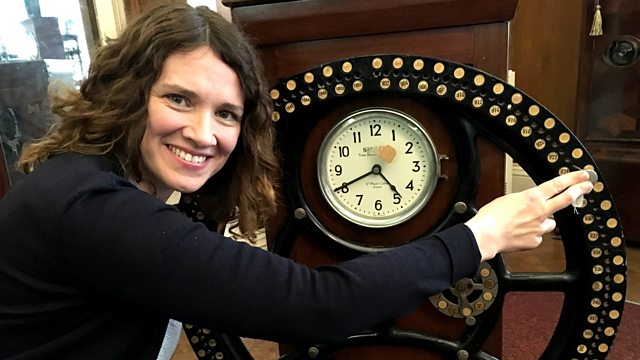
Clocking On
4 Extra Debut. Professor Emma Griffin looks at the Industrial Revolution to discover how British workers became tied to the clock. From 2017.
Professor Emma Griffin explores how British workers became tied to the clock.
Before industrialisation, workers were accustomed to a loosely regulated working week, influenced more by daylight hours and the agricultural cycle than by the time on the face of a clock.
Indeed, most people didn't own a watch and managed all aspects of their lives without reference to official time.
During the Industrial Revolution, British workers became tied to the clock in a way they never had before.
Emma visits Quarry Bank Mill in Cheshire to discover how 19th century factory owners extracted a long and regular working week from a workforce accustomed to a much more loosely regimented working pattern.
She also visits the Royal Observatory at Greenwich to understand how their precision clocks, which for centuries had been specialist scientific equipment of use only to astronomers, were pressed into service as the regulator of the nation's workforce.
Producer: Melissa FitzGerald
A Blakeway production for BBC Radio 4, first broadcast in May 2017.
On radio

![]()
Got a minute? Eight interesting facts about time and work
Workers have become increasingly unable to escape the clock.
Broadcasts
 Tue 30 May 201716:00BBC Radio 4
- Wed 2 Aug 201711:00BBC Radio 4
- Tue 3 Feb 202610:30BBC Radio 4 Extra
- Tue 3 Feb 202616:30BBC Radio 4 Extra
- Wed 4 Feb 202600:30BBC Radio 4 Extra
Subscribe to Seriously...

Get new documentary podcasts every Tuesday and Friday.
