Dorothea Bate
Tori Herridge explores the life of pioneering Natural History Museum palaeontologist, Dorothea Bate. From 2015.
When Dorothea Bate turned up at the Natural History Museum in late 1890s London and demanded a job she would have been unaware of the tremendous legacy her work would leave. Her boldness led Dorothea to the Mediterranean looking for the bones of extinct mammals, finding many species of tiny elephants and hippos.
She would later become the first female scientist to be employed by the museum. We delve into the palaeontology department at the Natural History Museum to reveal the bones Dorothea unearthed – some of which turned out to not be elephants after all.
Palaeontologist Tori explains why Dorothea Bate is one of her Natural History Heroes.
First heard on BBC Radio 4 in September 2015.
Last on

More episodes
Previous
Dr Tori Herridge

Together with Professor Adrian Lister, she identified the smallest mammoth ever known to have lived, and her internationally recognised work helps us understand evolutionary responses to extreme climate change.
She is currently writing her first book for Bloomsbury Sigma called ‘The World’s Smallest Mammoth’ and is co-founder of TrowelBlazers, a website dedicated to telling the stories of pioneering women in archaeology, palaeontology & geology.
Dorothea Bate
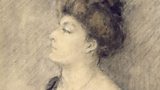
She excavated through high fevers and her fearless collecting trips led to the discovery of many extinct Mediterranean island species, including tiny 1m-tall dwarf elephants and dwarf mammoths, and the bizarre mouse-goat Myotragus.
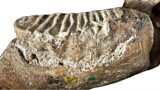
Dwarf elephant tooth
Broadcasts
 Wed 30 Sep 201513:45BBC Radio 4
- Thu 1 Sep 201609:30BBC Radio 4
- Wed 6 Nov 201914:15BBC Radio 4 Extra
- Thu 7 Nov 201902:15BBC Radio 4 Extra
5 scientists who changed the way we see nature
The Natural History Heroes who inspired today's experts.
Natural Histories
Brett Westwood explores nature's profound impact on human culture and society.
Download Natural History Heroes

Subscribe to the free Natural Histories podcast.
