Main content
Snapping Turtles - Taking the Long View
Monty Don asks if we are being short-sighted when it comes to conserving long-lived species.
What do elephants, snapping turtles and guillemots have in common? They are all examples of 'long-lived' animals with some species living longer than the careers of the scientists who study them. In this episode of Shared Planet Monty Don talks to Tim Birkhead and Phyllis Lee, both scientists who have studied the behaviour of long-lived species and both argue that you discover insights into long-lived animals can will help their conservation and our ability to share the planet with them.
Last on

Mon 1 Dec 201421:00
BBC Radio 4
More episodes
Professor Tim Birkhead
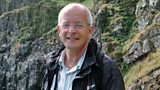
Professor Tim Birkhead, of the University of Sheffield’s Department of Animal and Plant Sciences, has been studying guillemots on Skomer Island since 1972. Before beginning his study as part of his PhD, no one had tried to conduct a census of guillemots.
He came up with an innovative way to count the birds and determine how many chicks were produced each year. By marking birds individually with colour rings he was able to measure their breeding success, see how old they are when they first start to breed and see how long the birds live.
When he began his studies, the guillemot population breeding on Skomer was just 2,000 individuals, yet pictures of the island 30 years earlier show that there had been around 100,000 guillemots then. In 2011, the population showed signs of recovery when around 20,000 individuals were recorded.
He came up with an innovative way to count the birds and determine how many chicks were produced each year. By marking birds individually with colour rings he was able to measure their breeding success, see how old they are when they first start to breed and see how long the birds live.
When he began his studies, the guillemot population breeding on Skomer was just 2,000 individuals, yet pictures of the island 30 years earlier show that there had been around 100,000 guillemots then. In 2011, the population showed signs of recovery when around 20,000 individuals were recorded.
Matt Keevil
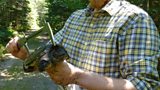
Matt Keevil works at a long term research project in Algonquin Provincial Park that has been studying snapping turtles in Lake Sasajewun since 1972.
He patrols nesting areas and measures the size and number of eggs that each mother turtle lays. This information allows researchers to keep track of the size of the population, the growth and survival of each individual turtle, and how many eggs the females lay.
He patrols nesting areas and measures the size and number of eggs that each mother turtle lays. This information allows researchers to keep track of the size of the population, the growth and survival of each individual turtle, and how many eggs the females lay.
Professor Phyllis C. Lee
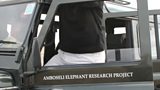
Educated at Stanford University in California, she moved to the UK after a spell working with Jane Goodall in Tanzania in the mid 1970s. She completed her PhD in animal behaviour at Cambridge in 1981 with the eminent ethologists, Richard Wrangham and Robert Hinde, and returned to Kenya in 1982 to study the Amboseli elephants with Cynthia Moss - work which continues to this day.
She was one of the main editors on the recently published University of Chicago book – The Amboseli elephants, which details over 30 years of research findings on this unique population.
Previously a Reader in Behavioural Biology and Conservation at the University of Cambridge and a Fellow of Downing College, she is now Professor and Head of Psychology in the School of Natural Sciences at the University of Stirling and a core member of the Scottish Primate Research Group.
As the past President of the Primate Society of Great Britain, she has been involved with a number of government science initiatives, and she has taken part in TV documentaries and radio interviews.
She was one of the main editors on the recently published University of Chicago book – The Amboseli elephants, which details over 30 years of research findings on this unique population.
Previously a Reader in Behavioural Biology and Conservation at the University of Cambridge and a Fellow of Downing College, she is now Professor and Head of Psychology in the School of Natural Sciences at the University of Stirling and a core member of the Scottish Primate Research Group.
As the past President of the Primate Society of Great Britain, she has been involved with a number of government science initiatives, and she has taken part in TV documentaries and radio interviews.
Broadcasts
- Tue 25 Nov 201411:00BBC Radio 4
- Mon 1 Dec 201421:00BBC Radio 4
Learn about habitats with The Open University
Explore the twists and connections of natural life in four different UK habitats.
