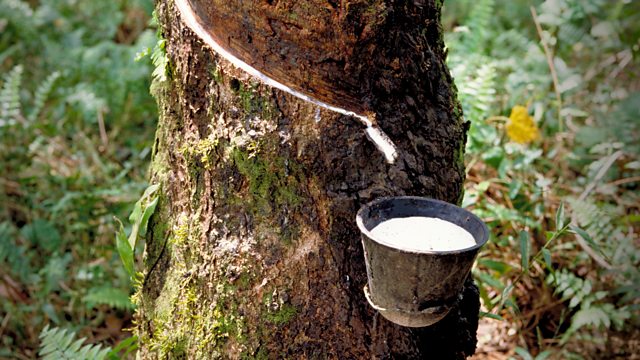
Tapping into Rubber
How the early dissemination of rubber seeds across the globe was the key to rubber's success. With Kathy Willis. From 2014.
Natural rubber derived from latex had long been a curiosity. When Nelson Goodyear perfected his method of vulcanisation of rubber and showcased its applications at the Great Exhibition of 1851 the possibilities now seemed endless.
But by 1860 demand was outstripping supply from Brazil. Kathy Willis examines how Kew was charged with getting seeds of this economically vital plant out of South America to germinate at Kew Gardens, and then to send seedlings off to cultivate in far flung reaches of the Empire.
The historian Emma Reisz explains how Kew acted as the international clearing house for smuggled seeds out of Brazil. Historian Jim Endersby sheds light on why Kew put its faith in one man: Henry Wickham, a travelling plant hunter with dubious botanical credentials. We hear from Mark Nesbitt, curator of Kew's economic botany collection, on how, despite rubber being recognised as an economically essential plant for the British Empire's economy, the whole business of transporting and nurturing the seedlings turned out to be a comically hit and miss affair.
Producer Adrian Washbourne.
Last on

More episodes
Previous
Next
![]()
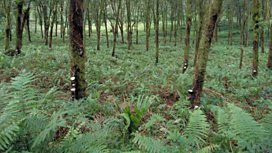
The View from Kew: Rubber Tree
In pictures: The story of rubber.
Clips
![]()
Plants: From Roots to Riches - Tapping into Rubber
Duration: 13:32
![]()
The Plant That Changed The World
Duration: 00:24
Broadcasts
 Tue 29 Jul 201413:45BBC Radio 4 FM
- Tue 1 Mar 201614:15BBC Radio 4 Extra
- Wed 2 Mar 201602:15BBC Radio 4 Extra
- Tue 4 Jul 201714:15BBC Radio 4 Extra
- Wed 5 Jul 201702:15BBC Radio 4 Extra
- Tue 9 Jul 201914:15BBC Radio 4 Extra
- Wed 10 Jul 201902:15BBC Radio 4 Extra
Royal Botanic Gardens, Kew
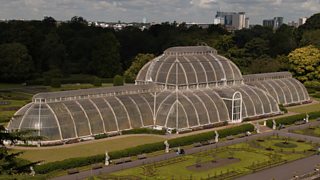
Delve deeper into plant science and find out more about plants featured in the series
The Power of Plants
Discover a selection of programmes relating to plants.
