
Wild Weather in 2012: South West
David Braine looks back on a year of extreme weather in the South West.
Last on

Clip
![]()
The science behind wild weather in 2012
Duration: 03:28
Weather in the South West 2012
- From 3-5 January, South West England was affected by strong winds associated with deep areas of low pressure tracking to the north of Scotland. Winds gusted at 50 to 60 Knots, with 74 Knots (85mph) at Isle of Portland on the 3rd.
- In a brief cold snap in early February the temperature fell to -10.1C at Yeovilton, Somerset on 4 February. However, there were no spells of significant snow across South West England.
- South West England was affected by a series of deep low pressure systems bringing strong winds in the second half of April. On both 18 April and 29 April, winds gusted at around 50 Knots in exposed coastal areas, bringing down trees and power lines and causing transport disruption.
- On 7-8 June an unseasonably deep area of low pressure brought strong winds and heavy rain to South West England. Winds gusted at 50 Knots in exposed coastal locations with 53 Knots (61 mph) at Plymouth, for example. There were reports of fallen trees and power cuts.
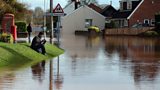
- From 6-7 July parts of south Devon recorded 60 to 70mm of rain, and parts of east Devon and Dorset over 100mm in the space of a few hours as a low pressure system tracked across South West England. There was flash-flooding in a number of villages in these areas and in Weymouth flooding to part of the Olympic venue. Mudslides occurred to cliffs in Lyme Regis.
- Around 50 to 70mm of rain fell across a swathe of south-west England and south Wales overnight 23-24 September with flooding reported across parts of Somerset. The rain was associated with an area of low pressure from ex-hurricane Nadine.
- The warmest days of the year were 25 May (28.5C) at Treknow, Cornwall and 29.4C at Poole, Dorset, and 25 July (29.3 C at Poole, Dorset) and 26 July (29.2C at Seavington, Somerset). Nowhere reached 30 C - the last time 30 C was exceeded widely in South West England was in July 2006.
- On 18 October, strong north-west winds combined with unusually high tides to cause some coastal flooding in Devon and Cornwall; a number of properties were flooded in Lynmouth, Mevagissey, Looe and Kingsbridge.
- A prolonged dry spell from April 2010 to March 2012 saw 12 of the 24 months through this period with around 75% of average rainfall, or less, causing problems for agriculture, the environment and water resources. Although the area of main concern for drought was further east, groundwater levels in the sandstone aquifers of south Devon and limestone and chalk aquifers of Dorset were at exceptionally low levels by the end of March 2012.
- By contrast, both April and June saw more than twice the average rainfall, and July and August over 150%. For the South West overall, it was the wettest summer since 1912. The period April to August 2012 was the wettest such April to August in the last 100 years in South West England by a margin of 100mm (more than an extra months’ rainfall).
Source: Met Office, National Climate Information Centre, October 2012 based on figures between January-October 2012.
Note: The South West region covered by the statistics includes Dorset and the edge of the Southern region.
The science behind Britain's wild weather
BBC weatherman Nick Miller looks at the science behind what happened to Britain's weather in 2012.
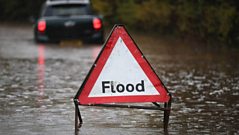
The worst drought since 1976 was followed by the wettest April to June on record. Many areas across England experienced flooding, including Yealmpton near Plymouth.
Nick Miller meets the Met Office's Adam Scaife and meteorologist Len Shaffrey to find out why the jet stream's unusual behaviour had such an impact on the UK's weather in 2012.
Watch the video feature on the BBC News website.
A year of wild weather
BBC’s weatherman David Braine explores the wild weather we have been experiencing this year.
Records tumbled in 2012 – the longest drought since 1976, the driest March since 1953 and then the heavens opened and we had the wettest April ever recorded. And the weather just got weirder, with floods devastating parts of Devon in July.
We meet the man who’s mobile phone footage of the flash flood in the North Devon village of Clovelly has been seen around the world, and learn that managing watercourses is vital to flood defence.
And we take a look at the flood defences protecting the South Devon village of Harbertonford, breached twice this year, leaving householders mopping up for the first time in 10 years.
We meet householder Dianna Webbe, still waiting for work to be finished to her house nearly six months after the flood waters ebbed. She says she has little faith in the village’s flood defences after her traumatic experience.
“It’s been a really wild year for weather”, according to the David, the BBC’s meteorologist in the South West since 2003.
“We’ve had a drought, and then floods in April, June, July, September, October and, most memorably November.”
David learns about the effect the drought and then floods have had on our wetland birds, visiting the RSPB’s Ham Wall reserve with naturalist Stephen Moss.
“We all understand the devastating effect the flooding has had on our human population”, says Stephen.
“But what a lot of people don’t stop to consider is the devastation wreaked on our wetland wildlife.
“If this topsy-turvy weather continues, I really do fear for our wildlife.”
The film also examines the causes of 2012’s wild weather with Meteorologist Nick Miller meeting scientists from the Met Office’s Hadley Centre, and we learn about the global driver of our weather the jetstream – and the theories about why our weather is changing.
We also meet the man responsible for keeping Devon flood free – George Arnison of the Environment Agency – and learn that we can’t build our way out of flood risk.
“We’re going to have to learn to live with the increased risk of flooding.” He added: ”If you live in a flood plain then you are at risk.”
With dramatic footage, from parched rivers in March to the deluge of November’s floods, 2012: A Wild Year for Weather delivers the most comprehensive review and analysis of the weather year.
Credit
| Role | Contributor |
|---|---|
| Executive Producer | Simon Willis |
Broadcast
- Sun 30 Dec 201217:30BBC One South West & Channel Islands only
