9. New Science, Old Magic
Neil MacGregor reveals how a black obsidian disc from Mexico reflects the Elizabethan fascination with astrology. From 2012.
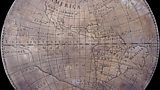
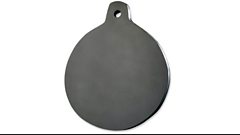
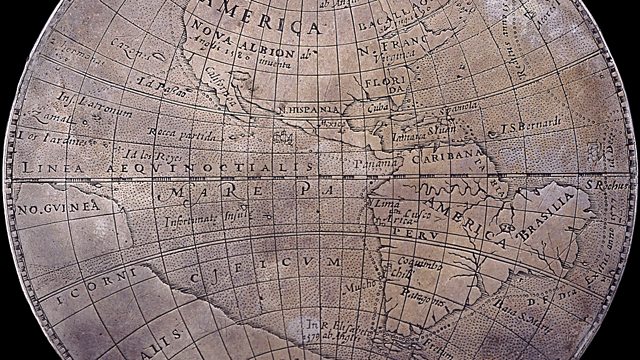
Dr Dee's Mirror was actually a highly polished disk of black obsidian from Mexico but it reflects the Elizabethan fascination with the new sciences of cosmology and astrology.
Object-based history series presented by Neil MacGregor, former Director of the British Museum.
Taking artefacts from William Shakespeare's time, he explores how Elizabethan and Jacobean playgoers made sense of the unstable and rapidly changing world in which they lived.
With old certainties shifting around them, in a time of political and religious unrest and economic expansion, Neil asks what the plays would have meant to the public when they were first performed.
He uses carefully selected objects to explore the great issues of the day that preoccupied the public and helped shape the works, and he considers what they can reveal about the concerns and beliefs of Shakespearean England.
Producer: Paul Kobrak
First broadcast on BBC Radio 4 in April 2012.
Last on

More episodes
Previous
![]()
Dr Dee's Magical Mirror
Watch a short video of the mirror.

Dr Dee's Magical Mirror
Size: H:224mm, W:186mm
Made in: Mexico
Made by: Unknown
Material: Obsidian
An Aztec mirror from Mexico isn’t necessarily the first thing that springs to mind when thinking about Shakespeare’s world. But this obsidian disc reveals something about 16th-century England and the level to which beliefs in ghosts and spirits still persisted.
This mirror is said to have belonged to one of the world’s most famous practitioners of the occult arts, Dr John Dee, whose advice was sought by the rich and powerful including Elizabeth I herself.
He was a kind of celebrity in his own time, a highly educated intellectual who explored the worlds not only of science and mathematics, but the workings of the occult and spirits too. Magic also had a starring role in many of Shakespeare’s plays – although making those spirits appear in front of the audience presented another set of challenges.
This object is from the British Museum
Quotations
'Spirits, which by mine art/I have from their confines called to enact/My present fancies.'
The Tempest, Act 4 Scene 1
Background
- Obsidian mirrors were used by Aztec royalty as symbols of their power, derived from the god Tezcatlipoca, 'Lord of the Smoking Mirror'
- John Dee was England's first magus and a leading mathematician of the age, a reviver of ancient knowledge and enthusiastic supporter of the Copernican world
- Although known as Dr Dee, his only claim to this title was the award of a doctorate of medicine from the University of Prague in 1584/5
- He received no favour from James I, whose opinions on witchcraft caused Dee some concern and he protested passionately against his reputation as a conjuror
- Shakespeare's magus figure, Prospero, is perhaps the most positive portrayal of a magus fugure in Elizabethan and Jacobean drama
More from Radio 4: Alchemists
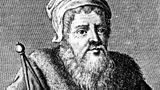
Historian Justin Champion examines the life of Elizabethan alchemist John Dee. He follows Dee's scientific work, his fascination with astrology and his explorations with angels.
More from Radio 4: The Aztecs

Melvyn Bragg discusses the creation, power and legacy of the Aztec Empire, arguably the most ruthless, pre-Hispanic empire in North America which, at its zenith, ruled over 6 million people.
More from Radio 4: Renaissance Astrology
Melvyn Bragg and guests discuss Renaissance Astrology, an essential part of Renaissance thinking on magic, music, medicine, politics, cosmology, destiny and much more.
More from Radio 4: Angels
Melvyn Bragg discusses the heavenly host of Angels, so popular with so many believers and so problematic for philosophers and theologians.
Broadcasts
 Thu 26 Apr 201213:45BBC Radio 4
- Thu 26 Apr 201219:45BBC Radio 4
- Thu 18 Oct 201214:15BBC Radio 4 Extra
- Thu 19 Mar 201514:15BBC Radio 4 Extra
- Fri 20 Mar 201500:15BBC Radio 4 Extra
- Wed 22 Jun 201613:45BBC Radio 4
- Thu 26 Apr 201814:15BBC Radio 4 Extra
- Fri 27 Apr 201802:15BBC Radio 4 Extra
- Thu 26 Oct 202307:15BBC Radio 4 Extra
- Thu 26 Oct 202312:15BBC Radio 4 Extra
- Thu 26 Oct 202317:15BBC Radio 4 Extra
- Fri 27 Oct 202302:15BBC Radio 4 Extra
Podcast
![]()
Shakespeare's Restless World
Neil MacGregor uncovers the stories 20 objects tell us about Shakespeare's world.