Yellowstone
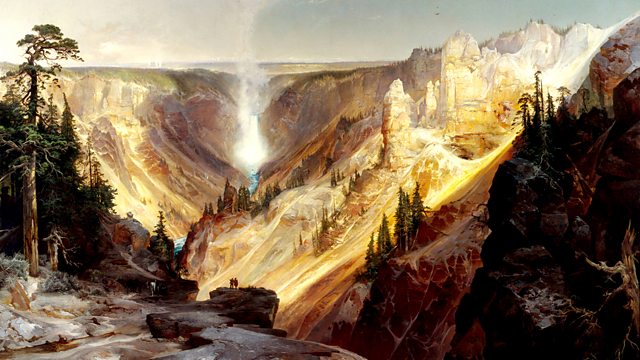
How the influence of European Romanticism recast Yellowstone as a place to witness the raw power of God in nature, rather than a satanic place to be tamed and cultivated.
As the world's first national park, Yellowstone has long served as a model for the protection of wilderness around the world. For Americans it has become a source of great national pride, not least because it encapsulates all our popular notions of what a wilderness should be - vast, uninhabited, with spectacular scenery and teeming with wildlife. But Yellowstone has not always been so. At the time of its creation in 1872, it was renowned only for its extraordinary geysers, and far from being an uninhabited wilderness it was home to several American Indian tribes.
This film reveals how a remote Indian homeland became the world's first great wilderness. It was the ambitions of railroad barons, not conservationists, that paved the way for a brand new vision of the wild, a vision that took native peoples out of the picture. Iconic landscape paintings show how European Romanticism crossed the Atlantic and recast the American wilderness, not as a satanic place to be tamed and cultivated, but as a place to experience the raw power of God in nature. Forged in Yellowstone, this potent new version of wilderness as untouched and deserving of protection has since been exported to all corners of the globe.
Last on

Clip
![]()
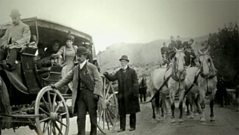
Yellowstone: an early tourist destination
Duration: 02:06
Credits
| Role | Contributor |
|---|---|
| Narrator | Deborah Maclaren |
| Executive Producer | Neil Nightingale |
| Series Producer | Andrew Murray |
| Producer | Susie Painter |
Broadcasts
- Thu 16 Jun 201121:00
- Fri 17 Jun 201100:15
- Fri 17 Jun 201103:25
- Sun 26 Jun 201102:05
- Sat 14 Jan 201219:00
- Sun 15 Jan 201202:30
- Tue 1 May 201221:00
- Wed 2 May 201202:20
- Tue 30 Oct 201220:00
- Sun 3 Nov 201319:00
- Mon 4 Nov 201302:20
- Sat 7 Feb 201519:00
- Tue 20 Oct 201520:00
- Thu 22 Oct 201502:00
