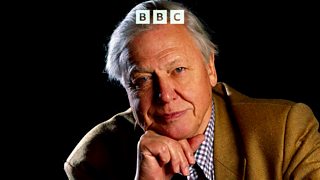
David Attenborough's Life StoriesSeries 2Episodes Episode guide
- All
- Available now (0)
- Next on(4)
Back up to: David Attenborough's Life Stories
![]()
Elsa
David Attenborough gives his perspective on the story of the famous lioness, Elsa.
![]()
Fireflies
Fireflies generate light by themselves and they do this with style.
![]()
Waterton
David Attenborough explores the life of Squire Waterton, a 19th-century taxidermist.
![]()
Nectar
David Attenborough tells of nature's first bribe, that evolved a hundred million years ago
![]()
Chameleon
Sir David Attenborough introduces Rommel the Chameleon.
![]()
Quetzalcoatlus
Sir David marvels over the Quetzalcoatlus: the largest flying animal ever to exist.
![]()
Cuckoo
David Attenborough tells us how cuckoos get their eggs into the nests of other species.
![]()
Chimps
David Attenborough recalls a memorable filming trip, following chimpanzees hunting monkeys
![]()
Butterflies
David Attenborough celebrates butterflies' migration with a twist of evolutionary thinking
![]()
Monsters
David Attenborough remembers puzzling over the Loch Ness Monster with Sir Peter Scott.
![]()
Rats
David Attenborough hates rats, but in a personal way explains why they should be respected
![]()
Identities
David reflects on seeing 'whitey' - a blackbird with a white feather - in his garden.
![]()
Hummers
Hummingbirds are brilliantly coloured with aeronautical skills that defy the imagination.
![]()
Wallace
David Attenborough on the achievements of scientist Alfred Russel Wallace.
![]()
Earthworms
David Attenborough recalls visiting Australia to find the giant earthworm - using his ears
![]()
Cicada
David Attenborough reveals the life of insects that emerge from the earth every 17 years.
![]()
Foreign Fare
David Attenborough explores the natural history of potatoes, peppers and artichokes.
![]()
Charnia
David Attenborough's fascination with the fossilised evidence of the beginning of life.
![]()
Kiwi
David Attenborough muses over the peculiar Kiwi, a bird more mammal-like in its habits.
![]()
Canopy
David Attenborough talks about filming in one of nature's most inaccessible places.