Ten must-read novels based on events that shook the world
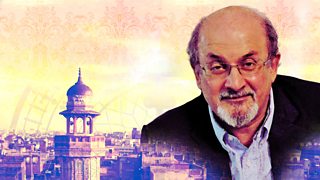
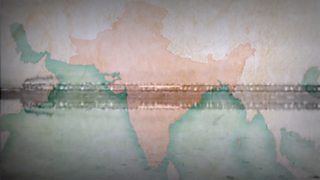
Radio 4’s recent adaptation of Salman Rushdie’s Booker Prize-winning second novel Midnight’s Children is based on the turbulent events following the partition of India in 1947. Here’s an eclectic mix of other novels based on world-changing events guaranteed to educate and entertain.
War and Peace
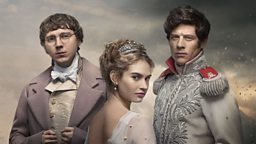
It’s a badge of honour to have read Tolstoy’s War and Peace anyway, but boosting your knowledge of the Napoleonic Wars is a very welcome side effect. The novel is set largely between Moscow and St Petersburg and deals with the entangling lives of five aristocratic Russian families struggling in the French invasion of Russia. There are touching love stories within the book, as well as humour alongside some of the most vivid and accurate portrayals of battles ever written. Tolstoy's fellow novelist and compatriot Fyodor Dostoyevsky described War and Peace as "the last word of the landlord's literature and the brilliant one at that".
Kindred
First published in 1979 and still very popular today, Kindred, written by Octavia E Butler, is the account of Dana, a young African American writer, who discovers she can go back in time from her ‘70s home in California to a plantation in Maryland before the Civil War. Essentially It’s a novel about power - how antebellum slavery affects everything in Dana’s Californian life from her race to perceptions about her gender and relationships. Here’s a passage from the memorable book burning scene: "The fire flared up and swallowed the dry paper, and I found my thoughts shifting to Nazi book burnings. Repressive societies always seemed to understand the danger of ‘wrong’ ideas.”
The Last Days of Night
Thomas Edison, Nikola Tesla, George Westinghouse and JP Morgan all feature in this novel by Graham Moore about the race for the right to ‘own’ electric light in America in the late 1800s, and thereby change the working and home lives of mil-lions of Americans and make a fortune. As the book says: “Poor people all think they deserve to be rich. Rich people live every day with the uneasy knowledge that we do not.” Money, industrial espionage, fame and rival patents all have a part to play in this fascinating story. Think of that next time you flip the switch.
North and South
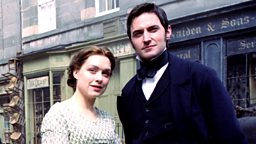
Elizabeth Gaskell’s North and South deals with the Industrial Revolution through the eyes of Margaret Hale, transposed from the prosperous South to ‘Milton’ in the newly industrialised North of England. Milton was based on Manchester, where Gaskell had lived, and her character Margaret sees Milton’s workers clashing with mill owners, battling new technology and fighting the contempt of the newly rich for the poor. North and South tells the story of the industrial revolution and labour relations in an absorbing story. The American author Sara Paretsky gave Gaskell's novels high praise indeed when she said that "Ruth, North and South and Mary Barton are at least as good as any of Dickens's novels."
HHhH
Understandably, the number of books based on the momentous events of the Second World War is innumerable. Joseph Heller’s Catch-22, Slaughterhouse-Five by Kurt Vonnegut and The Book Thief by Markus Zusak all deserve honorable mentions. Laurent Binet’s novel, HHhH, focuses on Operation Anthropoid, the assassination of Nazi leader Reinhard Heydrich, but woven into it is the author’s account of his own research and the process of fictionalising a real-life event. The American author Bret Easton Ellis said that "Binet's style fuses it all together: a neutral, journalistic honesty sustained with a fiction writer's zeal and storytelling instincts. It's one of the best historical novels I've ever come across."
The Diary of Anne Frank
Although this one isn’t technically a novel, it is without doubt a must-read book. It is the real-life diary of Anne Frank, a 13-year-old Jewish girl who hid in a secret annexe of an office building for two years with her own family and another in Nazi occupied Holland. Her diary was discovered and saved only after the family had been betrayed to the Gestapo. Despite the hellish circumstances of her life, Anne’s spirit is unstoppable and elements of the diary are exactly what you’d expect to read from a 13 year old girl - romantic feelings towards an older boy, frustration at not having a ‘best friend’ and the perennial complaint of the unheard teenager: “We aren’t allowed to have any opinions. People can tell you to keep your mouth shut, but it doesn’t stop you having your own opinion. Even if people are still very young, they shouldn’t be prevented from saying what they think.”
Midnight's Children
Midnight's children is the 1981 Booker Prize-winning second novel from British Indian novelist Salman Rushdie.
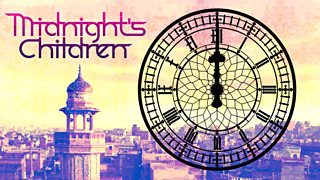
It tells the story of Saleem Sinai who was born on the stroke of midnight on August 15th 1947 - at the precise moment of India's arrival at independence. From that moment on he was mysteriously handcuffed to history.
A Tale of Two Cities
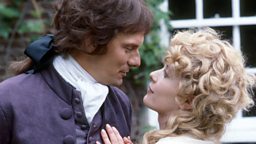
This 1859 novel by Charles Dickens is set in London and Paris, the “Two Cities” of the title, and links the events in both cities around the French Revolution and the Reign of Terror. The focus is two men; Sydney Carton and Charles Damay, who look alike but have vastly different natures. The plot is as intricate as you would expect and the themes of freedom, poverty and revolution are uplifting. It also gave us one of the most famous opening paragraphs in literature - "It was the best of times, it was the worst of times, it was the age of wisdom, it was the age of foolishness, it was the epoch of belief, it was the epoch of incredulity, it was the season of Light, it was the season of Darkness, it was the spring of hope, it was the winter of despair, we had everything before us, we had nothing before us, we were all going direct to Heaven, we were all going direct the other way…”
Of Mice and Men
Set in the Great Depression, Of Mice and Men by John Steinbeck is the tough story of George Milton and Lennie Small and deals with ranch workers who shunt miserably from place to place looking for work. Based on Steinbeck’s own experiences, the descriptions of the poverty and hopelessness are overwhelming, but the novel is buoyed up by the touching relationship between the street-smart George and the slow Lennie. “A guy needs somebody - to be near him. A guy goes nuts if he ain't got nobody. Don't make no difference who the guy is, long's he's with you. I tell ya, I tell ya a guy gets too lonely an' he gets sick.”
Resurrection Day
What would have happened if the Cuban Missile Crisis had escalated into full scale war? Resurrection Day by Brendan DuBois describes events around the Crisis, and imagines an alternative future in which the US became a third rate power relying on the UK for aid alongside a cowed and devastated Soviet Union. The British thriller writer and Jack Reacher creator Lee Child said that Resurrection Day is "a book you'll read three times and keep on your shelves forever."
An eclectic mix, but seeing world-changing events through the eyes of individuals adds a layer to our human understanding that no amount of academic accounts can achieve.