Five reasons why you must read Midnight’s Children
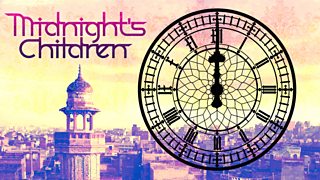
With Radio 4’s new adaption of Salman Rushdie's hugely popular novel marking the 70th anniversary of the partition of India, we take a look at what made the original text such a beloved classic.
1. It won the Booker of Bookers and the Best of Booker awards
“This is not what I had planned; but perhaps the story you finish is never the one you begin.”
Midnight’s Children is a proven hit with both critics and the reading public, winning the Man Booker prize for Fiction in 1981. On the 25th anniversary of the Booker Prize, a panel of former judges voted Midnight’s Children the Booker of Bookers. The public clearly agreed with them as, on the 40th anniversary of the prize, the vote for the Best of the Bookers was put to the public. Midnight’s Children triumphed with 36% of the vote.
2. It's a whistle-stop tour of Indian independence – just don’t take it all as fact
“Oh, spell it out, spell it out: at the precise instant of India’s arrival at independence, I tumbled forth into the world.”
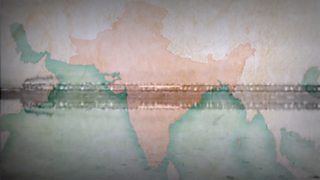
Protagonist Saleem’s birth happens on the stroke of midnight on the 15th of August 1947, when India and Pakistan become independent nations. From that moment on, Saleem’s destiny seems tied to that of India itself. As we follow Saleem into adulthood, the novel explores significant events in the sub-continent’s history, including the war between India and Pakistan, the independence of Bangladesh and the Emergency under Indira Gandhi. Saleem is not always the most reliable narrator and comically assumes that his own life has a bearing on wider historical events. Dive into a tumultuous period of Indian history – just make sure you check the facts before you use it to answer quiz questions!
3. Magical realism
“India, the new myth – a collective fiction in which anything was possible, a fable rivalled only by the two other mighty fantasies: money and God.”
Magical Realist literature uses the tropes of the supernatural, or the fantastical, combined with more realist or naturalistic storytelling. Midnight’s Children often makes it into the top ten lists for the genre, although Rushdie himself has said that “the fable, the surreal story is just another way of getting at the truth.” The mysterious powers possessed by the Midnight’s Children, and their extraordinary powers of telepathic communication, offer a prism through which Rushdie explores the troubled journey of India, following the initial hope and optimism of Indian Independence.
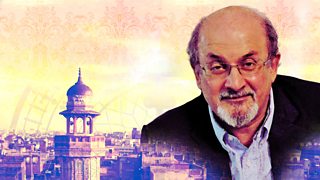
Salman Rushdie

4. It’s funny
“I, the possessor of the most delicately gifted olfactory organ in history…”
Stretching across 450 to 600 pages, depending on your edition, Midnight’s Children is epic in scale, language, story and texture. It is also very funny. Rushdie’s wit drives the plot forwards, peppering the text with jokes, larger-than-life characters and humorous asides.
5. The beautiful and unique Language
“What had been (at the beginning) no bigger than a full stop had expanded into a comma, a word, a sentence, a paragraph, a chapter; now it was bursting into more complex developments, becoming, one might say, a book – perhaps an encyclopaedia – even a whole language...”
Rushdie’s language in Midnight’s Children is rich, dense and playful. He subverts traditional English throughout the novel with purposely misspelt words, incorrect grammar and sprinklings of Hindi and Urdu, often to create hybrid words. If you haven’t experienced this linguistic experiment before, now is the perfect time to start.