Designs for life
Design surrounds us all the time yet it can be something of which we take very little notice. In the way that you might admire a painting or a piece of music, design can be thought-provoking, beautiful and baffling, sometimes all at the same time.

Designers work in various ways. They may be aiming to create amazing or attractive products, solve problems by making existing products better or use their creativity to imagine life in years to come. What will the world be like, and what products can we dream up to make a better world for the future?
You don’t need to leave the house to think about design. The newspaper you read, the cup you drink from, the chair you sit in…they’ve all been designed by someone. But do you like them? How would they be different had you been their designer? Step outside and consider other forms of design, from the bench in the park, to the clothes people wear and the buildings around us.
Should you wish to, there are plenty of places to visit in order to learn more about design. Then once you’ve seen how others do it, maybe it’s time to have a go? Customise a T-shirt or design a spaceship. Go on, open your eyes, put your thinking cap on and get creative!
| Why get into design? | Can it be inexpensive? | Is there a family option? |
|---|---|---|
| It’s an opportunity to look at our world from a different perspective, and depending how you choose to embrace an interest in design, set yourself challenges outside your comfort zone | Yes. There’s no need to spend money in order to look at design. And if you want to experiment you can adapt what you already own, whether it is to wear or use | Thinking about design can be a family activity, even if it leads to nothing more productive than a conversation. Or you could find an area of design that appeals – vintage comics, pottery, whatever – and go out looking for examples at boot sales, markets or collectors’ fairs |
Pleasing to the eye
Christopher Gridley, London: I was in the computer business until I was about 55, and have been collecting since about the 1970s. It’s mostly Victorian stuff, I have about 50 pictures from the era, but in the last 15 or 20 years it has been individual pieces from the various places my wife and I have visited, like Japan. I have quite a collection of Japanese, British and Welsh ceramics. But I collect things you need as well as just to look at. So we have a Philippe Starck vase, but also have his loo brush!
Will I ever stop collecting? You should ask my wife, but I suspect the answer is ‘no’
In the past I had a lot of Braun products, by Dieter Rams. He was a key figure in the German design renaissance of the late 1950s and 1960s, and became head of Braun’s design staff until he retired in 1995. Many of his functionalist designs - sleek coffee makers, calculators, radios and razors —have found a permanent home at the Museum of Modern Art in New York. I have items by him like a fan heater, a desk top heater, and a radio. I used to have one of his gramaphone sets, but life has moved on and I have disposed of that. I still have the instruction booklets for the items I have kept.
Fundamentally it’s about what pleases the eye. It’s a matter of getting your eye trained over time, which as an old buffer you end up doing! Will I ever stop collecting? You should ask my wife, but I suspect the answer is ‘no’, though I am running out of space now…
What would you like to try?
Architecture
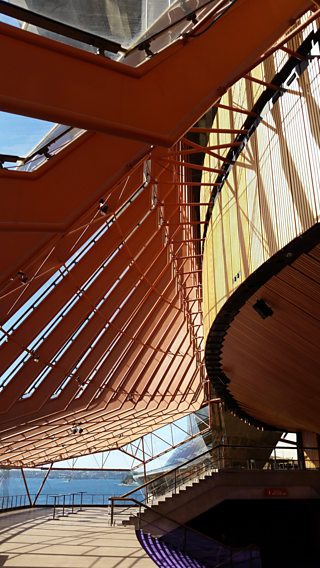
The newspaper you read, the cup you drink from, the chair you sit in…they’ve all been designed by someone
Architecture is a vast but fascinating subject to get your head around. And it can form the basis for so many design-inspired projects. Walk around your local area and look at homes from different eras. Which ones do you like? Which have stood the test of time and which would you consider a design mistake? If you want to turn your design study into a real day out, head for visitor attractions like stately homes, National Trust properties or tourist destinations such as Hampton Court Palace, where you can really get a sense of a period of history, and embrace heritage and design at the same time. There are suitable destinations all over the UK if you read up, such as the beautiful House For An Art Lover in Glasgow, which pays tribute to the work of Charles Rennie Mackintosh.
If all of this gets your juices flowing, have a go at designing your ideal home, even if that’s a dream that’s never going to become reality…
Digital design
When the Design Museum holds its Designs Of The Year competition annually, this is one of the categories. It’s design that’s cutting edge, potentially encompassing ideas such as installations, websites, apps, interactive innovations and products. If you are trying to enthuse youngsters about design, this is a great place to start. Last year’s shortlist included a search and rescue drone designed to save lives in the Lake District mountains, a mobile phone app for a game that you can never actually finish, a project that invited the people of Bristol to start conversations with streetlights and parking meters, and Dumb Ways to Die, a range of formats in which black humour is used to get young people to care about safety. The eventual winner was PEEK (Portable Eye Examination Kit), a smartphone-based system for comprehensive eye examinations, with the potential to revolutionise the prevention of blindness in low-income countries.
Fashion
We make a statement with what we wear every day – whether we intend to or not. It can tell the world about our taste, income, interests, sexuality and faith. Fashion teaches us about history. What was it like to wear a corset every day? How did people dress when materials were rationed? What made particular designers so legendary? There is endless information to read on the topic, and numerous places to visit, although for anyone truly inspired by fashion, a trip to the V&A museum in London is a must. If that’s not feasible, why not head to vintage clothes shops or markets and see what you can unearth? And if you are looking for a fun fashion project to try at home, how about buying some plain white T-shirts and seeing how you can transform them, with dyes or printing, or embellishments like ribbons, feathers, fringing or fake fur?
Graphics
Here’s another field of design that is everywhere we look, and it is a really accessible subject to enthuse youngsters to explore design. Product packaging, brand identities, magazines and newspapers, posters and typefaces, they all feature graphic design. Why do some fonts look dated? Why have others lasted – like the iconic Johnston (or Johnston Sans)? It has been the corporate font of public transport in London since 1916, making it one of the world's longest-lasting examples of corporate branding. Computer technology is a really useful tool for studying graphics and their power with youngsters. Get them to type their name, a phrase or a poem, then change it by using different fonts, sizes and colours and effects like bolding and italicizing. It’s a great way to learn about design and pick up computer skills. You may well create some great artwork in the process.
Transport
Think about design for transport and you are covering a lot more than planes, trains and automobiles. There’s boats, bikes, transport systems, networks. Just how practical was a Penny Farthing? What was wrong with the oft-derided Sinclair C5? Numerous museums and tourist attractions have sections devoted to transport, a few are totally dedicated to the subject. Looking at transport is a way to get a view on our world and its changing priorities. Once a car was admired for it’s sleek lines and speed, and to be fair, some always will be. However these days we want our transport to be kinder to the planet. Which vehicles are the most ecologically friendly and how might our transport of the future be different from that of today?
More design from BBC Arts
![]()
A graphic insight into North Korea
Everyday items provide a fascinating picture of creativity in the DPRK.
![]()
50 years of cutting-edge design
From the Rolling Stones to the Royal Mail, the rich history of graphic design.
![]()
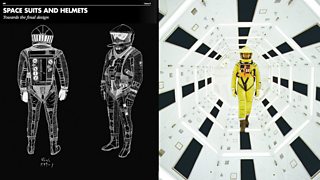
Designing 2001: A Space Odyssey
The unsung hero behind the film's extraordinary depiction of space travel.
![]()
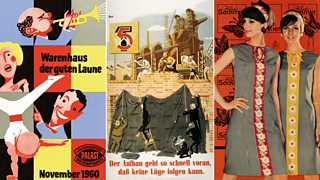
Extraordinary East German archive
Homewares, fashion and political posters from behind the Iron Curtain.