New prototype embeds BBC sound archive in the real world
13 October 2021
What happens when an Innovation Designer is let loose in the BBC archive? The Sonosynthesiser is an exciting prototype that explores how forgotten sound recordings can be embedded in physical space, allowing users to explore a unique audio history.
"An amazing, time-travelling collection of sounds"
Emily Sorrell was inspired to build the Sonosynthesiser the moment she discovered the BBC sound archive online. "I had come across it when it was first made publicly available and I couldn’t believe that more people weren’t talking about it" she said.
From a marriage in Mumbai, to bird calls in the Blue Mountains, you can explore echoes of worlds which may no longer even existEmily Sorrell
Having studied as a graphic designer, Sorrell soon became fascinated with design thinking in three dimensional spaces. She now works as a creative strategist and innovation designer, collaborating with heritage collections and cultural organisations across the UK, exploring ways to preserve intangible heritage collections and highlight opportunities for creative innovation as we reimagine our museums and cultural spaces.
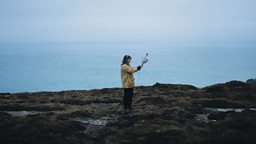
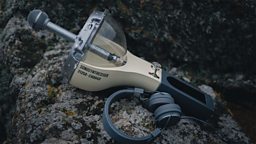
Her first major work, The Sonosynthesiser, creates a layer of archive sound on top of a physical environment. Users can locate and tune into different fragments of sound using a hand-held device. "I wanted to use digital technology to build an experience that was tactile, and felt authentically analogue - something retro-futurisic,” Sorrell explained. "I wanted familiar technology to feel invisible, like magic."
With no background in technology, Sorrell worked to build a specialised team to bring the concept to life. “Software engineer, Eddie Reeder was the resident magician” Sorrell says, “But we also worked with three very talented emerging designers to build something that felt right for the concept. We ended up with a beautiful atomic-era inspired prototype that you can’t help but pick up and start engaging with." The three designers in question are Lydia Otway, Toby Michael Shepherd and Hattie Evans.
Throughout the project, the software and physical device went through iterative testing and improvement, as the team explored how to make the experience intuitive enough that people could get lost in it. One of the highlights of the project was seeing the emotional responses of the first users, particularly older members of the public who were visibly moved when listening to the bygone sounds that once permeated their everyday lives. Users described the experience as 'beautiful, fascinating and very hypnotic'.
Though the first iteration of the Sonosynthesiser draws on the vast BBC Sound Effects Archive, the tool could easily become a vessel for other forgotten collections, allowing people to physically immerse themselves in any digital archive. Whether it's audio or video-based, the possibilities are practically endless. Sorrell hopes she can test other applications for the prototype in the future; “This time-travelling device,” she adds “has infinite potential in E-health as an immersive companion to patients with early to mid-stage dementia. It would be such a privilege to explore this further.”
Find out more
![]()
See and hear the Sonosynthesiser in action
This short film reveals how the Sonosynthesiser works.
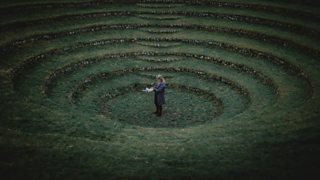
About the Artist
Emily Sorrell is an Innovation Designer, Researcher, Community Builder, and a collector of things that gather dust.
Amongst other things she is a creative strategist and innovation designer, working in the spaces between experience and education. She builds tactile, meaningful and memorable experiences rooted in the past.
Emily has worked with heritage collections and cultural organisations across the UK, exploring ways to preserve intangible heritage collections and highlight opportunities for creative innovation as we reimagine our museums and cultural spaces.
You can visit Emily's website, or follow her on Twitter, LinkedIn or Instagram.
The Sonosynthesiser Team was:
Designer/Project Manager: Emily Sorrell
Software Engineer: Eddie Reeder
Prototype team: Lydia Otway, Toby Michael Shepherd, Hattie Evans
Photographer: Matt Cannon
Exhibition Volunteers: Charlotte Sorrell, Charlotte Higgins
With thanks to Falmouth University for the use of their 3D printer
A New Creatives project
In 2019, BBC Arts and Arts Council England launched New Creatives - a talent development initiative encouraging artists aged 16-30 to push creative boundaries and reflect their experiences of living in Britain today.
Artists were invited to submit proposals for short films, audio and interactive works. The results reflect the breadth of emerging talent in Britain today.


More interactive projects from New Creatives
![]()
Before We Disappear
A new interactive video experience which challenges viewers to think differently about invisibility and hypervisiblity in an age of surveillance.
![]()
Hairy Hands FM
Experience a legend of Dartmoor brought to life using binaural sound.
![]()
Dichotomy
Play the VR game that aims to help people understand what it's like to live with Obsessive Compulsive Disorders.
![]()
To Miss the Ending
What if you had to abandon the decimated physical world, and your best chance of survival was to upload your memories to an AI server to reconnect with loved ones?
You might also like...
![]()
Easter Rising: Voice of a Rebel VR
Step into one man’s memories and journey back to a moment that changed Irish history forever.
![]()
Can you solve the mystery of The Boy in the Book
Experience a groundbreaking interactive documentary that pays homage to choose-your-own-adventure books.
![]()
Try something new at BBC Taster
Experiment with some of the BBC's most innovative new content, and tell the producers what you think.
![]()
Your Home Made Perfect
Watch as Angela Scanlon explains how homeowners can experience the extraordinary designs of two rival architects thanks to cutting edge virtual reality.