I shook hands with the man who nearly killed me
One summer evening in 2014, four men barged into Paul Kohler’s family home and began a savage assault on him. They believed, mistakenly, that he was hiding money there.
Paul was saved from almost certain death by the rapid response of the local police force; the four assailants were arrested, charged and imprisoned. Paul felt vindicated by the sentencing but his worldview was changed forever when he was invited to visit one of his attackers in prison, as part of a restorative justice scheme.
In an episode of Life Changing, Paul tells Dr Sian Williams about that momentous meeting, and the way his story being hijacked by others led to a career pivot into politics.
This article contains images of injury that some readers may find upsetting.

"It was a ferocious attack"
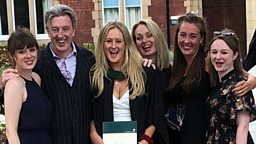
Paul had lived “a comfortable life in leafy Wimbledon” for 25 years. He was a lecturer in law, and head of the law school at SOAS. Happily married to Samantha, they had four daughters together.
They started attacking me and immediately shouting, ‘Where's the money?'Paul Kohler
“It was stable, it was lovely, it was family life,” says Paul.
On 11th August 2014, the academic was at home. “It was a balmy summer evening. My wife and I were downstairs playing cards, Eloise was at the top of the house with her boyfriend and my other three daughters were out in Wimbledon in bars and pubs,” he recounts.
Sam had just popped upstairs when there was a knock at the door. Paul opened it, assuming it was a daughter returning with friends. Four figures pushed their way inside.
“I soon realised they were wearing balaclavas,” he says. “They started attacking me and immediately shouting, ‘Where's the money?’”
Paul shouted to his wife to ring the police, which alerted the assailants to Sam’s whereabouts. “Two of them rushed upstairs,” he recalls. “They made her lie down on the floor; they put a hood over her head and threatened her whilst the other two carried on beating me.”
“It was a ferocious attack and I fell to the ground.”
One of the men grabbed a heavy wooden door that had fallen off a cabinet and raised it threateningly above Paul’s head. He was asked repeatedly about the whereabouts of “the money.”
“My guess is it was a drug debt they were chasing,” says Paul. Only they had gone to the wrong house. There was no money.
With Paul unable to comply, the weapon was raised again. “I'm absolutely certain he was trying to dispatch me at that point.”
“That's when two brave officers rushed through the door and saved my life”
Undiscovered at the top of the house, Eloise had rung the police.
“The police station is a few hundred yards from our house. They came within eight minutes of the call,” says Paul. The officers had been instructed to wait for back-up, but they bravely ignored what they were told, says Paul. “One of them leapt on the attacker, just as he was bringing down the wooden door on my head – and stopped it happening.”
More police arrived. Two of the men were arrested. Two fled the scene but were arrested in the subsequent days.
Paul was rushed into hospital. He spent the night in a state of terror and high alert.
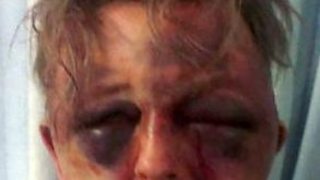
He had internal bleeding, a broken nose and a fractured eye socket. “I thought I'd lost my sight in my left eye for a couple of days because I couldn't see anything out of it at all.”
The photo taken of him on the night of the attack was too shocking to use for publicity purposes. “Even now it frightens me when I see it.”
When Paul returned to the house, he was determined to reclaim it.
“I had this almost visceral urge to lie down in each of the places where I’d been attacked and look up and capture a vista that didn’t have the attacker in my eyeline,” he admits. “That was really important. It was reclaiming my territory, I think.”
He had nightmares, but they subsided. It was his daughter that was the most affected. “In her place of safety, she heard this terrible thing happening,” he explains. “She moved out a few months later with her boyfriend – she couldn’t stay in the house.”
“We started trembling when we saw the attackers”
The following year, the perpetrators were sent to prison for between 13 and 19 years.
They had now received a very, very long sentence, that was rightly deserved.Paul Kohler
The day of sentencing was the first time Paul and his family had come face to face with the men since the brutal invasion of their home. “It was a terrifying moment because it brought back, of course, what had happened in a very visceral way.”
With the sentencing, came a cathartic feeling. “They had now received a very, very long sentence, that was rightly deserved.”
In his victim statement he expressed the anger he felt: “My anger with them, for what they’d done to my family.”
He expressed anger too for the way their violent actions had sullied the name of the very supportive Polish community. Some of the press had turned the fight into an anti-immigrant argument – because his attackers happened to be Polish.
“I really wanted to find out why they had attacked me”
Paul’s family’s story was on the front pages of the newspapers. Interviewed on the radio, he used the phrase, “Why me?”
Suddenly he wasn't the demon who was about to kill me. He was someone who one felt almost sorry for.Paul Kohler
A restorative justice charity – called Why Me? – got in touch. They could help him explore that question by arranging for him to speak to one of the attackers.
“I was very keen,” he says, “because I really want to find out why they had attacked me.” Sam was reticent, but loyally agreed. His daughter was on board.
In the end, only one of the criminals was deemed suitable. “The one I most wanted to see was the one we did see.” It was the man who had wielded the wooden door.
They entered a “terrifying” high security prison, met the chaplain who was supporting the perpetrator, sat down and waited.
“Then he came in.”
The young man was trembling, terrified. “What was until that point a demon who had tried to destroy our family was now a somewhat pathetic individual walking in, looking distraught and worried and that, of course, changed the power relationship.”
“Suddenly he wasn't the demon who was about to kill me. He was someone who one felt almost sorry for.”
“I shook his hand”
With the help of a translator, they began to talk.
Each family member had a different line of questioning. Paul wanted to know why it had happened – but he never got his answer. “It was some sort of gangland attack; he's not going to tell me why.”
Sam wanted the prisoner to understand how angry she was. He told her he knew from seeing her face on the night of the attack. “She didn't need to tell him.”
Then, the prisoner apologised.
“The whole rest of the meeting was testing the authenticity of his apology,” says Paul. The way to do this was to explore Eloise’s question: how was he going to change?
The prisoner said he was taking English lessons. He had a young child, who he wanted to have a relationship with. He wanted to get a skill.
“He felt genuine,” says Paul. He said he couldn’t promise to change, but that he would do his best. “I thought that added to the authenticity of his apology,” says Paul.
We got up, and I shook his hand. That's the point in my head I actually forgave him. And that was empowering.Paul Kohler
“We got up, and I shook his hand. That's the point in my head I actually forgave him. And that was empowering.”
“Samantha also shook his hand and, to this day, she doubts whether she should have done.”
“For my daughter, it was wonderful because it demythologised the beast… She was looking him in the eye and seeing him as this rather sad individual who was going to spend a long time in jail.” Eloise was able to return to live in the family home. “It was no longer the house she'd associated with the attack.”
“It’s informed my belief in a criminal justice system that reforms people”
“A narrative was being imposed on what had happened,” says Paul. Leading up to the Brexit vote, his story was being used by the Leave campaign. “I felt really very angry about that… And I felt really angry on behalf of the Polish community.”
Had it not happened, I wouldn't be here today, I wouldn't be in Parliament.Paul Kohler
Soon afterwards, the Mayor of London was threatening to close down the Wimbledon police station where Paul’s “saviours” were based. “I started campaigning to save the police station.”
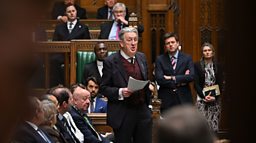
Incensed, wanting to take action, Paul decided to join the Lib Dems. “The rest is history,” he says. In 2024 he became Liberal Democrat MP for the London seat of Wimbledon.
Paul says his family bond is stronger than ever. “All adversity brings you closer together.”
“Had it not happened, I wouldn't be here today, I wouldn't be in Parliament… It gave me a new route in life. So, I have this bizarre conflict… It was a terrible moment, but it changed my life.”
Sometimes Paul’s memories of that night get triggered.
“When we’re in parliament talking about criminality and violent crime, then it comes back. Even now I can’t watch a fight scene on TV. I have to turn away.”
But there’s a big positive.
“It’s informed my belief in a criminal justice system that reforms people,” says the MP. “That’s something I want to fight for because we don’t reform people in this country like we should do and we must do – and that’s something I strongly believe in.”

More articles from Life Changing
![]()
Smell of meat triggers my 'life-threatening' panics
Veteran Geoff was plagued by c-PTSD, but a unique partnership restored his independence.
![]()
My brain injury nearly killed me, but it won’t stop me sailing
When yachtsman Robin was violently attacked, a life-or-death decision had to be made.
![]()
Life Changing: I saved 30 people from a sinking ship – but I can’t swim
Lorry driver Larry O’Brien explains how he saved over 30 people from a sinking ferry.
![]()
Life Changing: I was shot in the face and blinded - but stayed positive
Ed Stewart went blind after being shot, but a new - albeit risky operation - offered hope.