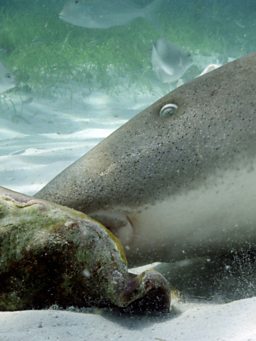
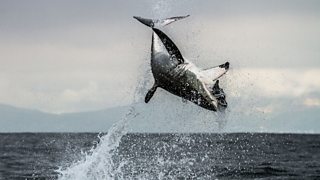
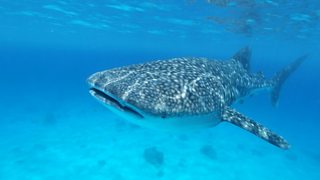
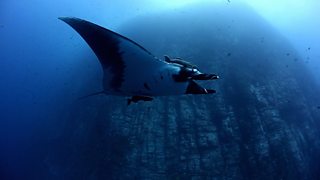
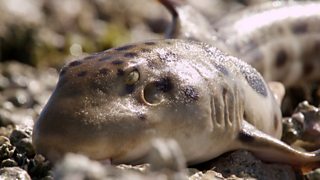
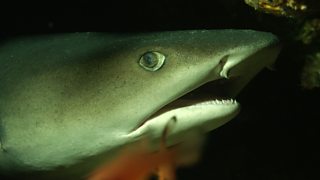
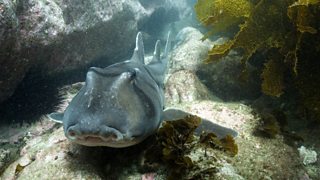
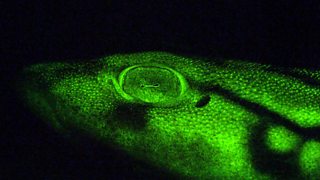
Nurse shark
(Ginglymostoma cirratum)
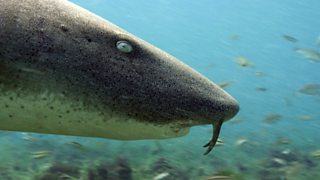
brothers help each other get a mate
Diet
Feeds on crustaceans, conch, squid, shellfish, fish and even stingrays.
Habitat
Commonly found in the Atlantic and eastern Pacific in coastal tropical and sub-tropical waters, on sandy bottoms or in caves or rock crevices.
Fin-tastic facts
Nurse sharks are particularly unassuming sharks, often seen lying motionless on the seabed, or under rocky overhangs. But when it comes to finding a mate, they really start to liven up. Nurse sharks have very complex courtship rituals. It begins with a male grasping a female’s pectoral fin in his mouth to try and maneuver her into a mating position. But the female has other ideas, and rolls over, forcing the males face into the sand. The male has to let go of her fin or he’ll suffocate. It seems that females will do all they can to try and avoid male attention, often going into dangerously shallow waters just to get away. But persistent males that share the same genes will even form co-operative groups, and working together they will try and block off her escape route into shallow water. When one of the males maneuvers the female into a mating position, the rest of the males will leave the pair alone to mate. It seems that in the race to pass on their genes to the next generation, “bands of brothers” will give up their own opportunity to mate with a female, and let their male relative pass on their genes.