'My Fresh Start as a documentary maker'
Award-winning presenter Stacey Dooley has made many fascinating and impactful documentaries. So for this episode of her podcast, Fresh Starts, she was keen to meet someone starting out in their career.
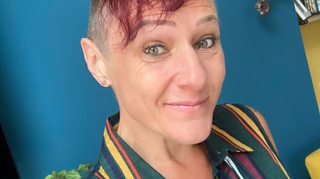
For Linda Adey, the road to journalism wasn't an obvious one and was rocky at times. But after some serious soul-searching, she discovered a love of storytelling and grafted her way to her first documentary commission.
Find out more of Linda's story - and click here to hear some of the wisdom passed on by Stacey!
Listen to the podcast, 'Linda: Becoming a documentary maker', here!
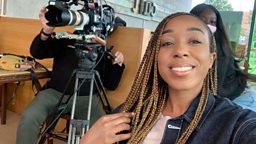
As with many young people, Linda initially struggled to find her vocation in life. However, Linda was possibly more restless than most. “I found school really hard,” she tells Stacey, “and I found that settling into anything really rigid was really, really hard. I struggled for years to find out what I wanted to do and what I loved.”
I struggled for years to find out what I wanted to do"Linda
There was a lot of pressure on Linda to succeed. “People that come from African homes who don’t go to university and aren’t a graduate by the age of 21 feel a big [sense of] shame,” she says. “Coming to this country, the only real way to make it is by having an education and knowing what you want to do.”
Linda’s dad wanted her to study law, so seeing her drop out of seven different colleges was worrying for him and for Linda’s mum. “I felt like a black sheep; I felt stupid,” recalls Linda. “When they saw that I hadn’t figured it out, they were really worried.”
One of Linda’s life journey stopping off points was at drama school. She was in the same year as John Boyega. Of him and her fellow students, Linda says: “they were really passionate about acting in a way that I don't think I was.”
But drama school wasn’t a waste of time by any means, Linda realised that she loved storytelling. This was an instinct that was reinforced by time Linda spent travelling with her church, as far afield as South Africa and Israel.
“I was hearing about people’s struggles and challenges, and I thought ‘there’s got to be a job where I can do that?’ And then – ding - I figured it out!”
Linda enrolled on a journalism course at Nottingham Trent University and took every opportunity that came her way. On a field trip to the local BBC newsroom, Linda very quickly showed her networking skills, asking journalists if she could shadow them.
“They put me on their list of freelance reporters, and two weeks later I was out working for East Midlands Today as a reporter. It was mad!”
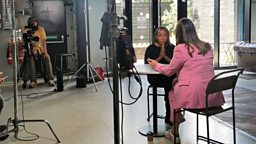
After a stint at BBC London, Linda broke her way into documentaries. Her first documentary, about racism at British universities, was broadcast very recently on BBC Three and iPlayer.
Now at the forefront of investigative journalism, Linda still feels like a “newbie”. Talking about working with directors, producers and “soundies”, as Stacey calls them, Linda says: “I ask a lot of questions, especially if I don't know what's going on, and they've just been really patient.
"I think I'm lucky in that respect because I've heard some stories from my friends who do the same sort of thing, and it's not always like that, apparently!”
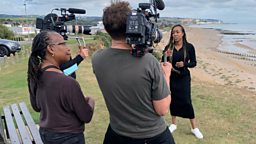
Linda’s profile and ability to tell stories is something she is very aware of on a number of levels. First in terms of reflecting representation of the wider community:
It's important for communities that feel marginalised... [to] hear people on the news that look like them"Linda
“When you find out that the industry is that 70 percent white, male and middle class, that’s why it's so important to have diversity on screen. And I'm not even saying this is a black, cisgendered woman, I'm saying this from the point of view of all types of diversity.”
Linda also sees her role as allowing other sections of society to be heard:
“I know that it's important for communities that feel marginalised from society to see and hear people on the news that look like them. For example, I've got mates who are disabled that have a certain perspective on things that is so important.”
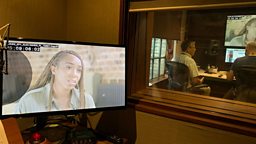
Ultimately, Linda believes that the effect of this reflecting back of society can’t be underestimated. “For people who have maybe lost trust in the establishment, this [representation] will help bridge certain bridges, even though it's a tiny thing.”
As for Linda’s parents – perhaps her toughest audience – they have been won over. “It’s almost like I’m not the same person” laughs Linda. “I think they understand now that sometimes you just don't have it all together, and it just takes a little while grow as a person.”
When Linda met Stacey!
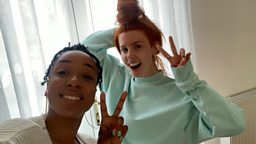
In the podcast, Linda asks Stacey all about how she started in documentaries, how she copes with reporting from hostile environments, and how she stayed true to herself in the media world.
It's a fascinating insight into Stacey's life and career, and a must-listen for any budding journalists!