'Why I swapped the funfair for funerals'
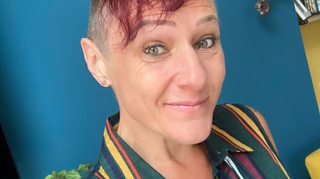
In this episode of her podcast, Fresh Starts, award-winning documentary maker and podcaster Stacey Dooley meets travelling showman Perrin.
Having built his whole life around the fairground and his collection of rides, the pandemic changed everything for Perrin and his family. Desperate to make ends meet, Perrin had to park his bumper cars and decided to become an undertaker, a job he never thought he could love.
Here's five things we learned about Perrin’s life as a fairground showman...

1. Being a showman is 'more than just a job'

Fairground showmen and women identify themselves as ‘occupational travellers’ rather than as Gypsy or Roma, but, as with those groups, you’re born into that life – it’s their heritage.
It’s not a job – it’s a way of life"Perrin
“It’s not a job – it’s a way of life,” says Perrin. “The different places we go, the people we meet, the friends we’ve got everywhere – you can’t beat it. I’m the fifth generation of our family to do this business, and I can’t see myself doing anything else. This is what we’ve been brought up to do as kids, and we love it.”
Perrin hopes that his children, George and Olivia, will follow in the footsteps of him and his wife, Sophie. They both say they will. Olivia is particularly focused!
“You know this is going to be your life one day,” Olivia says. “It’s going to be you changing a tire, it's going to be you buying a pump, it's going to be you sat on the floor figuring out what to do. It defines me. I don't work at the fair. I am the fair. This is me.”
2. It might have 'fun' in the name... but it's hard work to run!

As Olivia mentions, there’s a lot to do when you’re running a fairground, from flipping burgers and selling doughnuts to repairing a fairground ride or one of the mobile homes the family travel around in.
“You've got to have something a bit wrong with you to do it,” says Perrin, “the hours we put in - it's not like a normal nine-to-five job. On a weekend I can work from early Saturday morning right through to Sunday night. It's always eyes open to eyes shut.”
3. Showpeople are always on the go
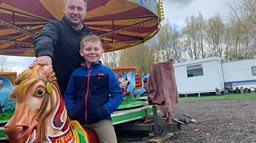
When Perrin and family travel to other sites they take five rides, food vans and their mobile home with them. “We might be out for a week or two weeks,” he says “then come back for a couple of weeks and then so on.”
With no staff helping them, this can be a stretch at times and Perrin’s pace of life has changed a bit. “We don't go too far any more, we try to stay local to keep the expense down. But we have other events us all over the country, so we're quite lucky in that respect.”
4. Showpeople still experience prejudice

Despite the enjoyment that funfairs bring, the Showpeople that work on them still face prejudice.
There is a certain stigma towards us"Perrin
“There is a certain stigma towards us with other communities,” says Perrin, adding: “they look upon us in a derogatory way and we get a lot of discrimination. They’ll see us taking money or they'll see us drive a four-wheel drive and assume we're all income tax dodgers and that we must be millionaires. They don’t see the maintenance side of it and the money that goes into the constant upgrading of stuff.”
Some of the misconceptions are very surprising, such as the idea that the community doesn’t have social media (which they use to advertise fairs). Perrin says he has a thick skin, even when mickey-taking turns “nasty”. However, he has his limits: “I went through a lot that at school; I don’t want my kids to go through it.”
5. When work in the pandemic dried up, Perrin made a life-changing career move...

It was a conversation with his friend Ed, a funeral director, that opened up a new direction for Perrin during the pandemic. A number of showmen that Perrin knew had fallen on hard times during lockdown. Perrin was struggling financially and wanted to give it a go.
Making the change between funfairs and funerals wasn’t easy. Seeing parents mourn the loss of their son or daughter was shocking for him. “I had to quickly cut that off because I couldn’t get too emotionally attached,” says Perrin, realising that “people seeing me upset” wouldn’t help anyone.
Ultimately, he’s learned to treat the role as a job but still show compassion at the same time.
What happened next?
What was working in a funeral parlour really like? Did Perrin stick to his new found career? Did the funfair get back to full swing after the pandemic?
Find out by listening to the episode on BBC Sounds! You can listen for free to all episodes of 'Stacey Dooley: Fresh Starts' exclusively on BBC Sounds. And subscribe so you never miss an episode!