Original seaside rock music with the last remaining spa orchestra
Before the jet engine altered summer holidays for Brits forever, thousands of families would flock to the UK's costal towns for their deckchairs, sand, ice-cream and donkey rides. As resorts competed to be the destination of choice for the (hopefully) sunny break, many engaged resident seaside orchestras to give their town the edge over its rivals.
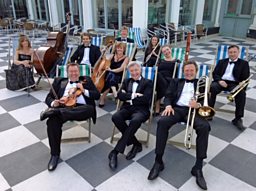
The Scarborough Spa Orchestra is the last remaining professional seaside outfit of its kind, regularly holding concerts in the North Yorkshire town. It'll be entertaining crowds as part of Heritage Open Days on Sunday 13 September with a free concert at The Spa Theatre so we thought we'd take a look back at the history of this living relic from a bygone era.
By Stephen Walker, Music Librarian of The Scarborough Spa Orchestra
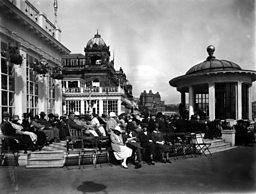
It all began in the 1620s when a certain Mrs Farrer, walking on the beach of Scarborough’s south bay discovered the spa waters and their medicinal qualities. Visitor numbers increased rapidly to take the waters. and to satisfy the growing crowds, musical entertainment was introduced, informally at first.
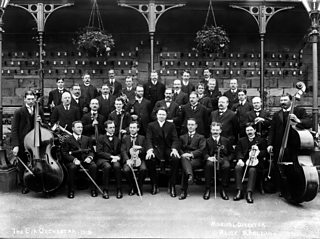
By the end of the 1911 season there was much dissatisfaction. The musicians were described as “a party of undertakers” whose playing was “slack and uninspired”.
In 1867 the first permanent musical director was appointed. Herr Wilhelm Meyer Lutz was a distinguished musician, composer and theatre conductor. He and his successors over the following 40 years led military bands rather than orchestras.
By the end of the 1911 season there was much dissatisfaction. The musicians were described as “a party of undertakers” whose playing was “slack and uninspired”.
After national advertising and London-based interviews, a new musical director was found in the person of Alick Maclean who had latterly been chef d’orchestre for all the London theatres under the direction of Sir Charles Wyndham.
Maclean had no intention of continuing the military band tradition: “I frightened everybody out of their lives by suggesting that we should have an orchestra. They said we could not do it. It was bound to fail. But they tried it after much persuasion,” he was quoted as saying. And the now legendary Scarborough Spa Orchestra was born.
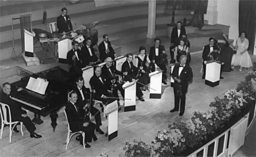
Maclean’s orchestra played from early April to late October, at the height of the summer season giving three concerts every day. His programmes were far from the sort of palm court and light music soon to become associated with seaside orchestras all around our coasts. A morning concert would typically include Bach, Mozart and Wagner. Full symphonies and concertos were commonplace.
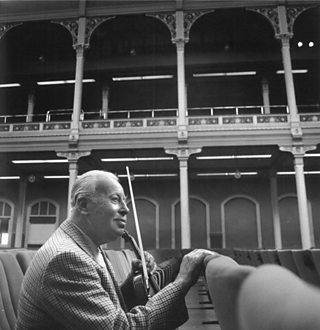
A morning concert would typically include Bach, Mozart and Wagner. Full symphonies and concertos were commonplace.
It is hard to assess Maclean’s popularity, but he began an orchestra tradition in Scarborough which has lasted for more than a century. When his untimely death was announced in 1936, a great shadow fell over the Spa and over the town as a whole - not for nothing had he become affectionately known as “The God of Scarborough”.
Successive musical directors for the next 25 years tended to be household names – leading light music figures who had found fame on favourite BBC radio programmes. This tradition culminated in the appointment of Max Jaffa in 1960. A hugely popular light music performer on both radio and television, Jaffa came to Scarborough for one season and stayed for 27 years.
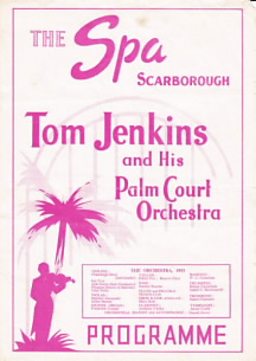
Max Jaffa’s orchestra was very much in the palm court tradition. He had no brass players, just strings, woodwind, piano and percussion. When Simon Kenworthy took over as musical director in 1992 until 2006 he revamped the line-up.
Financial considerations over the years have reduced the size of the Spa Orchestra. Alick Maclean’s 35 had become just 10 when Kenworthy took the helm: piano, violin, cello, bass, flute, clarinet, bassoon, trumpet, trombone, percussion.
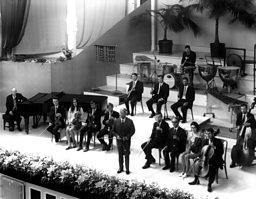
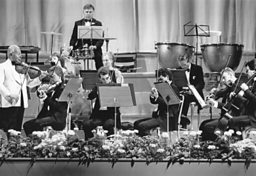
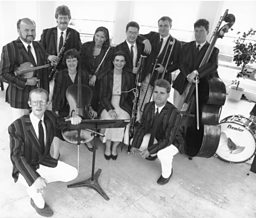
Now under the leadership of Paul Laidlaw, the line-up is the same.
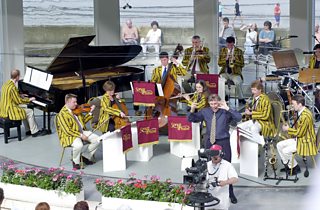
During a 15 week season, the Spa Orchestra plays nine concerts each week, five in the morning outside in the Sun Court enclosure and four in the evening. No concert programme is ever repeated and the resources of the music library are such that, as a general rule, no single piece is repeated within a five week cycle.
This places huge demands on the players who have to cope with, on average, 150 different pieces of music each week. When guest players deputise for regular members of the orchestra, they are always astounded at the range and styles of music they are expected to play.
All the musicians are professional players who have “real” jobs in major orchestras such as the Halle, BBC Philharmonic, BBC Concert, Opera North and Northern Ballet orchestras.
Playing on the Scarborough Spa is no holiday in terms of the musical demands. For many years, the Spa Orchestra has been the sole reason for large numbers of visitors arriving in Scarborough. As the UK’s only remaining seaside orchestra, the now legendary Scarborough Spa orchestra retains its huge popularity and has a bright future.
Related Links
Going back to your roots