United Nations of design: Global show packs emotional punch
5 September 2018
London Design Biennale 2018 welcomes 40 countries, territories and cities to the capital to explore the impact of design on our lives. WILLIAM COOK asks how they approached the theme of ‘Emotional States’, and why, with so many art biennales, we need a design one.
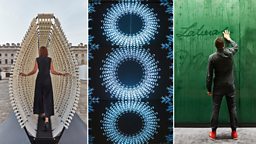
London’s Somerset House is a stage for some of the world’s most innovative designers at the London Design Biennale. From Poland to Pakistan, from Sweden to Somalia, 40 countries, cities and territories (from every continent apart from Antarctica) have transformed this grand old building into a united nations of design.
The theme of the first London Design Biennale was Utopia. This year, the theme is Emotional States.
The theme of the first London Design Biennale, held at Somerset House in 2016, was Utopia. This year, the theme is Emotional States.
This enigmatic brief has inspired a broad range of responses, from Scandinavian robots to Australian light sculptures. This isn’t a conventional exhibition of modern furnishing or household appliances. A lot of these installations would look perfectly at home in a show of contemporary art.
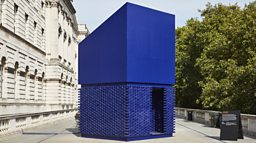
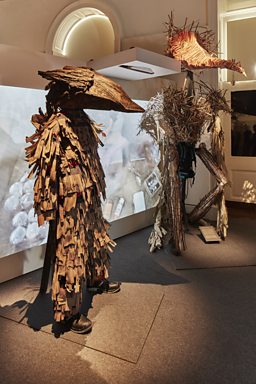
Like the Venice Biennale, each country has its own pavilion – a space where anything goes. India’s pavilion pays tribute to indigo workers who used to make this precious dye by hand. Canada’s pavilion is a homage to the many places in Canada named after emotions, from Happy Adventure to Lonely Island. "In your life there are only a few places, or maybe only the one place, where something happened, and then there are all the other places," reads a lyrical quotation by Canadian writer Alice Munro.
The UK shows how digital tools can enable on-the-ground recording and preservation of evidence of cultural heritage destruction in Maps of Defiance. Other entrants from the UK include Liverpool celebrating the immensity of the universe with projected images from an extremely sophisticated telescope, Dundee exploring how gaming and virtual technology can be used to help young people talk about mental health and Leeds’ highly charged live tableau inspired by British folklore.


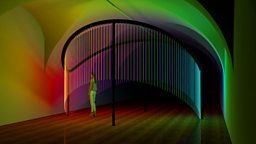
So why was ‘Emotional States’ chosen as the theme for this year’s biennale? "The theme is intended to encourage immersive installations that really engage the viewer at a physical as well as an intellectual level," says LDB’s artistic director, Christopher Turner.
As Turner observes, it’s an idea whose time has come. Rather than merely measuring Gross Domestic Product, nations are now trying to measure happiness. States from Venezuela to the United Arab Emirates have appointed Ministers of Happiness. Theresa May has appointed a Minister for Loneliness to her cabinet.
Two hundred years ago, English philosopher Jeremy Bentham advocated the greatest happiness for the greatest number as the best basis for legislation. The pursuit of happiness is enshrined in the US Constitution. However it’s only recently that nations have started addressing happiness in its own right. Bhutan led the way, with its Gross National Happiness Index, and in 2012 the UN launched the first World Happiness Report.
In this report the richest countries scored highest and the poorest countries scored lowest. No surprises there. However when Gallup conducted a more complex survey, called the Global Emotions Report, the results were more revealing: 149,000 people in 142 countries were asked questions like "Did you feel well rested yesterday?" "Were you treated with respect?" "Did you smile or laugh a lot?" and "Did you feel pain, anger, worry or stress?"
This time, the country that came top was Paraguay, which ranks 64th in the World Happiness Report. The UK came 38th, alongside Germany and the US. Thanks to their strong familial and social networks, Latin American countries scored highly despite lower levels of individual GDP.
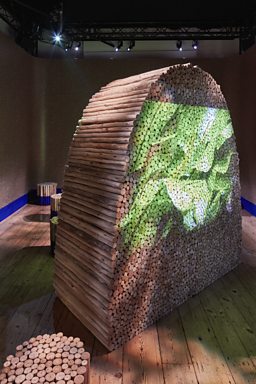
The contents of these pavilions confirm that when it comes to cultivating happiness, money isn’t everything. Italy, Brazil and Argentina all focus on the importance of trees and forests. Austria depicts an Alpine dystopia, ravaged by global warming. Yet amid the doom and gloom are messages of hope and optimism. Germany focuses on turning rubbish into furniture.

"This is the first design biennale in a major capital city," explains Christopher Turner. "It’s important to bring people together in a forum like this, to exchange ideas." Turner hopes LDB will help to counter the emotionally turbulent and politically polarised tenor of our time.
London really needs to emphasise that it is open to business and the creative community.Christopher Turner, LDB artistic director
With so many fine art biennales to choose from, is a design biennale really necessary? "Design is very much about problem solving, so it’s got a practical bent that art doesn’t have," says Turner. "Design is about asking questions." LDB asks a lot of questions. It also proposes some solutions. "Some pretty big themes are being looked at here: sustainability, migration." Designers can reflect on those themes in ways that artists don’t.
Turner believes design can have a big impact on the way we live, for better or worse. "When something is designed well it does make a tremendous difference, but design can also have negative effects." LDB designers are taking a closer look at new technology, thinking about how computers can serve mankind, rather than the other way around.
Design is a reflection of the times we live in, and the times have changed a good deal since the first London Design Biennale at Somerset House in 2016. "It is a challenging landscape," says Turner. "London really needs to emphasise that it is open to business and the creative community. A lot of people who work in the creative communities here, especially from the European Union, aren’t feeling particularly welcome right now, and I hope events like this can serve to counter that in some small way."
London Design Biennale is at Somerset House, London, 4-23 September 2018. In partnership with the London Design Biennale, BBC World Service’s The Cultural Frontline presents a panel discussion on the social impact of design on Saturday 8 September.
London Design Biennale medal winners
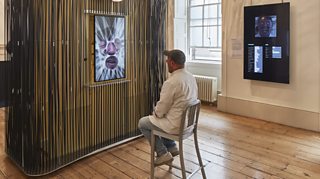
The LDB Emotional States Medal, for the most inspiring interpretation of the 2018 theme, goes to the USA for Face Values which engages emotion as a physical performance, inviting visitors to use their facial expressions to generate digital portraits and graphic displays.
The LDB Medal, awarded to the most outstanding overall contribution, goes to Egypt for Modernist Indignation which mourns the loss of the country’s modernist architecture.
The LDB Best Design Medal, awarded to the contribution with the most exceptional design, goes to Latvia for Matter to Matter, where visitors can leave a message on a wall of condensation. It explores the transience of emotions and the ways in which nature reclaims the marks we leave.

More design from BBC Arts
![]()
A graphic insight into North Korea
Everyday items provide a fascinating picture of creativity in the DPRK.
![]()
50 years of cutting-edge design
From the Rolling Stones to the Royal Mail, the rich history of graphic design.
![]()
Designing 2001: A Space Odyssey
The unsung hero behind the film's extraordinary depiction of space travel.
![]()
Extraordinary East German archive
Homewares, fashion and political posters from behind the Iron Curtain.




More from BBC Arts
![]()
Picasso’s ex-factor
Who are the six women who shaped his life and work?
![]()
Quiz: Picasso or pixel?
Can you separate the AI fakes from genuine paintings by Pablo Picasso?
![]()
Frida: Fiery, fierce and passionate
The extraordinary life of Mexican artist Frida Kahlo, in her own words
![]()
Proms 2023: The best bits
From Yuja Wang to Northern Soul, handpicked stand-out moments from this year's Proms