Doing it by the book: Top tips for self-publishing
28 September 2015
Writers have been self-publishing since the beginning of the written word but things have thankfully moved on from writing on stone tablets and papyrus. William Blake was a notable self-publisher and even Jane Austen paid London-based Thomas Egerton to publish her first novel Sense and Sensibility.
With the rise of ebooks, self-publishing has never been so easy and so accessible to writers of all genres and styles.
It's a highly competitive market but there are ways to make your work stand out from the rest. We spoke to self-published author Amanda J MacKenzie, a retired GP from Glasgow, about her publishing journey.
After spending 26 years working for the NHS she penned her first novel in her spare time in 1994, she went on to work as a doctor for a total of 38 years and is using her retirement to pursue her first love of writing.
Her first novel, Scorpio, is a historical novel set in Roman times, an era that has obsessed her since she was a 12-year-old girl.
She did all her research for the novel from good old fashioned printed books and had her novel typed on word processor into a manuscript.
She's now had to grapple with modern technology but thinks no matter who you are or what your age you should embrace the wonderful world of self-publishing. She has shared her top tips to help others get their works seen.
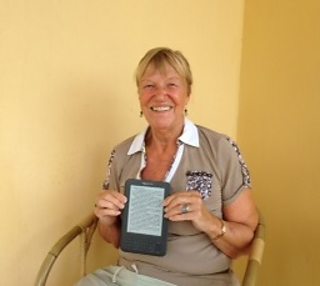
I am now aged 72, and with few computer skills, but with my first ebook published, and earning money already, without literary agent or print publisher
1. Anyone can do it, even me!
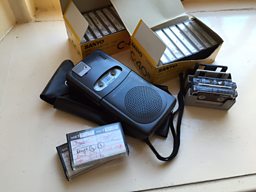
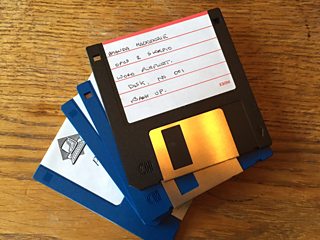
Twenty years ago I wrote my first one and a half historical novels while working as a GP and raising four children. Actually as I couldn't type in those days I dictated the book and had someone else type it, which was expensive. The Internet was a small affair. It hadn't heard of many of my actual real characters, which made research more difficult. Of course I wrote to the publishers and literary agents listed in the Writers Handbook, only to be rejected, like so many others before me, without anyone reading so much as a page. It was a little dispiriting. Eventually the manuscripts and floppy discs were relegated to the attic. Then ebooks were invented. I am now aged 72, and with few computer skills, but with my first ebook published, and earning money already, without literary agent or print publisher. I've even almost managed to finish writing the second book. If you have written a book, you can do the same.
2. Rope in Relatives and Friends
If you don't know your HTML from your PDF, as I didn't, don't panic. Find a relative who likes you, and with the relevant IT skills (it will probably be someone young). But you will also need relatives or friends to check your document before you think of uploading onto an ebook platform. It is all too easy for a single person such as the author to miss errors repeatedly. A fresh pair of eyes is a tremendous help. So print a hard copy first, and get it checked by another person(s). Be aware that different ebook publishers require different formats. Although it is possible to convert files into the required format, sometimes errors appear. There are now guide books published about 'How to publish an ebook.' My copy has several editing errors, which is encouraging. You don't have to be perfect, either.
3. Cool Cover
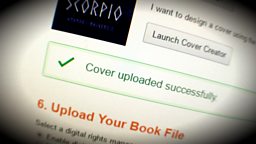
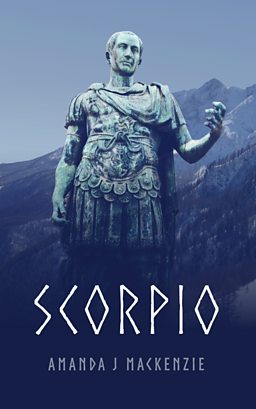
To my surprise the first requirement for a self-published book is for a cover. The ebook publisher will provide a minimal cover, or point you to professional help. But a well-designed cover helps to sell the book. Don't make it too fussy, as it will be shrunk for the browsing customer. If you make your own don't forget that many images are copyrighted, including maps and diagrams. Ensure the title and the name of the author can be seen clearly against any image. My book is based on Julius Caesar, so I was fortunate to find a statue of him standing at the Roman Gate in Turin, so I could take the photo myself and combine it with a photo of the mountainous Italian-French border, taken by our guide during a skiing trip.
4. What kind of book?
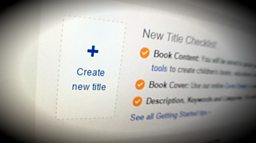
The ebook publisher will want to know what sort of book they are dealing with, so choose two of the specified categories to classify the book, eg. historical romance, crime thriller, and add a very brief description, (the blurb), of the book content for the browsing customer, written in an interesting and exciting way to gain their attention.
Ideas to exercise your mind
![]()
Need to flex your mental muscles?
Then creative writing might be for you
5. Get the price right
The publishers of ebooks are remarkably generous compared with publishers of academic printed books, for instance, who can take up to 95% of the profits. Even well-known authors are lucky to receive more than 15%. Usually there are two options, 70% for the author and 30% for the ebook publisher, as long as the ebook can be lent out and falls within a certain price range, but usually a minimum of 35% of your price. There are also options to publish free for a few months to generate an audience. Ask around. As my book took a lot of research and a long time to write, I didn't want to give it away. But my daughter said she looks for bargains, so although she may pay £5.99 for a book, £6.99 was too expensive. An established author can reduce the price, as they are almost guaranteed a large volume of sales, unlike us.
Afterwards it is up to you to market your book, so tell all your friends, the local paper, the local TV station
6. Uploading the book
This is the terrifying moment. You have told the ebook publisher everything they need to know, and now is the vital part. What will the book look like? Although during the process it is possible to see how the book will appear as an ebook on a simulated screen, be warned! With some ebook publishers the paragraph and speech indents are not apparent on the preview, and only appear once the book is published. Sometimes the book has a different appearance on different devices. But remember ebooks can be varied by the reader, using alternative fonts, or different line spacing. As long as the book is easy to read it is not a problem.
7. No worries!
Okay, now you are checking your book you find you have missed out a full stop, or an inch mark, or a whole sentence. It doesn't matter. Correct the error and publish again. It is possible to republish as often as necessary to correct any faults. But don't forget to 'tag' the document, make a tiny alteration to the text at the beginning, so you can easily ensure your new version is the one available to download. If there are gross errors due to formatting issues, don't despair. The publishers are easy to contact by phone so it is possible to speak to an actual person, or send a message, which will be swiftly acknowledged and dealt with. The publishers have a technical team on hand to advise on any problems. All for free. You are never alone. Afterwards it is up to you to market your book, so tell all your friends, the local paper, the local TV station. Use the ebook publisher's tools to create a biography of yourself, with photos, on their authors information site, so your readers can get to know you. Or set up a Facebook page. There may already be an Internet forum to join, such as the Historical Novelists Society, to further advertise your book to interested readers. So now you are a published author. Enjoy!
![]()
The Craft Club Yarnbombers
Meet the world-record holding crafters making a crochet Christmas project
![]()
Sally Taft
Get Creative's content producer rolls up her sleeves and threw a pot for Hey Clay!
![]()
Kenneth Small
The retired tool-maker who gave the Jubilee Thames Pageant sunny skies
![]()
Kate Simner
The contracts administrator with creativity at her fingertips
![]()
Kirk Crosby
DIY toymaker father creates kingdoms from clutter
![]()
Cindy Huntley
Paperback perfection: the school worker who sculpts art from stories
![]()
Patryk Sadowski
Photographer uses real life locations to create futuristic scenarios
![]()
Gary Cummins
Construction worker recreates day job in miniature
![]()
Anneka Gamble
Bake Off's back. How sugarcraft can be the icing on the cake.
![]()
Joe Whiteman
Landscape gardener has a monster talent
![]()
Jonathan Clark
Sports-mad poet serves ace verses
![]()
Neil Howard-Pritchard
How a lifeboat rescue sparked an interest in model boat making
![]()
Ron Hinkson
How a painter turned five church windows into a Renaissance masterpiece
![]()
Jean Samtula
One of a handful of aspiring artists whose painting was chosen for the Royal Academy's Summer Exhibition
![]()
David Martin
A retired designer who painted a Canaletto-style painting, replacing the buildings with those of his home town
![]()
Robert Burns
A retired decorator gave his home a Renaissance make-over
![]()
Maria Lyon
A crafter who loves creative challenges of all shapes and sizes
![]()
Rachel Blunden
A spinner who takes her spindles wherever she goes, including an FA Cup Semi-Final
![]()
Kenneth Small
A retired tool-maker who painted a life-size Canaletto replica
![]()
Bev Cain
A crafter who didn't think drawing would be her forte but had a go anyway
![]()
David Colbert
A former teacher who went looking for a hobby and found the ukulele
![]()
Emily Auger
A jewellery designer who discovered a love for digital printing and uses it as a way to relax and to cure jet-lag
![]()
Cheryl Lloyd
A dedicated mum and knitter who makes retro tank tops for her rugby- mad son and his friends to add a splash of style to the stands
![]()
Rachel Orchard
A stitcher who joined a sewing group to meet like-minded people. She's made tea cosies and draught excluders as gifts and hopes to move to dressmaking
![]()
Peter Egriega
A stroke survivor who has used painting, music and writing to rehabilitate. He shared his first self-portrait using his affected hand with Get Creative
![]()
Sally Taft
A keen cross stitcher and crafter who uses it as a way to relax and wind down after a day content producing for Get Creative