Mementos of a marriage: Victoria and Albert's watercolours
30 January 2018
In conjunction with the Palaces and Pleasuredomes episode in Andrew Graham-Dixon's Art, Passion & Power, Carly Collier, Assistant Curator of Prints and Drawings at the Royal Collection Trust gives an insight into Queen Victoria and Prince Albert's precious watercolour albums.

The Children's Fancy Ball at Buckingham Palace, 7th April 1859, dated 1859 | A watercolour depicting the fancy dress ball held in the Ball Supper Room at Buckingham Palace to celebrate the sixth birthday of Prince Leopold, the youngest son of Queen Victoria and Prince Albert... Signed "AGNENI", who was paid 30 guineas | Read more at Royal Collection Trust's website
"My valuable Albums … containing most beautiful water colour paintings … arranged by my dearly beloved Husband."
These 'valuable' albums were known as the ‘View’ or ‘Souvenir’ albums, and they became precious mementos for Victoria after the untimely death of Albert in 1861.
The commemorating and recording of special occasions, places and people is a constant in human history. In the 21st century we create physical and digital photo albums – we organise our images, captioning them with the names of featured friends, often noting down the place, the date, and the event or occasion.
Over 150 years ago Queen Victoria and Prince Albert engaged in very similar activities, compiling nine albums of colourful, lively watercolour paintings which captured important private and personal events; from the christenings and birthday parties of the royal children to glittering court balls, views of the towns, cities and landscapes they saw on their travels at home and abroad, and records of the places they lived such as Windsor Castle and Buckingham Palace.
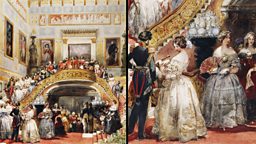
The Grand Staircase at Buckingham Palace, State Ball, 5 July 1848 [right, detail] | French artist Eugène Lami specialised in recording court festivities. This watercolour is a valuable record of the appearance of the staircase at Buckingham Palace, which had been redecorated under Ludwig Gruner's supervision in 1845. | Read more at Royal Collection Trust's website
The watercolours in these albums were either commissioned by the couple themselves or given to them by relations, friends or others as gifts, and many were painted by leading British and European artists.
Significantly, when Prince Albert died Queen Victoria decided not to make any further albums. These nine became an extremely important visual memorial of the queen's life with her 'dearly beloved Husband'.
Victoria and Albert enjoyed visiting watercolour exhibitions in London and discovering the work of artists who were new to them, and they both drew and painted themselves. Queen Victoria, in particular, became a talented painter in watercolours.
These 'valuable' albums were known as the ‘View’ or ‘Souvenir’ albums, and they became precious mementos for Victoria after the untimely death of Albert in 1861.
This was not just because of the memories contained in the watercolours themselves but also thanks to the shared activity of the queen and her husband in creating the albums together.
Victoria often wrote in her journal about the quiet, happy evenings she and Albert spent looking at and arranging their watercolours, deciding which scenes to include in which album and what title should be inscribed on the page underneath each.
Significantly, when Prince Albert died Queen Victoria decided not to make any further albums, and therefore these nine became an extremely important visual memorial of the queen's life with her 'dearly beloved Husband'.
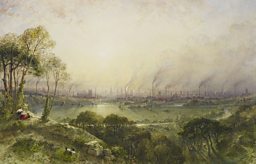
Manchester from Kersal Moor, dated 1852, by William Wyld (1806-89) | Victoria had visited Liverpool on 9 October 1851 and Manchester over the following two days, and commissioned a watercolour of each of the cities from Wyld soon after. The overcrowding and slum conditions of the workers' housing were a severe social problem, and the Queen noted in her journal: 'The mechanics and work-people, dressed in their best, were ranged along the streets in their button-holes; both in Salford and Manchester, a very intelligent, but painfully unhealthy-looking population they all were, men as well as women'. Wyld's view of the city is, however, overtly romantic. |Read more at Royal Collection Trust's website
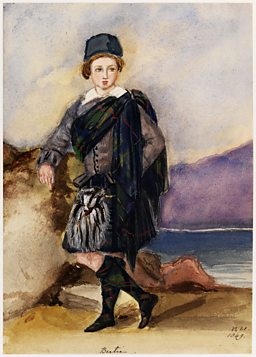
Bertie, dated 1849 | Painted by Queen Victoria |Read more at the Royal Collection Trust's website
Watch
![]()
Palaces and Pleasuredomes
George IV's extravagant taste and Victoria and Albert's shared love of art.
![]()
Victoria's children
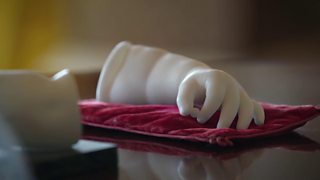
A macabre commission by Victoria - marble effigies of the limbs of her infant children.
![]()
Brighton's house of fun
The Royal Pavilion reveals George IV's extravagant taste in interior décor.
Related Links
The Curators
![]()
Hans Holbein and the court of Henry VIII
Curator insights into Holbein's portraits of court life.
![]()
George III's 'Buy British' drive
The family retreat at Buckingham House was filled with works by British artisans and artists.
![]()
Victoria and Albert's watercolours
These albums became precious mementos for Victoria after the untimely death of Albert in 1861.
![]()
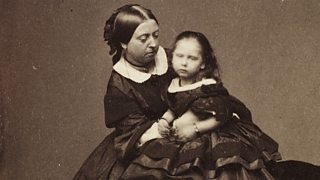
Cartes-de-visite: The royal image
Insights into early royal portrait photographs.
Royal Collection season highlights
![]()
The House of Fun
Welcome to the breathtaking Royal Pavilion in Brighton.
![]()
Victoria's children
One of Queen Victoria's more macabre commissions revealed.
![]()
King of the collectors
An exhibition reunites the treasures amassed by Charles I for the first time in 370 years.
![]()
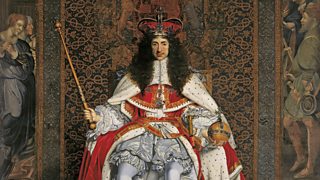
Art as power tool
How Charles II, the 'Merry Monarch', overruled austerity to project power through art.
![]()
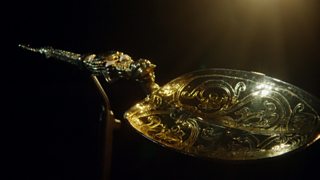
Sacred items
What the Coronation Regalia tell us about the country's history.
![]()
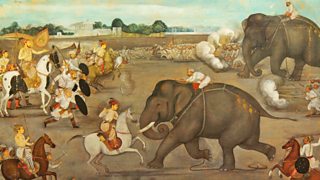
The Padshahnama
This extraordinary work of Mughal painting was acquired by George III.
![]()
Royal armour
An incredible suit of armour created for Henry, Prince of Wales.
![]()
A new light on Leonardo
Andrew Graham-Dixon views drawings by da Vinci that have been lost for centuries.


More from BBC Arts
![]()
Picasso’s ex-factor
Who are the six women who shaped his life and work?
![]()
Quiz: Picasso or pixel?
Can you separate the AI fakes from genuine paintings by Pablo Picasso?
![]()
Frida: Fiery, fierce and passionate
The extraordinary life of Mexican artist Frida Kahlo, in her own words
![]()
Proms 2023: The best bits
From Yuja Wang to Northern Soul, handpicked stand-out moments from this year's Proms