Hilary Bevan-Jones: "I want people to feel the same joy as that man who spoke on the original documentary"
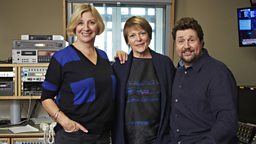
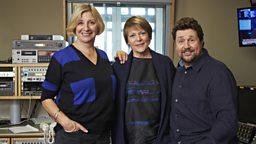
Hilary Bevan-Jones served as Executive Producer on That Day We Sang, having worked on numerous ground breaking and influential dramas such as Cracker and State of Play. She has also won a primetime Emmy for the acclaimed HBO film The Girl in the Café. In 2006, she was also made Chairman of the British Academy of Film and Television Arts, the first woman in its 60 year history to hold this position.
Imelda and Michael are both extraordinary and beautiful singers, I get goosebumps every time I listen to themHilary Bevan-Jones
What is That Day We Sang about?
Firstly, the film is about the profound memories you can get from listening to a piece of music and how it strikes a chord within you. Whatever your age, it can affect you the same way. Secondly, the film is about second chances and how it is never too late for people to have a new start, a new relationship and to find love.
How important was it to film That Day We Sang in Manchester?
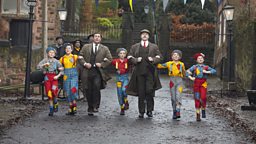
It was really important to film it in Manchester because the whole story is set there and is about the extraordinary Manchester Children’s Choir. Walter Carroll formed the choir in the 1920s for children from underprivileged homes all over Manchester. These were children that wouldn’t have had a piano or even a wireless in their parlour. There is a documentary from 1970s about the choir. In it, one of the original children was interviewed and said how recording the song was one of the happiest days of his life. Victoria remembered that statement and that feeling then bottled it up and transformed it into a script for stage and television.
When it came to casting for Tubby and Enid, did you always have Imelda Staunton and Michael Ball in mind?
Imelda is an incredible actress and singer. We always thought she would be perfect for Enid and she said yes straight away. When it came to Tubby, Victoria, Paul and I always thought it should be Michael. We had seen them perform together in Sweeney Todd and saw how incredible they were together.
What do you think Imelda and Michael bring to their roles?
They are both extraordinary and beautiful singers, I get goosebumps every time I listen to them. Then when you put them together, there’s this magic and chemistry that comes out that’s radiant. Imelda transforms during her song ‘Enid’. You see her go from a café in Paris, to dancing the tango, to Westside story and it’s absolutely seamless. With Michael, he almost dares you to look away from him he’s so charming. He holds the screen so well and his voice is extraordinary.
Was it always in your plans to use the Hallé Orchestra and the Halle Children’s Choir?
That was a stroke of genius by Paul Frift who met them and talked to Shirley who leads the choir. She has an indomitable spirit; you can see similarities between herself and Gertrude Riall, the original choir teacher, when you see her work with the children. The children came and dressed up in itchy 1920s clothes and had their hair cut to the period. Even one girl who had never had her hair cut before was happy to have her hair cut into a 1920s bob.
What do you want audiences to feel at the end of watching That Day We Sang?
I want people to feel the same joy as that man who spoke on the original documentary, who then went on to inspire Victoria to write the film; joyful.