Best pictures: Capturing the Oscars' golden moments
24 February 2017
As the 89th Academy Awards approach, there is no better time to look back at some of Oscar’s most memorable moments. Look! There’s Marlon, Audrey, Jack, Dennis and Billy. Let’s mingle.
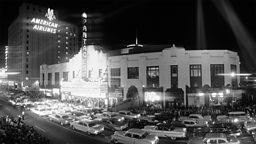
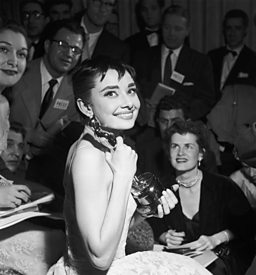
Audrey Hepburn, 1954
Roman Holiday: Trumbo and the Hollywood blacklist
Roman Holiday was the film in which Audrey Hepburn, then a virtual unknown, made her name with American audiences. The film also won for Costume (Edith Head) and Best Story (as the category was called until 1957), with the writing credited to Ian McLellan Hunter and John Dighton.
McLellan Hunter was actually a front name for Dalton Trumbo, one of the top-earning Hollywood screenwriters in the 1930s and '40s. Trumbo was blacklisted in 1947 for his refusal to name names before the US Congress's House Un-American Activities Committee, and in 1950 he served 11 months in prison for contempt of Congress along with the rest of the Hollywood Ten.
In 2011 the Writers Guild of America posthumously gave Dalton Trumbo official recognition for writing the Oscar-winning screenplay. Breaking Bad star Bryan Cranston played Trumbo in the 2015 film biopic, and received a Best Actor Oscar nomination for his portrayal.
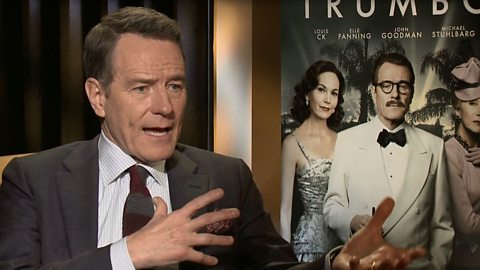
Trumbo
Bryan Cranston discusses his Oscar nominated role as Dalton Trumbo.
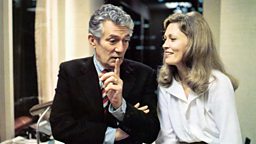
Faye Dunaway, 1977
Network
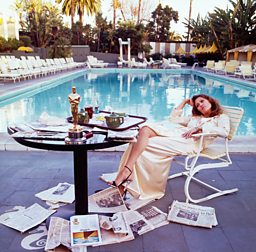
Faye Dunaway finally won a Best Actress Oscar, for her performance in Network (1976), having been nominated previously for Chinatown (1974) and Bonnie and Clyde (1968).
Peter Finch, who played "mad as hell" news anchor Howard Beale, died two months before the awards and was awarded the Best Actor Oscar posthumously - as seen in the newspapers scattered around Dunaway in this photograph taken at the Beverly Hills Hotel the following day.
The movie also won in the Best Supporting Actress (Beatrice Straight) and Best Original Screenplay (Paddy Chayefsky) categories, with nominations for Best Picture, Director Sidney Lumet, William Holden also for Best Actor, Ned Beatty for Best Supporting Actor, and for Editing and Cinematography.
Finch was the only recipient of a posthumous Academy Award for acting until Heath Ledger's Best Supporting Actor award in 2009.
Jack Nicholson & Dennis Hopper, 1970
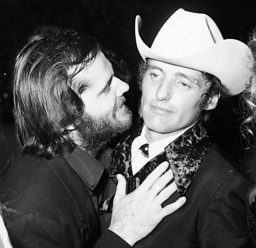
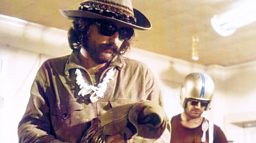
Easy Riders
Jack Nicholson was nominated as Best Supporting Actor for his role in the cult classic Easy Rider, one of the films that heralded the 'New Hollywood' era led by young auteur directors who were fully aware of the American counterculture and were often 'the people our parents warned us about'.
The film also received a Best Original Screenplay nomination, for director Dennis Hopper - shared with fellow writers Peter Fonda and Terry Southern.
The huge box office and critical success of Easy Rider allowed Dennis Hopper to negotiate complete control of his next project. Hopper spent $1million of Universal Studios' cash in Peru directing The Last Movie, and the film's total commercial failure coupled with Hopper's outrageous reputation led to his virtual exile from Hollywood.
Hopper was seen only in low-budget and European films for the rest of the 1970s, until a return to prominence in a minor but notable role in Apocalypse Now. His starring role as Frank Booth in David Lynch's Blue Velvet, along with a Best Supporting Actor Oscar nomination for Hoosiers, also in 1986, marked the revival of his career.
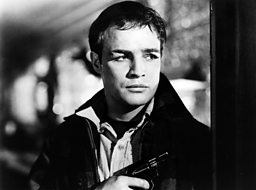
Marlon Brando, 1954
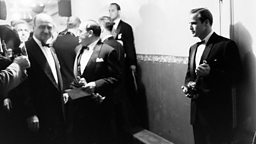
On the Waterfront and The Godfather
Marlon Brando won his first Best Actor Oscar for On the Waterfront (1954), having been nominated for the previous three years running - for A Streetcar Named Desire, Viva Zapata! and Julius Caesar.
His second Best Actor award, from seven total nominations, came for his 1972 performance in The Godfather. This time Brando boycotted the ceremony, becoming the second actor to refuse to accept a Best Actor award after George C. Scott in 1970.
Brando sent actress and activist Sacheen Littlefeather in his place, where she announced that his boycott was due to the negative depiction of Native Americans by Hollywood. She later read a 15 page statement by Brando to the press, which was reprinted in full by the New York Times the next day.
Brando's Godfather co-star Al Pacino also boycotted the 1972 ceremony as he objected to being nominated in the Supporting Actor category, rather than Best Actor, when his on-screen time significantly exceeded that of Brando.
Henry Fonda, 1982
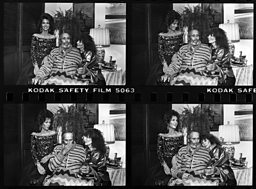
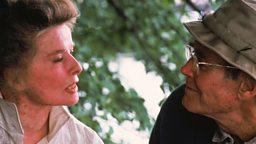
On Golden Pond
Henry Fonda's role in On Golden Pond, as a cantankerous old man presiding over a family reunion, reflected some of the real-life tensions in the Fonda dynasty.
Fonda's performance was honoured by the Academy with his first Best Actor award; it was presented in a special ceremony at the family's Beverly Hills home due to the actor's ill-health.
The on-screen father and daughter roles were played by Fonda and his daughter Jane, who had originally purchased the rights to the screenplay. Jane Fonda was nominated in the Best Supporting Actress category.
On Golden Pond received ten nominations in total, also winning Best Actress for Katherine Hepburn and Best Adapted Screenplay. Henry Fonda's previous nomination, for The Grapes of Wrath 42 years earlier, remains a record for a gap between Oscar nominations.
Billy Wilder, 1960
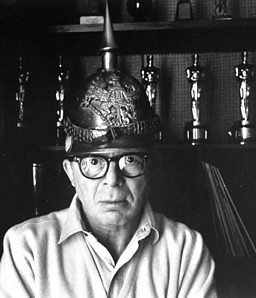
The Apartment
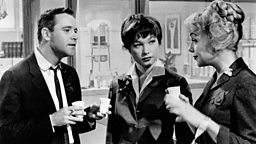
Austrian-born Billy Wilder directed and produced the hit 1960 comedy The Apartment, winning Academy Awards for Best Director and Best Picture, and sharing the Best Original Screenplay award with his long-term writing partner I. A. L. Diamond.
Only seven other film-makers have achieved this 'triple' for one film: Leo McCarey (Going My Way, 1944), Francis Ford Coppola (The Godfather Part II, 1974), James L Brooks (Terms of Endearment, 1983), Peter Jackson (The Lord of the Rings: The Return of the King, 2003), brothers Joel and Ethan Coen (No Country for Old Men, 2007) and Alejandro G. Iñárritu (Birdman, 2014).
Wilder had already won three Oscars, Best Director and Best Adapted Screenplay on The Lost Weekend, 1945 (with Charles Brackett), and for Best Original Screenplay on Sunset Boulevard, 1950 (with Charles Brackett and D. M. Marshman, Jr).
They said what?!
![]()
The Oscars in quotes
From the cheeky to the downright near the knuckle
Related Links
More photography from BBC Arts
![]()
War and peace
The compassionate photography of Don McCullin.
![]()
Childhood in the 1970s
Tish Murtha’s tender photos of deprivation in Britain.
![]()
Neon dreamland
Liam Wong's sci-fi-style images of Tokyo at night.
![]()
Pup art
William Wegman's Polaroids of his loyal Weimaraners.
![]()
Stanley Kubrick
1940s New York through the lens of teenage Stanley Kubrick.
![]()
Jailhouse Rock
Behind-the-scenes photos of Johnny Cash's prison shows.
![]()
The real Sin City
Hard-boiled photographs tell the history of crime in LA.
![]()
10 years with Kate Bush
Rare photographs of the singer at the height of her career.

More from BBC Arts
![]()
Picasso’s ex-factor
Who are the six women who shaped his life and work?
![]()
Quiz: Picasso or pixel?
Can you separate the AI fakes from genuine paintings by Pablo Picasso?
![]()
Frida: Fiery, fierce and passionate
The extraordinary life of Mexican artist Frida Kahlo, in her own words
![]()
Proms 2023: The best bits
From Yuja Wang to Northern Soul, handpicked stand-out moments from this year's Proms