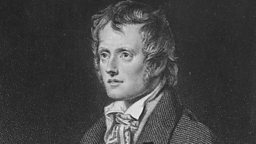
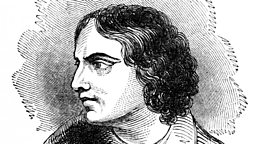
John Keats – How did the romantic poet produce so much brilliant work in his short lifetime?
John Keats left his fledgling medical career behind to become a poet, but the critical reception of his early work was scathing – some published reviews called him an uncouth cockney who should have stuck to being an apothecary.
Keats’ response was a year of intense creativity: in 1819, he wrote some of the most loved poems in English, including Ode to a Nightingale. Just two years later, the 25-year-old was dead from tuberculosis, before his work found fame. Some who knew him, including Shelley, believed his true killer was the critics.
For In Our Time, Misha Glenny and guests discuss the short life of one of the most celebrated Romantic poets and his lasting works from that year of brilliance.
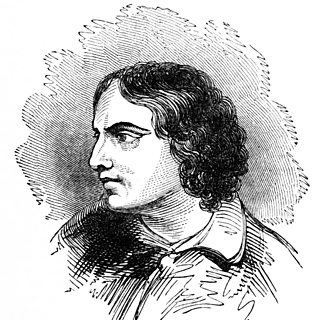
Podcast: Misha Glenny and his guests discuss John Keats
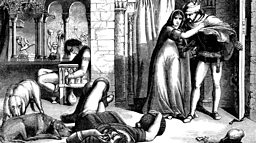
Keats abandoned a career in medicine for poetry
Born in 1795, Keats grew up in London. His father was a helper in a livery stable; his mother the daughter of the owner. He had four younger siblings: George, Thomas, Edward – who died as an infant – and sister Francis. In 1803 he went to study at Clarke’s Academy at Enfield.
“He's often caricatured as being uneducated, because he didn't go to Eton like Shelley; he didn't go to Harrow like Byron. But he did have a good education,” states Fiona Stafford, Professor of English Language and Literature and Tutorial Fellow at Somerville College, Oxford.
Keats went on to study medicine, but abandoned the career in 1816. “He gives it up, I think, because he realises what a good poet he is,” says Fiona. “Keats is a real lover of poetry and he has a real gift for it.”
By this time, Keats’s father had died in a tragic riding accident and he had also lost his mother. His younger brothers, Tom and George, provided emotional and psychological comfort to the young poet, explains Meiko O’Halloran, Senior Lecturer in Romantic Literature at the University of Newcastle. “They’d had a lot of experience of bereavement in their childhood.”
The reviews of Keats’s early work were scathing
“The outside world had not made very much of his poetry up to that point,” explains Nicholas Roe, Wardlaw Professor of English Literature at the University of St
Andrews. “His 1817 collection, which he'd put together late in 1816 and over Christmas of that year, only reached a few dozen readers who were his friends, as he put it, and a few dozen readers who weren’t his friends and didn't like the book.”
Endymion: A Poetic Romance, which appeared in April of 1818, reached some readership, but it was very widely criticised (in hostile terms) in the leading journals of the day.
The attacks on Endymion were “pretty brutal,” states Fiona. “It's amazing he ever wrote anything again.”
In fact, what followed – just a few months later – was a remarkable reply to his detractors: a creative flowering in which Keats wrote his best works. “I suspect that’s partly proving what he can do, as he retreats wounded from these awful, awful reviews,” suggests Fiona.
Another family tragedy also fuelled Keats’s output
In the summer of 1818, Keats undertook a four-month trip around Scotland with a friend. “It was a tour that was productive in poetic terms,” says Nick. But when he came home, he found his brother Tom dying of tuberculosis.
This also had a huge impact on Keats’s writing, says Fiona. “He was very close to his younger brothers. I think having lost their parents, John felt a particular responsibility for them, and also as a trained doctor.” He nursed his brother through the final stages of the disease. “It is an absolutely harrowing part of his life. But out of that comes an extraordinary surge of creativity.”
Within just a few months of Tom’s death Keats was producing his best works: The Eve of St. Agnes, his extraordinary odes (Ode to a Nightingale, Ode on a Grecian Urn, Ode on Melancholy), La Belle Dame sans Merci and stunning sonnets. “They’re just all pouring out of him,” says Fiona.
During this period, his shift in register and form is extraordinary, says the academic. He swings from Spencerian stanzas, to narrative romance, to the humorous Sonnet To Mrs. Reynolds’s Cat. “It's an astonishing achievement,” states Nick.
“He seems to write at his best in a single effort; a single creative outpouring,” says Nick. When his epic project Hyperion was interrupted by his brother’s illness, Keats found it difficult to pick up the creative momentum and bring the poem to completion, and yet it has been suggested that Ode to a Nightingale was written in just three hours.
Keats’s own sense of mortality played a part in that prolific year
As a medical student, Keats was faced with mortality on a daily basis. He had faced death in his personal life too: he lost his little brother when he was only nine; he had lost his parents. Even before Tom died, he had written the sonnet with the opening lines, ‘When I have fears that I may cease to be / Before my pen has gleaned my teeming brain.’
“He's not under any illusion that death’s not there and that it’s coming for you,” says Fiona. “I think that adds to the intensity. I think it adds to that need to pour it out.”
Traditionally, poets would begin their apprenticeship in the pastoral genre before working their way up to the ambitious genre of the epic, explains Meiko. “Keats was attempting epic poetry at the age of 22,” she states. “Having lost Tom at such a young age, he’s more aware than ever that he may have a limited amount of time in which to compose his epic poetry.”
Keats was just 25 when he died
By 1820, Keats had become seriously ill. He’d been suffering from tubercular symptoms throughout 1819 – likely contracting the disease by his brother’s sick bed. In January of that year, Fanny Braun (Keats’s fiancé) tells us he experienced his first haemorrhage from his lungs.
His condition deteriorated. By the late summer of 1820, doctors advised him to go to Italy to try to pass the winter in the warmer climate, which was thought to be beneficial for tubercular patients.
“Their forlorn hope was that Keats would get better and, although he rallied occasionally, the course of his illness was relentlessly for the worse,” says Nick.
Keats died in Rome in February 1821.
The recognition Keats’s deserved came decades after his death
Keats didn't experience critical acclaim during his lifetime but, gradually, it emerged.
“His 1820 volume was in fact well received,” says Nick. “A Keats collector called Richard Woodhouse thought that the volume placed Keats with Shakespeare.”
There were many tribute poems written to him during the 1820s. In 1836 Charles Brown gave a lecture on Keats, which was the first section of his projected biography. He also put on an exhibition of Keatsiana at the Plymouth Atheneum.
There followed biographies, Keats’s life letters and previously unpublished poems that all helped turn the tide. By the second half of the 19th century, Keats had become a major figure in English poetry.
Fiona believes that Keats’s enduring popularity is easy to explain. “The poems are so good,” she states. “They're absolutely perfect.”
“Keats at his best is just so astonishing. You can read the odes over and over again and just have your breath taken away by how powerful they are; how beautiful they are.”