Sound of Song: The recording revolution
15 January 2015
Composer and musician NEIL BRAND's new series Sound of Song explores the elements that come together to create our favourite songs. Brand writes exclusively for BBC Arts on each programme in the series, beginning with the first episode's examination of the birth of recorded music.
Although I love songs and, like most of us, measure out my life by them, there's something I love even more - that's the stuff round the edges of songs: the performance, the recording, the production.
As a composer myself I find it fascinating to discover what a song went through between being dreamt up by the writer and heard by us, the audience.
That's what this new series is about, how advances in technology throughout the last century and this one have influenced songwriting and performance, how the nature of songs and the people who sang them changed according to how they were recorded or amplified.
Perhaps the most surprising facts about the first part of the story are just how quickly recorded sound took hold of the public imagination and the fact that one extraordinary songwriter was involved in every development in musical technology in those first thirty years.
Recorded sound's first real master, Thomas Edison, thought he was inventing a piece of office technology with his first recording machine.
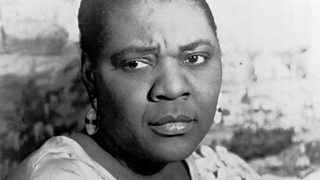
Blues could never have developed without discs and radio because it was essentially an aural tradition, only written down when W.C. Handy found a way to notate Memphis Blues
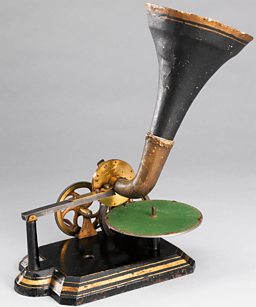
However, the public taste for hearing music without having musicians playing in front of them drove an explosion in sound recording and reproduction technology that, by the start of World War One, saw cylinder players and gramophones (all beautifully crafted pieces of furniture) installed in millions of homes, playing every kind of music from all over the world.
Radio swiftly followed, bringing an unending stream of music on demand straight to everybody's fireside.
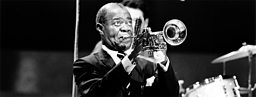
With these extraordinary developments came the stars they made - many, such as Bessie Smith and Louis Armstrong, the children of a new form of recording using electrical microphones which soon outstripped the original acoustic horn mikes.
Blues could never have developed without discs and radio because it was essentially an aural tradition, only written down when W.C. Handy found a way to notate Memphis Blues in 1912.
Electrical mikes brought out the full range of artistry by singer and band alike, and even now, as we prove in the series, Bessie Smith's voice is extraordinary by any standards on the equipment of the time.
The other stars who came to prominence through recorded music were the songwriters, none more so than the protean Irving Berlin.
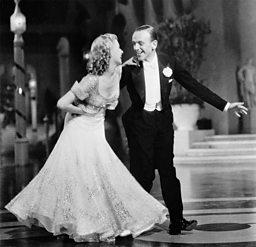
Berlin composes for Fred and Ginger
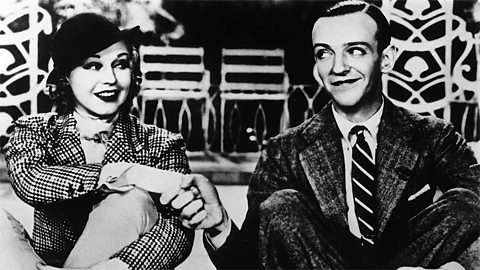
Fred Astaire and Ginger Rogers in Top Hat, 1935
Performing Isn't This a Lovely Day (To Be Caught in the Rain)? by Irving Berlin.
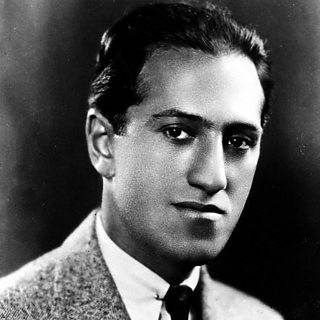
Irving Berlin led the way - the rest of us just followed...George Gershwin
Amazingly for a composer who was self-taught at the piano and never learnt to read music, it was Berlin's songs that broke the barriers to international success with Alexander's Ragtime Band, propelled Al Jolson through the Sound Barrier with The Jazz Singer and helped cinema sound and image reach its peak of perfection with Astaire and Rogers's Top Hat.
Even George Gershwin said, "Irving Berlin led the way - the rest of us just followed... ."
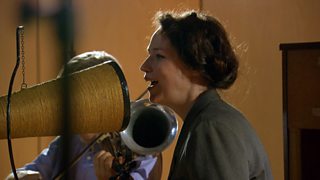
For this episode I got to record with a singer and Stroh violinist (watch the programme to see what that is!) onto wax cylinder exactly as had been done in the Edwardian era.
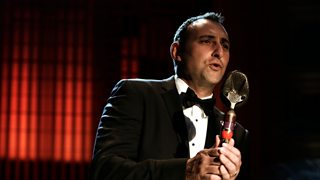
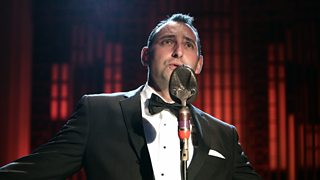
I also got to play Blues piano on Beale Street, Memphis, accompany crooner Matt Ford onstage in a '30s classic, see Thomas Edison's original music recording room, meet Jazz critic legend Gary Giddins and experience the Sound of Songs beautifully reproduced on gorgeous original machines, the way our ancestors heard them.
I've had a ball. I hope you do too.
Episode one of Sound of Song was shown on BBC Four, Friday 16 January and is now available on BBC iPlayer. Neil Brand's introductions to episodes two and three have also been published by BBC Arts, alongside exclusive extras from the series and archive performances.
Sound of Song episodes
![]()
The Recording Revolution
Neil Brand investigates how songs were recorded for the first time, the listening revolution in the home that followed the arrival of the microphone, the song-writing genius of Irving Berlin, and the interpretative power of singers Bessie Smith, Louis Armstrong and Bing Crosby
![]()
Reeling and Rocking
Neil Brand recreates some of the most memorable and innovative recording sessions in music history - from Elvis's slapback echo in Memphis and the Beatles' tape loops at Abbey Road to Phil Spector's Wall of Sound and the Beach Boys' pop symphonies
![]()
Mix It Up and Start Again
From the synthesisers of symphonic rock to the mixes of disco and the samplings of hip hop, music was transformed by the arrival of digital technology and the computer
Neil Brand writes...
![]()
Reeling and Rocking
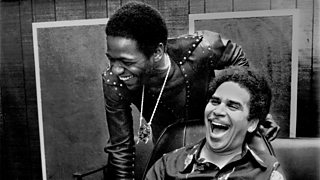
Neil on the sounds of Sinatra, Presley and Al Green, and the growth of a new creative personality in the studio - the producer
![]()
Mix It Up and Start Again
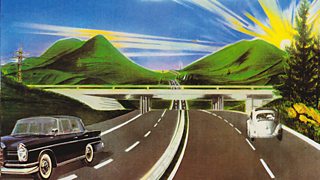
When synths took over: Neil mixes it with Kraftwerk and Public Enemy, and the future of the song
W.C Handy and the blues
W.C. Handy, the African American leader of a dance orchestra, claimed to have had the blues revealed to him one night in 1903 while waiting for a train in Tutwiler, Mississippi.
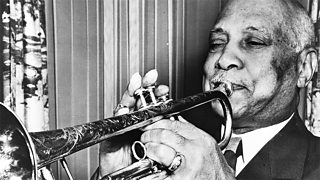
He was sleeping on a bench when a ragged black man woke him up with his mournful singing, answering each line by sliding a knife against the strings of a guitar. Handy later described it as "the weirdest music I had ever heard."
Handy was a musically literate band leader from northern Alabama who had toured the South extensively picking up songs and tunes - the roots of what would become the blues lay in slave songs, spirituals, and country string ballads.
In 1909 Handy and his band moved to Memphis, Tennessee, where he rearranged many of these songs for performances on the club circuit. One of his compositions was Memphis Blues, which he subsequently published in 1912.
Memphis Blues became the song of that year, requested in dance halls nationwide, and it launched the blues as a mass entertainment genre.
"Memphis Blues was hugely significant," said Elijah Wald, author of The Blues: A Very Short Introduction. "It started the blues craze and made the blues a key marketing term. It was spread by the sale of sheet music and by the fact that every dance band in America was being asked to play it, and was playing it."
In 1914 Handy followed up his hit with another 12-bar blues piece called St Louis Blues. It was even more popular and influential than its predecessor, and went on to become a jazz standard played by Louis Armstrong, Count Basie and Bessie Smith.
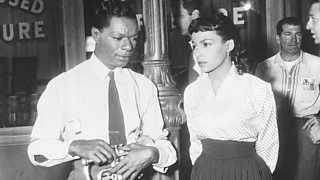
In his only major screen role, Nat 'King' Cole portrayed Handy in the 1958 film St Louis Blues. It also starred jazz and blues greats Eartha Kitt, Pearl Bailey, Cab Calloway and Ella Fitzgerald.
Sound of Song Clips
Berlin On Radio 3
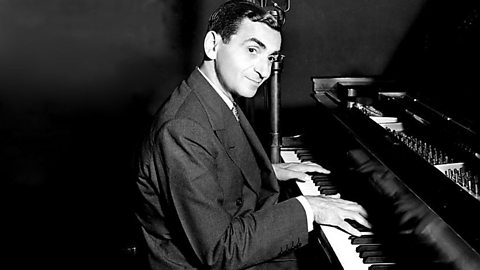
Irving Berlin (1888-1989)
Donald Macleod explores the life and work of Irving Berlin