Freya by Anthony Quinn
About the Book
London.
May 1945
Amid the wild celebrations of VE Day, Freya Wyley meets Nancy Holdaway, the prelude to a devoted and competitive friendship that will endure on and off for the next two decades. Freya - wilful, ambitious, outspoken - pursues a career in journalism which the chauvinism of Fleet Street and her own impatience conspire to thwart; while Nancy - gentler, less self-confident - struggles to get her first novel published.
At university, both become entangled with Robert Cosway, a charismatic young man whose ambition will have a momentous bearing on their lives.
Beneath the relentless thrum of changing times and a city being reshaped, we glimpse the eternal: the battles fought by women in pursuit of independence and love. Freya is a portrait of an extraordinary woman taking arms against a sea of political and personal turmoil.
About the Author
Anthony Quinn was born in Liverpool in 1964.
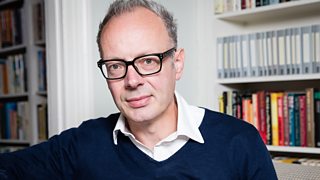
In 1986 he moved to London, working at Zwemmer’s Bookshop on Charing Cross Road and renting a room in Islington so narrow he could touch both walls from the middle of it. His earliest break in journalism was to write book reviews for the recently launched Independent, whose literary editor was Sebastian Faulks.
In the 1990s he became slightly more prosperous and moved to a bigger room, this one equipped with a kitchen and a flip-down bed. He continued to write for newspapers and magazines. He was for fifteen years the film critic of the Independent (1998-2013) and also wrote a wine column for Esquire magazine.
Having been a judge on the 2006 Man Booker Prize he wrote his first novel the following year: the two events may have been related. The Rescue Man (2009) won the Authors’ Club Best First Novel Award.
Since then he has written three others, Half of the Human Race (2011), The Streets (2012) and Curtain Call (2015). He still lives in Islington, with his wife, the journalist and author Rachel Cooke.
Q&A
When I write I like to…
...interrupt myself by making endless cups of tea. Stare at photographs of London street scenes from before the war. Browse the bookshelves in my office. Stare out of the window. Repeat, until guilt or inspiration forces you to actually write something.
The book that inspired me to write must have been…
...probably Middlemarch. It was so engrossing and life-enhancing that I began to realise there was no higher art than the novel.
My speciality in the kitchen is…
...I have two! Smoked salmon pasta and baked sea bass - neither of them remotely good enough to compete with anything my wife makes.
My current view is of…
...a vista of back gardens and back elevations; a few trees and some tower blocks in the distance. I like that mixture of urban and rural.
One of my favourite writers is...
...Elizabeth Taylor (1912-1975) is a late discovery of mine. I've spent the last two years reading her 12 novels and four story collections. She wrote exquisite tragicomic tales about longing, loneliness, jealousy, the pain of love and the meaning of transcendence.
One thing people don't know about me is…
...I have never owned a mobile phone.
The thing I love most about words is…
...their infinite capacity to surprise and delight.
Radio 2 Book club
I am pleased as punch that Freya has been chosen for the Radio 2 Book Club, and feel only gratitude to the Reading Agency and library staff who helped pick it. Libraries have been crucial to me both as a reader and a writer. I actually couldn't have written my first novel The Rescue Man without the benefit of Picton Library in Liverpool and Finsbury Library in Clerkenwell, and I felt it was only appropriate that the centre of the story concerns the rediscovery of a "forgotten" Victorian library. Libraries aren't just vital to our educational well-being; they are - or can be - wonderful, handsome and soul-enlivening places of contemplation. They are the lifeblood of any civilised society.