V&A Museum, London: Collecting the world under one roof
10 May 2016
The Art Fund's Museum of the Year award was created to celebrate outstanding galleries and museums from all parts of Britain. In the third of a series of five articles about the venues that have earned a place on the shortlist, WILLIAM COOK travels to London's Victoria and Albert Museum. From its base in leafy Kensington, the V&A has built an outstanding collection of art and objects from around the world. Eclectic and challenging, these works have inspired many generations of artists - a feat that has made it a cornerstone of British cultural life.
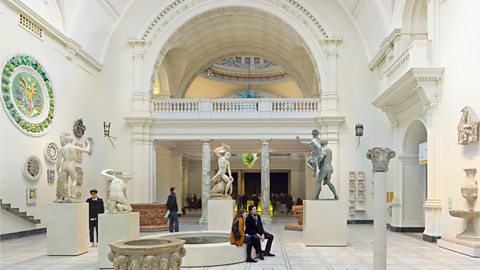
Museum of the Year shortlisted: V&A
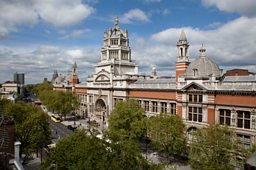
The V&A, London, shortlisted for the Art Fund Museum of the Year award, 2016.
For Londoners, the Victoria & Albert Museum used to be a pleasantly sleepy place – a tranquil refuge from the school-trip chaos of the Science Museum across the road.
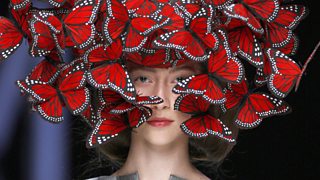
Yet lately, something’s changed. Blockbuster exhibitions like the Alexander McQueen retrospective, Savage Beauty, have transformed this august institution into London’s most fashionable museum.
Blockbuster exhibitions have transformed this august institution into London’s most fashionable museum
And now it’s been shortlisted for the Art Fund’s Museum of the Year.
Entering through the aptly named Grand Entrance, this change of mood is apparent straight away.
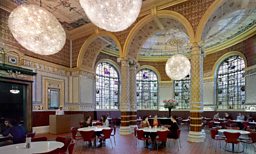
The marble foyer bustles with foreign visitors; the bookshop and restaurant are attractions in their own right.
The secluded John Madejski Garden, with its stylish paddling pool, is a haven for toddlers and sunbathers. This isn’t just a museum – it’s a rendezvous.
However it’s the collection that makes the Victoria & Albert Museum so special – more than two million objets d'art, spanning everything from crockery to haute couture.
Over three million people visit its South Kensington site every year. Almost a third of these visitors are students, coming here in search of inspiration, just like Alexander McQueen used to do.
During the last decade, applied art and design has become a central part of British culture. It’s no longer a niche interest – nowadays it’s as mainstream as pop music or the movies.
The V&A reflects this shift in populist attitudes. It’s also played a part in bringing this shift about.
Museum of the Year 2016
![]()
The shortlist
Films featuring the five nominations
![]()
Victoria & Albert
A world-leading art and design museum with over 2 million objects from around the world
![]()
Jupiter Artland
A beautiful sculpture park and gallery near Edinburgh
![]()
Museum of the Mind
The new museum at Bethlem Royal Hospital, the western world's oldest psychiatric institute
![]()
Arnolfini Gallery
The ambitious art centre at the heart of Bristol's historic waterfront
![]()
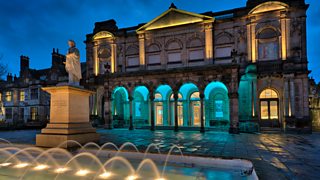
York Art Gallery
The refurbished Victorian gem with a world class collection of British ceramics
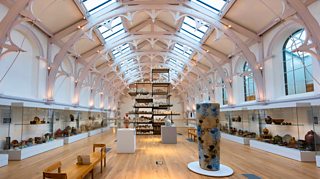
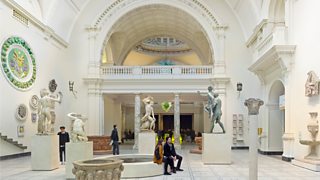



The V&A is best known for applied arts, but it’s also full of other treasures. It boasts a superb collection of 19th Century British painting (particularly Constable and Turner) and some exquisite medieval art.
The V&A’s internationalism has always been one of its main attractions
However most of these exhibits have always been here, so what’s changed?
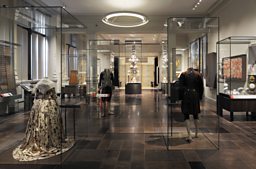
Gradually, the V&A’s galleries have been overhauled - and although the specific alterations have been subtle, the cumulative difference is dramatic.
No longer do you tramp past rows and rows of antique curios in glass cases.
Different genres have been brought together, making the displays much more immersive.
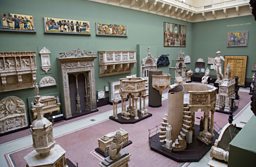
Dynamic curation has brought these dead objects back to life. The latest section to get a makeover is the Europe 1600-1815 Galleries.
Joanna Norman, the V&A’s Deputy Head of Research, takes time out to show me round. The original architecture has been revealed and the exhibition space has been expanded.
"It’s about creating a more pleasant visitor experience, and improving physical access to the objects," says Joanna. There’s a lot more natural light. The overall effect is clear to see.
The V&A’s internationalism has always been one of its main attractions – it’s a treat to sneak in here for an hour or two, and take a quick trip around the world.
However traditionally, the V&A’s displays have tended to focus on specific regions – artefacts from Asia or Africa in one room, artefacts from Europe in another.
These new European galleries show how European tastes have been shaped by trade with the Far East and the New World.
"It’s about putting Europe in its global context," explains Joanna. "We’ve brought in objects from our Asian collections, and from the Spanish Americas."
And now the V&A is expanding its own horizons. Last year its touring exhibitions travelled to ten countries, where they were seen by over a million people.
In 2017, the current redevelopment of the South Kensington site will be completed, reinvigorating this historic building. "It’s about creating much more inviting spaces - much more welcoming spaces," says Joanna.
And in 2018, the V&A will open a new Museum of Design in Dundee.
For 150 years, the V&A has inspired future designers and manufacturers here in South Kensington. In a couple of years, it’ll be inspiring a new generation of Scots designers and manufacturers, in its new home on the River Tay.
This year’s Museum of the Year winner will be announced at London’s Natural History Museum on 6 July.


BBC at the V&A


More from BBC Arts
![]()
Picasso’s ex-factor
Who are the six women who shaped his life and work?
![]()
Quiz: Picasso or pixel?
Can you separate the AI fakes from genuine paintings by Pablo Picasso?
![]()
Frida: Fiery, fierce and passionate
The extraordinary life of Mexican artist Frida Kahlo, in her own words
![]()
Proms 2023: The best bits
From Yuja Wang to Northern Soul, handpicked stand-out moments from this year's Proms