Inside The Christie: Five innovative ways of helping cancer patients
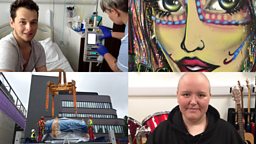
It treats more than 44,000 patients a year, and in 2016 was named the most technologically advanced cancer centre in the world, outside of North America.
The Christie in Manchester is one of Europe’s largest single-site cancer centres, treating cancer patients in many innovative ways.
BBC Radio 5 live was given unprecedented access inside the hospital, to find out more about their new technologies and treatments, and speak to the patients benefitting.
1. They'll soon be using proton beams to treat cancer
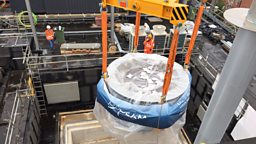
The first NHS proton beam machine was delivered to The Christie on Thursday 22nd June 2017. It will take a year to get the unit ready, with the first patients expected to be treated in August 2018.
The Christie will be the first NHS trust to provide the treatment, meaning patients won’t have to travel abroad. University College London Hospital will open its own proton beam centre in 2020.
Last year the NHS sent 210 patients abroad – mostly to the US and Switzerland.
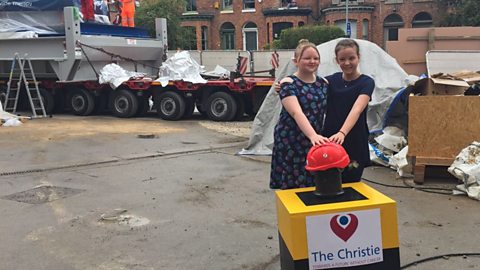
The Christie hospital in Manchester gets proton beam machine
Radiographer says it's an 'exciting day' as key part of proton beam machine is delivered.
The 90-ton machine - called a cyclotron – had to be lifted into position at the hospital on a huge crane. The Christie have named the cyclotron 'Emmeline', after Emmeline Pankhurst.
Proton beam therapy uses charged particles instead of X-rays to deliver radiotherapy for cancer patients. It means high-energy protons can be targeted directly at a tumour, and so reducing the dose to surrounding tissues and organs.
Usually this means patients suffer fewer side effects.
(Sources: NHS England, Cancer Research UK)
Amelia's Story
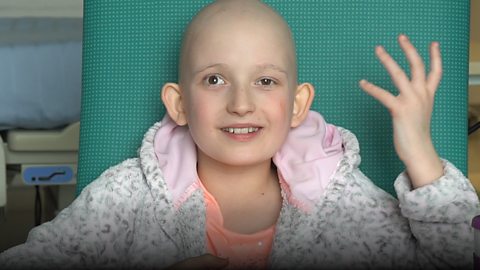
Pioneering proton beam therapy for 10 year-old girl
10-year-old Amelia is fighting cancer with ground breaking proton beam therapy in America
Lucy's story
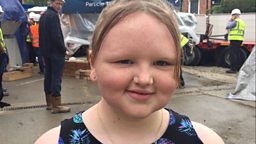
11 year old Lucy and 12 year old Emma pressed the button to start moving “Emmeline” into position. Both of them had to travel to Oklahoma for proton beam therapy.
I didn't know any of the doctors and all the words they were saying, they have different names for all the equipment and the medicines that I was having, so it was really hard to adjust to everything in Oklahoma"Lucy, 11
Lucy was in the US for 10 weeks and had 28 doses of proton therapy.
2. They're tackling body image issues

The Teenage and Young Adult service is for 16-24 year old's who are diagnosed with cancer or leukaemia at The Christie. The unit has two social hubs, a gym and a music room.
People presume hair loss is the most significant thing but there’s so much more involved."Anna - runs body image workshops at The Christie
In 2014, the service started organising “body image workshops” for young people, focusing on how diagnosis and treatment affects how patients feel about their body.
The sessions focus on anything from hair loss, to weight gain and weight loss.
Seren's story

Seren is 21, she was diagnosed with ovarian cancer in April 2015. She lost a lot of weight.
"I didn’t think I’d lose weight, because in hospital I had bandages all over me, and sheets, it was only when I actually had a shower, and I looked at my leg and I thought that doesn’t look like my leg any more it was really strange.
Some of my friends were really shocked when they first saw me, and they didn’t know what to say – you can see people’s reaction.
I think my issues with body image have come to the forefront now, because back then I was focusing on my treatment and getting better, and now it’s focusing on how I look after my treatment and the scars that I’ve got."
Chelsea's story
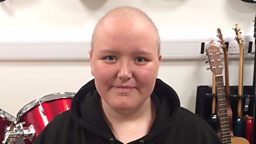
Chelsea is 18 – she is currently being treated at The Christie for Acute Myeloid Leukaemia.
"My hair was falling out but it never fell out completely.
I turned around to my mum on the day I was being discharged from hospital and said ‘let’s just shave it all off’ – and at first I was a bit nervous because I thought the bald head wouldn’t suit me, but now I absolutely love it, and I don’t really want my hair to grow back.
Before I came into hospital I had nice bright red hair and then it all just went, so I am intrigued to see how it grows back. It’s going to be interesting."
Lydia's story
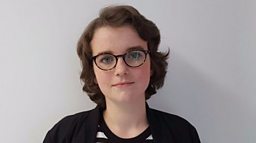
Lydia is 17 and was diagnosed with leukaemia in October 2015 - she’s still having chemotherapy.
"It’s been so empowering to meet other people and talk about the side effects that can happen that other people don’t understand.
I did lose a lot of weight and gained weight and I think you should just learn to embrace your body - my body has kept me alive. You should learn to love your body.
I lost my hair twice – the second time I hid it and wore wigs and beanies. I remember sometimes when my hair was quite short, maybe an inch long...I would go out without a wig or anything and people would just stare at me and laugh, and I think it’s just so rude because you don’t know what people are going through."
3. They do chemotherapy treatment in car parks
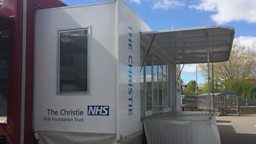
Mobile chemotherapy buses are used by a number of trusts around the UK. The Christie’s unit parks up in a different supermarket car park, five days a week.
It has four beds, and makes it more convenient for patients having regular chemotherapy who have to travel long distances to get to the hospital.
Inside, it's like any normal clinic, with four beds and a team of chemotherapy nurses.
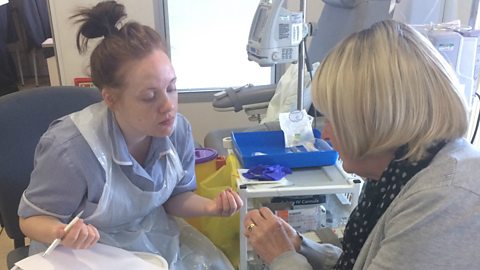
The chemotherapy treatment centre - in a supermarket car park
Patients and nursing staff show what it's like inside a mobile chemotherapy centre.
4. They're at the forefront of drug trials and specialist treatment
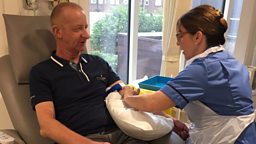
The Christie is home to one of the largest clinical research facilities in the UK.
More than 600 drug trials run every year, involving around 3000 patients. Some of these trial drugs and treatments will eventually become mainstream cancer treatments.
Michael's story
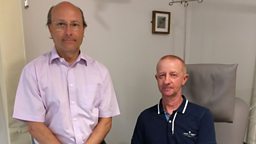
Michael is 59. He was diagnosed with a form of non-Hodgkin lymphoma in May 2015. He’d had numerous treatments including chemotherapy and 3 clinical trials. In April 2017, he started on his fourth clinical trial called ADCT-402.
I had a tumour showing under my left armpit, and within a few weeks of actually starting it, it seemed to shrink and it’s seems to be shrinking still now. I check it every morning and evening.
They [my family] couldn’t believe it - they were overwhelmed, my wife keeps on looking at it and said yes it’s definitely shrinking. It’s good, it’s a good result.
Adele's story
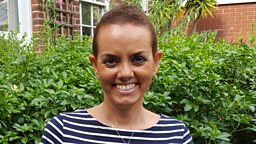
Adele is 39, she was diagnosed with bowel cancer two years ago, just before she had a baby. She’s had a specialist type of surgery using a heated chemotherapy (HIPEC) which is only carried out at two centres in the UK – The Christie is one of them.
Because of my age, I was 37, you don’t really think about particularly bowel cancer. I'd never been to the doctor about any particular issues.
Here [The Christie] they really understood my case and the options that might be available.
From being told there’s nothing we can do, effectively you can have a bit of chemotherapy, to someone who’s got a proper treatment plan for you, nothing gets bigger than that.
I came out of that appointment in a different head space in a different frame of mind, it's a life changer for you.
5. They use play to help children understand their treatment
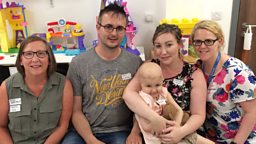
Ava is 5, and she's a patient at The Christie.
The hospital has a play room where she can draw pictures of her favourite Disney characters, and take her mind off everything.
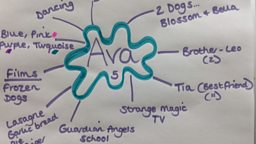
The staff in the play room can also help children understand more about their illness and treatment, to make it less scary.
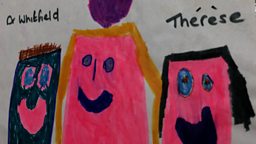
They helped Ava make a map of everything she likes, and she's drawn a picture of some of her favourite hospital staff.
See also
Your reaction
Here's what you've been telling us...