Mr Siddons stars in Wolverhampton
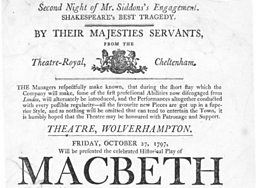
The entertainers on this playbill have travelled to Wolverhampton from Cheltenham’s prestigious Theatre Royal to stage a performance of Macbeth.
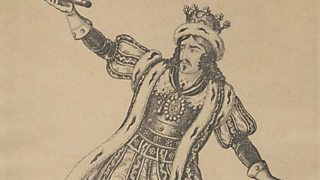
In the lead part is a certain Mr Siddons, a well-established actor in London and the provinces.
![]()
Much ado near me
Hear more Shakespeare stories on BBC Radio Gloucestershire
![]()
Shakespeare Festival 2016
The BBC celebrates the genius of the bard
While quite a draw for the Wolverhampton crowd, Mr Siddons wasn’t thought to be as celebrated as his wife, the famous Sarah Siddons, who was revered for her portral of Lady Macbeth.
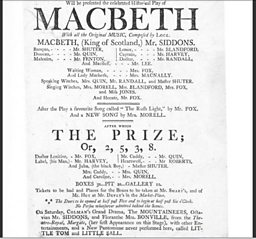
On this night, Lady Macbeth is played by the somewhat lesser known…Mrs Macnally.
Any group of performers from a patent (or official) theatre royal such as Cheltenham could call themselves “servants of their majesties”.
This was not a sign of Royal patronage, rather than a way of emphasising that they were from a licensed theatre and benefitting from the cachet of this status.
And the playbill advertising this performance to the good people of Wolverhampton sells this fact.
The play is a crowd-pleaser…a banker for the management.
In this popular adaptation of “Macbeth”, the role of the weird sisters or witches has been expanded and includes singing!
The play is referred to, without irony, as “the celebrated Historical Play of Macbeth with all the Original Music, Composed by Locke”.
“By the pricking of my thumbs,
Something wicked this way comes.”
(Macbeth, Act I, Scene 4)
At this time, Shakespeare productions were freely adapted, plots could be changed, new characters introduced, and lines rewritten.
The Cheltenham Connection
Cheltenham was a popular place for the wealthy elite to take the waters.
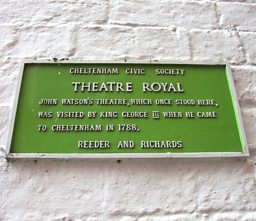
The Theatre Royal there opened in 1782, some 15 years before this performance in Wolverhampton. The Cheltenham Theatre Royal was in York Passage near the High Street and it was visited by King George III and the Royal Family when they visited the town.
The company have adopted their name and the Royal coat of arms – probably this is the work of their original Cheltenham-based manager John Boles Watson (1748 – 1813).
This Irishman was a former actor whose ill-health rescued him from the itinerant life of an actor.
He went on to create a circuit of around forty or more theatres that included the Theatre Royal Gloucester which opened in 1791 and the theatre in Cirencester.
About Shakespeare on Tour
From the moment they were written through to the present day, Shakespeare’s plays have continued to enthral and inspire audiences. They’ve been performed in venues big and small – including inns, private houses and emerging provincial theatres.
BBC English Regions is building a digital picture which tracks some of the many iconic moments across the country as we follow the ‘explosion’ in the performance of The Bard’s plays, from his own lifetime to recent times.
Drawing on fascinating new research from Records of Early English Drama (REED), plus the British Library's extensive collection of playbills, as well as expertise from De Montfort University and the Arts and Humanities Research Council, Shakespeare on Tour is a unique timeline of iconic moments of those performances, starting with his own troupe of actors, to highlights from more recent times. Listen out for stories on Shakespeare’s legacy on your BBC Local Radio station from Monday 21 March, 2016.
You never know - you might find evidence of Shakespeare’s footsteps close to home…
Craig Henderson, BBC English Regions
Related Links
![]()
Shakespeare Lives
The nation’s greatest performing arts institutions mark 400 years since the Bard's death

Shakespeare on Tour: Around Gloucestershire
![]()
Shakespeare in Gloucestershire
What links did Shakespeare have with Gloucestershire?
![]()
Shakespearean A-Lister visits Tewkesbury
Edmund Kean acts in Richard III
![]()
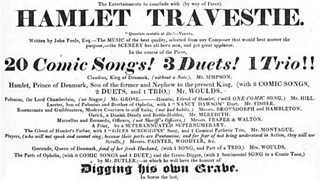
Burlesque Shakespeare in Gloucestershire
19th Century Shakespeare satire enjoyed by spectators
Shakespeare on Tour: Around the country
![]()
A wealthy host attracts Shakespeare's actors to Yorkshire
Shakespeare’s King’s Men visit the Clifford family at Londesborough Hall
![]()
Norwich gives Shakespeare's company the cold shoulder
Shakespeare's players paid 40 shillings not to perform
![]()
Celebrated young actor stars as Hamlet
Child prodigy actor who took theatres by storm in 1804 stars as Hamlet in Stafford
![]()
Much Ado about Dracula?
Much Ado About Nothing at the London Lyceum 1883