What Did the BBC National Short Story Award Do for You?
Former winners and shortlisted writers for the BBC National Short Story Awards explain the impact the prize had on them.
Lionel Shriver (2014 Winner and 2013 and 2009 Shortlist)
Winning this award helped me to take writing short stories more seriously, rather than regarding them as something of a sideshow in relation to my novels. The award inspired me to powwow with my UK editor on a collection I've had hazily in the back of my mind for years, and am now resolved to bring to fruition. And most years, I find the due date for the BBC NSSA an excellent hard and fast due date on a personal level, guaranteeing that I produce at least one would-be decent short story per year, even when I'm up to my neck in a new book.
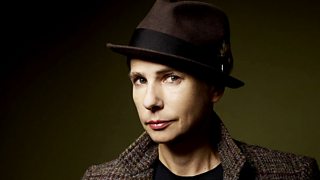
This award helped me to take writing short stories more seriously"2014 winner Lionel Shriver
Francesca Rhydderch (2014 Shortlist)
It was a lovely surprise to find myself shortlisted alongside some very prominent writers. It was also (unexpected but important) confirmation that I am heading in the right direction as a short story writer, and an indication that I should keep going. On a practical level, being shortlisted has been hugely helpful, with agents and publishers approaching me about my work. In the last 12 months I’ve also received numerous invitations to read at events and take part in panel discussions. I’ve learned so much from talking to other writers, and to readers.
Lisa Blower (2013 Shortlist)
Being shortlisted for the BBC award offered exposure, opportunity, and, more importantly, another reason to keep going.
Miroslav Penkov (2012 Winner*)
Most notably, winning the award changed the fate of my story collection in Bulgaria. We Bulgarians get so few chances to win Western prizes that if one of us happens to be recognized abroad our people always notice; some with kindness, others with… well, in their own peculiar ways... But there is always attention. Quite literally overnight my book became a best-seller in Bulgaria and has stayed that way ever since. Some of the stories were optioned for film and even I, who never thought of writing for the big screen, have been tempted to try my hand at this different form.
Lucy Caldwell (2012 Shortlist)
Being shortlisted for the BBC International Short Story Award in 2012 for my story Escape Routes was a huge boost. I’d been writing stories for as long as I’d been writing, with little success, the lapsed and abandoned Word documents accumulating in a slow drift on my laptop. The recognition that Escape Routes received increased my determination to persevere with short stories, perhaps the tricksiest, most elusive, most unforgiving and most magical of all literary forms, and it gave me the confidence to declare to my publishers that I wanted to bring out a collection.
Margaret Hyland (2011 and 2012 Shortlist)
Being shortlisted had a profound impact, not necessarily in terms of exposure or enhanced profile — these things are notoriously difficult to quantify — but in terms of confidence and self-esteem, the impact has been inestimable.
Katherine Orr (2011 Shortlist)
For me, being shortlisted for the award meant a very encouraging, high-profile endorsement of my work at a fairly early stage in my writing life: my first book is coming out early in 2016. Radio time definitely leads to an increase in profile - so many more people know about your work afterwards.
Alison MacLeod (2011 Shortlist)
It was a delight and an honour to watch my story, The Heart of Denis Noble, travel far and wide via the BBC broadcast and the award anthology. In Liverpool, my cab driver wanted to talk about it after hearing me on Front Row. The Royal Society tweeted about the story. I heard from listeners in Canada and India. Denis Noble himself came as my guest to the award evening, and above all, I was happy that the details of his life and his scientific breakthrough were, in some small way, honoured by both the story and the nomination. Using the life story of an actual, living person - and inventing elements of it - could have gone so badly wrong in many ways. I was keenly conscious of that when I embarked on the story, but I took a risk - and, crucially, Denis Noble also took a risk. The result (the nomination) was a joyful thing for us both. In the years since, I've written more short stories for the BBC, and that still feels like a terrific privilege.
Jon McGregor (2010 and 2011 Runner Up)
More perhaps than the basic fact of being shortlisted, the coverage on Radio 4 - and in particular the broadcast of the story - was hugely significant for me. I know from conversations that people heard those broadcasts who would never usually read short stories, or go to the trouble of buying a collection of stories; and in some cases having heard the story then went on to buy my collection, and/or other collections of stories. Radio 4 reaches an audience well beyond the usual readership of literary fiction.
Naomi Alderman (2009 Shortlist)
Oh gosh, not sure! I think probably it enables me to describe myself as "a short story writer" even though publishers still won't take a book of short stories from me!
Richard Beard (2008 Shortlist)
It reassured me that I wasn't only a novelist. Even though I'd had short stories published before the shortlisting, the prize acted as a validation - I could bring my experimental approach to the short story and it could work. Suddenly I wasn't the only person to think so.
*In 2012 the award was an international prize.
Further reading...
![]()
The 2015 Award
Listen to the nominated stories and interviews with the writers.
![]()
Previous winners
Listen to readings of some of the previous winners of the award.
![]()
BBC Young Writer's Award 2015
A new award seeking out the best young writers in the UK.
![]()
Reading Europe
Radio 4 explores what the continent is reading now and why.