Building on success: Tate Modern takes to the wing
16 June 2016
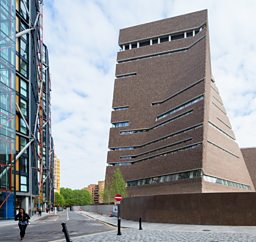
Launched with considerable fanfare, the latest building to carve a niche in London's cityscape is the Tate Modern's new extension - Switch House. More than just a venue expanding its footprint, this striking new addition is a statement of intent for a gallery with world-class ambitions. Now half the space allotted to individual artists is dedicated to female artists and a global collection of digital multimedia art sits alongside more traditional forms. WILLIAM COOK takes a tour of London's new 21st Century global art space.

Back in 1999, it was a redundant power station in a rundown district of South London. Today, it’s Britain’s biggest museum of modern art. And this week, Tate Modern opens a new wing, expanding its exhibition space by 60%. Tate Modern has transformed the artistic landscape of Britain’s capital. With this opening, it becomes a leading player on the world stage.
Built in 1952, by the great British architect Giles Gilbert Scott (the man who designed the traditional red telephone booth), Bankside Power Station was always a popular London landmark, but from 1981 it was derelict, threatened with demolition.
Since it opened in 2000, Tate Modern has revived the south bank of the River Thames. It proved art can be a catalyst for urban regeneration
The decision to turn it into an art gallery was inspired. Since it opened in 2000, Tate Modern has revived the south bank of the River Thames. It proved art can be a catalyst for urban regeneration.
Gilbert Scott’s iconic building was redesigned by Swiss starchitects Herzog & de Meuron, and the Basel-based duo have returned to London to build Tate Modern’s brand new wing. Their new Switch House echoes the austere style of Gilbert Scott’s masterpiece. It’s even made from the same mud brown brick.
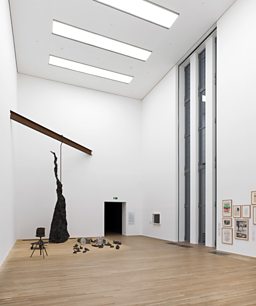
The biggest difference is the unbroken spaces in these new galleries, which creates a thrilling sense of flow. ‘It’s a very rich conversation between works of art and architecture,’ says Tate Modern’s director, Frances Morris. ‘The visitor can actually walk around and feel the collections.’
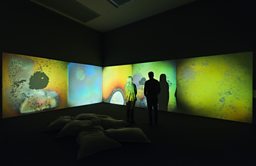
Such a dramatic expansion was bound to be transformative, but this extension isn’t just about increasing the existing space. It’s also about a change of ethos. The opening of the Switch House cements Tate Modern’s shift of emphasis. It used to be a museum of Western European and North American painting and sculpture. Now it’s a global museum of multimedia art.
Tate Modern broke new ground by rejecting the conventional chronological model of curation. Rather than beginning in 1900 and ending up in the present day, artworks from different eras and genres were jumbled up, with dramatic (and often disorientating) results.
Yet although the presentation was unconventional, the artworks themselves were fairly orthodox. There wasn’t much video or photography. There weren’t many female or so-called ‘ethnic’ artists. The collection mainly consisted of paintings and sculpture, made by dead white men from Western Europe and the USA.
Of all the works on show today, in the new Switch House and the old Boiler House, 75% have been acquired since Tate Modern opened. These additions reflect Tate’s growing interest in multimedia, and in artists outside Europe or the US.
When Tate Modern opened in 2000, it was, by necessity, a museum of the 20th Century. The new Tate Modern is a museum for the 21st
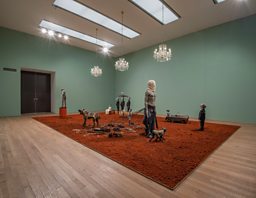
Under Morris, who became director this year, half the galleries allotted to individual artists are now allotted to female artists. Tate Modern is now a multicultural space for every sort of modern art.
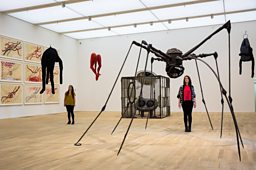
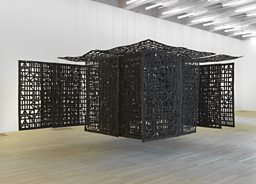
This evolution has been a gradual process, but Herzog & de Meuron’s sleek Switch House gives it a proper platform. Every artwork in this new building has been made since 1960. The old oil tanks in the basement have become a new space for performance art. There are displays about older women, and working women. There are films about Ai Weiwei and Sheela Gowda. There are rooms devoted to Louise Bourgeois and Rebecca Horn.
This extension has also freed up more space in the original building. The core of Gilbert Scott’s colossus, the Boiler House, has had a complete rehang, with four fresh exhibition spaces: Material & Objects, Media Networks, Artist & Society and In The Studio. As they did before, these thematic displays shun chronology, but now they seem to make a lot more sense.
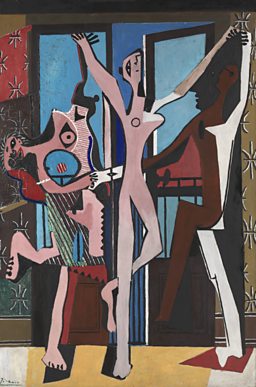
Material & Objects ranges from Kurt Schwitter’s collages to Sheela Gowda’s sculptures. Media Networks ranges from John Heartfield’s anti-Nazi cut-ups to the feminist agit-prop of the Guerrilla Girls. Artist & Society contrasts Picasso’s Weeping Woman with the manifestoes of Joseph Beuys. ‘Jeder Mensch ein Kunstler’ (Everyone is an artist) was Beuys’ defiant Cri de Coeur. It could double as a slogan for the new Tate Modern.
By comparison, In The Studio feels pleasantly old-fashioned. Rooms devoted to Bridget Riley and Gerhard Richter, artists once regarded as avant-garde, now seem reassuringly traditional. The juxtaposition of Rothko’s serene abstracts and Monet’s water lillies is inspired. Amid the bold new works by African and Asian artists, there’s still room for a few old favourites, like Dod Procter’s Morning, bought for the nation by the Daily Mail in 1927.
For fuddy-duddys like me, video will never replace painting, but if modern artists are working with cameras and computers, Tate Modern needs to show their work.
A statement by contemporary Belgian artist Luc Tuymans sums it up.
‘It’s ridiculous to fight new media. You can’t win, so you just have to incorporate it into your toolbox.’
That’s what Frances Morris has done here. When Tate Modern opened in 2000, it was, by necessity, a museum of the 20th Century. The new Tate Modern is a museum for the 21st.

Artists on BBC Arts




More from BBC Arts
![]()
Picasso’s ex-factor
Who are the six women who shaped his life and work?
![]()
Quiz: Picasso or pixel?
Can you separate the AI fakes from genuine paintings by Pablo Picasso?
![]()
Frida: Fiery, fierce and passionate
The extraordinary life of Mexican artist Frida Kahlo, in her own words
![]()
Proms 2023: The best bits
From Yuja Wang to Northern Soul, handpicked stand-out moments from this year's Proms