Siege mentality: Fireworks at the Royal Court
2 March 2015
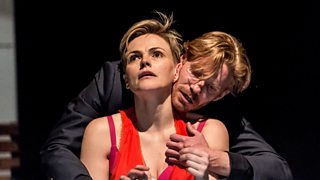
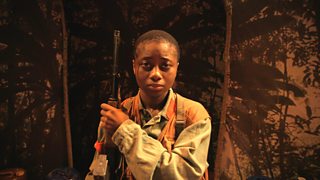
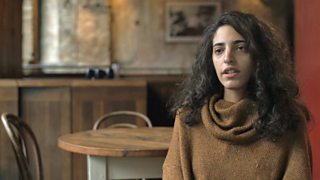
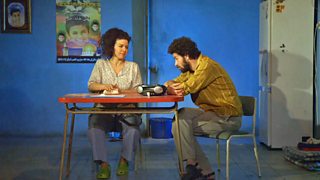
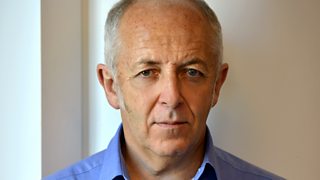
Set in an unnamed Palestinian town, Fireworks follows the families of 11-year-old Lubna and 12-year-old Khalil as a siege intensifies outside their apartment block. In the second of three special features on new works at the Royal Court Theatre, writer Dalia Taha, director Richard Twyman and designer Lizzie Clachan discuss bringing the powerful play to the stage. Below, the BBC's Middle East Editor JEREMY BOWEN discusses the geopolitical context of the play, and describes the trauma he has witnessed first hand in the region.
Human beings adapt well, even to terrible hardship. Our brains always want to live, to find a way not to die, to save ourselves and the people we love. We have an instinct to survive that will not keep quiet until our bodies expire.
The sad truth is that at any given time around the world human beings are being tested, and are forced to rely on their instincts to stay alive. Sometimes that means behaving passively. It can mean sitting quietly, in the strongest place you can find, and hoping that shells or bombs do not explode near enough to kill you.
Being in a place that is being bombed is frightening. You can hear warplanes in the air, or the whoosh of shells passing over and a dull crump as they explode in the distance, or the unbearable crash of a much closer explosion.
On the Israeli side of the border it can mean a warning of only 15 seconds or so before the rocket or mortar hits. It is terrifying, and traumatising.
Schools have reinforced concrete roofs. Bus stops are fortified, turned into bunkers. Cartoon characters point the way into the shelters that are built into children's playgrounds. Houses have safe rooms, with extra thick walls and roofs and steel shutters over the doors and windows.
Sometimes Israelis are killed by weapons fired by militant groups in Gaza. But the experience of Israelis in the firing line is nothing like as terrifying or as deadly as being on the wrong end of an Israeli bombardment.
Israel has a powerful air force and fearsome artillery; Palestinians in Gaza do not have the protection that Israelis do in their homes, schools, playgrounds and bus shelters.
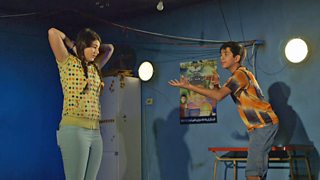
The play Fireworks explores the instinct to survive in Palestinians caught up in an unnamed war in an unnamed place, which could be Gaza.
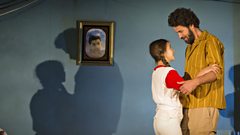
It does not waste much time on politics. Instead it is about two families who cannot escape from a nightmare that has already killed the son of one of the couples, and could kill them all. The parents try to create an imaginary place of safety for their children as the building shakes and ‘fireworks’ light up the sky.
The children are growing up, showing signs of puberty, but their parents comfort them with games of Let’s Pretend that might have worked when they were younger, but cannot work now.
Fireworks is good at showing the claustrophobia of life under fire, especially for people who are too poor to live in more than a couple of rooms. The families talk about fleeing to a refuge for displaced people in a school, weighing up whether it is safer to stay at home or to leave.
Hanging on to a little piece of familiarity can feel better than running
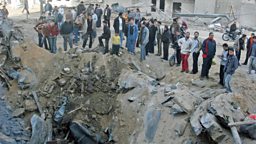
I have seen families arriving at UN schools in Gaza after leaving their homes in a hurry. Often they are from the sections of Gaza not so far from the border with Israel.
It has happened often enough for people to know what to bring, stuffed into cars or on to carts pulled by horses or donkeys; clothes, extra bedding, mattresses, some cooking pots, buckets for carrying water, gas cylinders to run stoves, sacks of flour, or chickpeas, or tins pulled out of cupboards.
In every community there are some families, like the ones in Fireworks, who do not want to move; they see their homes as safer than any of the alternatives, or are prepared to take their chances, gambling that they could die wherever they go, recoiling at the idea of sleeping on the floor of an overcrowded classroom, or queuing for overflowing latrines.
Sometimes people won’t budge even when their homes, or those of their neighbours, are damaged. Hanging on to a little piece of familiarity can feel better than running; especially when your own eyes and ears tell you that the attackers can reach wherever they like.
The men in Fireworks talk about hitting back, even though they know that the acts of violence they contemplate will not help much. One of them has a handgun; the other wonders about phoning restaurants to threaten destruction and death, to return some of the fear he feels.
In the play, their plans are fantasies. Perhaps at some time in the future they will try to take their anger and impotence into real life. One man has already lost a son; his wife has lost her mind from grief.
In this claustrophobic, angry life the son of the other man, a 12-year-old called Khalil, struggles to control his own anger. His games with Lubna, his neighbour, a girl of 11, are suffused with violence.
She pretends to be his captive. When that game gets boring, he wants to play checkpoints. The outside world is tantalising. Their parents try, and fail, to keep them indoors; futile, because danger follows them home.
Palestinians in the Gaza Strip often call it the world’s biggest jail. Most of them are not allowed to leave Gaza; hostile governments in Israel and Egypt control its borders. It is easy to find adults who have never been out.
No peace process exists. Without peace more war will come. And more families will shelter from the bombs, and bicker with each other in their isolation, and sometimes they will die no matter how hard they try to survive.
In pictures
Background
Dalia Taha is a Palestinian poet and playwright. She was born in Berlin in 1986 and grew up in Ramallah, Palestine.
Her first play, Keffiyeh/Made in China, was produced by the Flemish Royal Theatre and A.M. Qattan Foundation and premiered in Brussels before touring seven Palestinian cities across the West Bank.
She is currently pursuing an MFA in Playwriting at Brown University and has published two collections of poetry and a novel.
Fireworks was initially developed during the Royal Court's International Residency in London in August 2013, which hosted writers from all over the world.
It is part of International Playwrights: A Genesis Foundation Project, with additional support from the British Council and the A.M. Qattan Foundation.
The Royal Court Theatre has worked with theatre artists in 70 countries and in over 40 languages. Each year, Royal Court playwrights and directors travel across the world to build relationships with emerging talent through workshops, residencies and touring.
This work is led by Elyse Dodgson, head of the International Department - and Fireworks is the culmination of 17 years' work in Palestine.
About the production
Fireworks is at the Jerwood Theatre Upstairs at the Royal Court until 14 March 2015.
Cast
Samar: SHEREEN MARTIN
Khalid: SALEH BAKRI
Ahmad: NABIL ELOUAHABI
Khalil: YUSUF HOFRI and GEORGE KARAGEORGIS
Lubna: EDEN NATHENSON and SHAKIRA RIDDELL-MORALES
Nahla: SIRINE SABA
Creative Team
Director: RICHARD TWYMAN
Writer: DALIA TAHA
Translator: CLEM NAYLOR
Designer: LIZZIE CLACHAN
Lighting Designer: NATASHA CHIVERS
Composer: BENEDICT TAYLOR
Sound Designer: GEORGE DENNIS
Related Link
More from the Royal Court
![]()
How to Hold Your Breath
An in-depth look at the theatre’s second highest-grossing show ever.
![]()
Liberian Girl
BBC Arts examines the immersive, award-winning play about child soldiers in Liberia.