Final call to save di world from 'climate catastrophe'
Wia dis foto come from, Getty Images
- Author, Matt McGrath
- Role, Environment correspondent
- Published
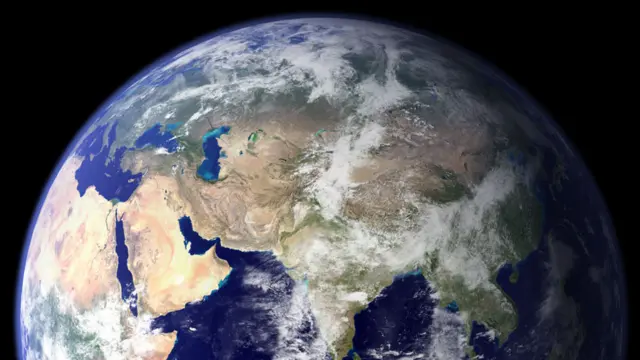
Na final call from scientists say dis na di last warning on di risk of temperatures wey dey rise around di world.
Dia report to keep di rise under 1.5 degrees C say di world dey completely off track and instead e dey go towards 3C.
To stay for di target of 1.5C wey dey above di pre-industrial level go mean say "di Changes go dey quick for all aspect of society".
E go cost well-well - but di window of opportunity still dey open.
Afta three years of research and discuss between sabi pipo and goment officals for mitin for South Korea, di Intergovernmental Panel on Climate Change (IPCC) don release special report on wetin global warming of 1.5C fit cause.
Di critical 33-page Summary for lawmakers show di difficult negotiation between climate research pipo wey stand for wetin dia report show and goment representatives wey dia concern be di economy and how pipo live go beta

Despite di issues, some key message dey loud and clear.
"Di first one be say, if we limit warming to 1.5C e get plenti benefits unlike wen you limit am to two degrees. E dey really reduce wetin climate change fit cause," according to Prof Jim Skea, wey br chairmo of IPCC.


End of Di one wey oda users dey read well well
"Di second na di nature of di change we need if we go limit warming to 15C - change to energy system, change to di way we dey manage land, change for di way we dey move around and transportation."
Wetin we fit takeaway from this?

"Sabi pipo fit write for capital letters, 'DO SOMETHING NOW, IDIOTS,' but dem need to tok am wit facts and numbers," na so Kaisa Kosonen tok, of Greenpeace wey dey observe di tok-tok. "And dem don do am."
Research pipo don use di fact and numbers paint picture of do world wit dangerous fever wey humans cause. We bin dey tin say if we keep warming below two degrees dis century, den di change wey we dey experience go dey manageable.
Not anymore. Dis new study say if e pass 1.5C e go dey beyond wetin pipo fit live in. And di 1.5C temperature "guard rail" go go high in just 12 years, for 2030.
We fit stay below am - but e go need plenti quick changes from goment and individuals and we go need invest plenti money every year, about2.5% of global gross domestiv product (GDP), di value of tins wey don ey produces, for 20years.
Even den, we go still need machines, trees and plants to capture carbon for di air wey we fit store for underground - forever.
Wetin I fit do?
Di report say quick and significant change for four big global system suppose happun.
- energy • land use • cities • industry
But it still add say di world no fit mit e target witout change by individuals as dem urge pipo to:
- buy less meat, milk, cheese and butter and more local sourced seasonal food - and troway less of it away • drive electric car but trek or cycle short distances • take train and bus instead of aeroplane • use videoconferencing instead of business travel • use washing line instead of a tumble dryer • insulate homes • demand low carbon for every consumer product
Lifestyle change fit make big difference, na wetin Dr Debra Robert, di IPCC oda chairmo tok.
She tok say "dis na big message for di individual."Dis no be about remote science; na about wia we dey live and work, and e dey give us idea of how we fit contribute to di big change, because everibodi need dey involved.
"You fit tok say you no get control over land use, but you get control ova wetin you dey eat and dat one too dey determine land use.
"We fit choose di way we move in cities and if we no get access to public transport - make sure say you dey elect politicians wey go provide options around public transport."

Five steps to 1.5
- Global emissions of CO2 need to come down by 45% from 2010 level by 2030
- Renewables fit provide up to 85% of global electricity by 2050
- Coal fit reduce to close to zero
- Up to seven million sq km of land go dey needed for energy crops (a bit less dan di size of Australia)
- Global net zero emissions by 2050
How much all dis go cost?
E no go come cheap. Di report say to reduce warming to 1,5Cgo involve "yearly average investment need for di energy system of around $2.4 trillion" between 2016 and 2035.
Sabi pipo believe say dem suppose put dis number in context.
"Cost and benefit dey wey you gas weigh," na so Dr Stephen Cornelius wey be forma UK IPCC negotiator wey dey wit WWF tok. Im say to reduce emmision go cost money but e go dey cheaper dan to pay for carbon dioxide to remove am later dis century.
"Di report also tok about di benefit as higher economy growth at 1.5 degrees dey dan wen e dey 2C and high risk of impact at 1.5 dat you do at two."
Wetin go happun if we no act?
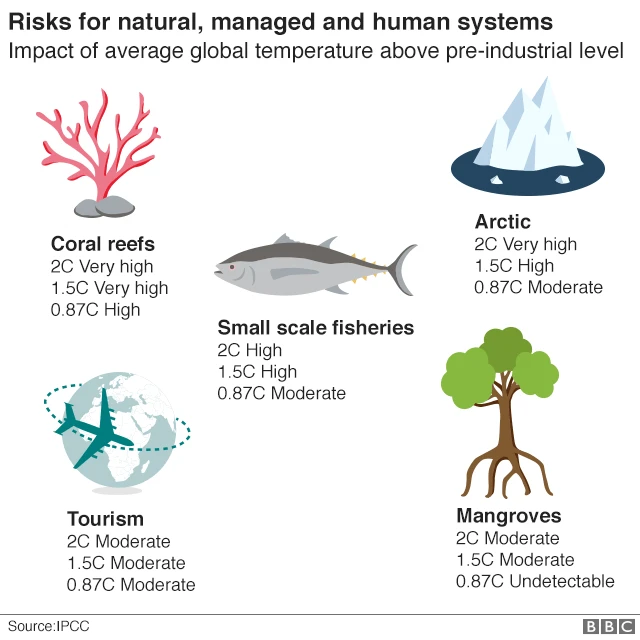
Di research say if we fail to keep di temperature rise below 1.5C, we dey for significant and dangerous change to our world.
Global sea-level go rise about 10cm (4in) more if we let warming to 2C. Dat fit no sound like much but if we keep am for 1.5C mean say 10 million less pipo go dey expose to di risk of flooding.
Significant impact for ocean temperature and acidity, and di ability to grow crop such as rice, maize and wheat dey too.
"We already dey di danger zone at one degree of warming," according to Kaisa Kosonen from Greenpeace. "Both pole dey melt at fast rate; ancient trees wey don dey for many years suddenly don dey die and di summer wey we just experience - basically, di world bin dey on fire."