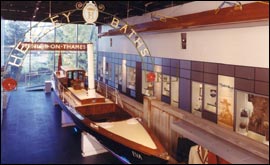
The Galleries
Henley, the River Thames and rowing are synonymous with one another and the Museum has three permanent galleries dedicated to each of these themes: The Rowing Gallery illustrates the history of rowing from its origins in the fleets of ancient Greece to today's most technologically advanced boats. This gallery is about the quest for speed and the transformation from workboat to racing boat. Key exhibits include the winning boat of the first Oxford and Cambridge boat race, as well as and the world's oldest known competitive rowing boat. Interactive exhibits challenge visitors to find out just how difficult it is to row in unison as a crew. Rowing enthusiasts can also see the boat in which Redgrave, Pinsent, Foster and Cracknell won the gold medal at the 2000 Sydney Olympics. Inter-active displays enable the visitor to discover the finer points of rowing and reveal accounts of rowers' exploits from building a 170-oar trireme to winning an Olympic gold. The Thames Gallery offers visitors a range of perspectives, looking at the river as an inspiration for the arts, as a natural habitat for wildlife and as both a source of pleasure and a means of trade. Exhibits from local and private collections, some of which had never been on view to the public before, help to illustrate the historic and social importance of the river, whilst the latest technology and interactive displays enable visitors to learn more about river management and water supply.
The Henley Gallery provides a history of the town's development through the centuries and the vital role the river has played in that development. Visitors can take a 'virtual' tour of the town through state-of-the-art technology. An adjacent gallery houses Henley from the Wargrave Road (1698) - a painting of international significance by Flemish artist Jan Siberechts, who is widely regarded as one of the founders of the British landscape tradition. |